If you’re shopping for a boat heat exchanger kit, you want solutions that reliably manage temperature while enduring harsh marine conditions. This guide highlights five top options and explains who they’re best for. Each product is evaluated for durability, compatibility, and performance, helping you choose the right kit for diesel engines, water-to-air cooling, or retrofit projects.
Summary of selected products:
| Product | Best For | Key Benefit |
|---|---|---|
| Marine Engine Water Cooler (Titanium Exchanger) | Diesel engine boats needing corrosion resistance | Efficient heat transfer with titanium exchanger |
| AB Plate Heat Exchanger 4″x12″ (30 Plates) | High-flow water-to-water cooling | 316L stainless steel with copper brazed edges |
| Water to Air Heat Exchanger 12×15 | Residential or boat HVAC retrofit | High heat transfer with copper/aluminum fins |
| Water to Air Heat Exchanger 12×12 | Compact space or smaller systems | Balanced performance and compact size |
| NEXDYNAMI Heat Exchanger End Cap Kit | Boat model compatibility and maintenance | Universal fit and leak-proof design |
Marine Engine Water Cooler With Titanium Exchanger
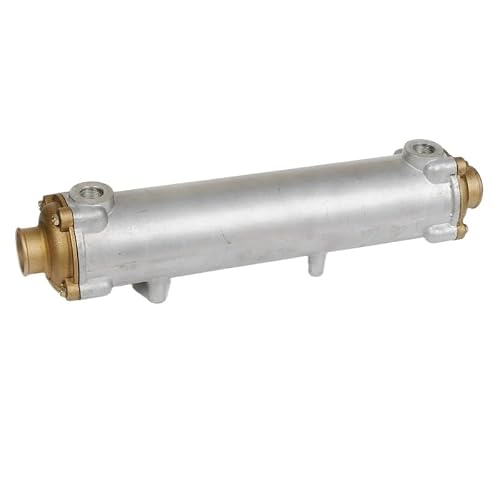
Product overview: A heavy-duty marine water cooler featuring a titanium heat exchanger for stable heat transfer. The cast iron body emphasizes structural strength and corrosion resistance suitable for saltwater use. The unit is rated for high-temperature resistance up to 105°C, supporting safe operation under demanding marine conditions.
Who it’s best for: This is ideal for boat owners with diesel engines that require robust cooling in harsh environments and where longevity in saltwater exposure is a priority.
Why selected: Titanium heat exchangers offer excellent corrosion resistance and reliable heat dissipation, which can extend engine life in marine settings.
Caution: Cast iron construction adds weight; ensure mounting provisions accommodate added mass and vibration in your vessel’s engine compartment.
AB Plate Heat Exchanger, 4″x12″ 30 Plates

Product overview: A high-performance plate heat exchanger built from 316L stainless steel with copper edges brazed to form a durable, leak-resistant unit. Designed for water-to-water applications, it supports high pressure and temperature with smooth-thread connections for easy hookups.
Who it’s best for: Great for boat owners performing high-flow cooling or heating transfers where a compact, durable plate design is preferred.
Why selected: The 30-plate configuration and 4″x12″ footprint provide substantial heat transfer capacity while maintaining a compact profile for crowded engine rooms.
Caution: Brazed joints require careful installation to avoid any leakage points under vibration; ensure proper torque and sealants are used according to instructions.
Water To Air Heat Exchanger 12×15

Product overview: A high-capacity water-to-air heat exchanger designed for outdoor wood furnaces and residential-like heating and cooling tasks, adapted here for marine HVAC applications. It features 12 aluminum fins and 3 rows of 3/8″ copper tubes, with epoxy-coated fins for wear resistance. It emphasizes energy efficiency and compatibility with various heat sources.
Who it’s best for: Suitable for boat owners looking to retrofit or upgrade a marine HVAC system, particularly when integrating water-to-air heat exchange with boilers or other heat sources.
Why selected: The design emphasizes improved heat transfer (10–20% gains) and energy efficiency, making it a practical choice for efficient cabin or engine space conditioning.
Caution: The unit is relatively large; verify mounting space and airflow clearance in the vessel’s layout before purchasing.
Water To Air Heat Exchanger 12×12
Product overview: A 12×12 water-to-air heat exchanger with 60,000 Btu capacity and up to 360kBtu/h potential depending on the application. The unit uses steel shell construction with base brazed joints and epoxy-coated fins for corrosion resistance and durability in demanding environments.
Who it’s best for: Ideal for boats needing a compact, efficient water-to-air solution where space is at a premium but heating/cooling demand remains significant.
Why selected: It balances performance with footprint, making it suitable for mid-size vessels or retrofit projects where a smaller exchanger is preferable.
Caution: Ensure the system’s airflow and ducting are properly sized to maximize the exchanger’s effectiveness and avoid bottlenecks.
NEXDYNAMI Heat Exchanger End Cap Kit

Product overview: An end cap kit designed for compatibility with Crusader 23540-based systems and other similar boat models. It emphasizes universal fit, leak-proof design, and rustproof components for long-term reliability on water.
Who it’s best for: Suitable for boat owners performing maintenance or retrofit work who need reliable end caps and compatible components to complete a heat exchanger installation.
Why selected: The universal fit and robust construction support easier maintenance and adaptability across boat models.
Caution: Check model compatibility and confirm exact end cap requirements before purchase to avoid mismatches with your current exchanger setup.
Buying Guide: Key Considerations For Boat Heat Exchanger Kits
- Application type: Choose between water-to-water versus water-to-air systems based on whether you’re cooling an engine directly or conditioning the cabin/compartment space.
- Material durability: Stainless steel, copper, and titanium offer varying corrosion resistance. Titanium for saltwater exposure; stainless steel with copper brazed edges for high-pressure use.
- Flow capacity and size: Ensure the exchanger’s Btu/h rating aligns with your boat’s heat load. Check footprint to fit engine rooms or hull spaces.
- Mounting and connections: Verify port sizes, thread types, and mounting hardware compatibility with your existing plumbing.
- Maintenance: Look for leak-proof designs and components with corrosion resistance to minimize upkeep in marine environments.
FAQ
- What is the best heat exchanger for saltwater boats? Titanium exchangers offer superior corrosion resistance and long-term durability in saltwater environments.
- Do I need a water-to-air or water-to-water kit? Water-to-water is typically used for engine cooling, while water-to-air is suitable for cabin or equipment space heating/cooling.
- Can I retrofit a heat exchanger into an existing system? Yes, but verify compatibility with port sizes, mounting points, and the overall heat load.
- Are end caps important? End caps maintain leak-proof connections and compatibility with the exchanger’s accessories and model range.