Answer: For boat owners seeking reliable, easy-to-use winching on trailers, a power winch or a well-equipped manual option helps load and unload boats with less effort. The top picks below cover electric and manual choices for small to mid-size boats, offering safer handling, multiple control options, and durable construction. This guide identifies who each product is best for and why it stands out, with practical cautions where applicable.
| Product | Best For |
|---|---|
| Nilight Boat Trailer Winch 3500 lbs | Boaters needing a portable, electric winch with remote control for trailers up to 18 ft and light to mid-weight boats |
| Dutton-Lainson 1200 lb Winch | Budget-conscious users seeking a rugged manual option for small boats and trailers |
| Hand Crank 3500 lbs Trailer Winch | Manual backup with strong cranking power for diverse trailering needs |
| Reversible Electric 6000 lbs Winch | Boats up to heavier loads with dual operation and higher winching power |
| Dyneema Rope Electric/Manual 6000 lbs Winch | Mid-to-large boats requiring improved rope tech and flexible operation |
Nilight Boat Trailer Winch 3500 lbs: Portable Electric Winch

The Nilight winch is a portable 12 V DC electric model with a rated line pull of 3500 pounds and a marine-rated capability up to 6500 pounds. A 3-stage planetary gear drive and a 265:1 gear reduction ratio support smoother, quieter operation with less amperage draw. It offers dual-direction control: power in, power out, plus a freewheel option and a hand-crank for emergency use. Best for boaters who want remote control convenience and a reliable electric winch for trailers up to about 18 feet long and up to 5,000 pounds in weight capacity.
- Best for: boat trailers that require electric assist with multiple control modes
- Why selected: strong motor, quiet operation, and emergency hand crank
- Caution: pulling capacity decreases with incline; check trailer setup and weight distribution
Dutton-Lainson Company Brake Winch: 350–2500 lb Capacity
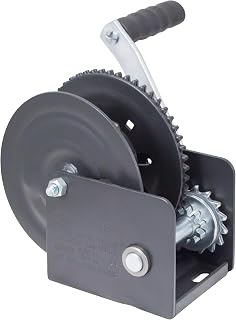
This US-made, rust-resistant winch provides 1200 lb capacity with automatic braking for secure holds during boat launching and trailer loading. It features a 7-inch ergonomic hand crank for reduced fatigue during extended use. Suitable for heavier duty marine and trailer tasks, including boat and ATV loading, with durable powder-coated protection for marine environments.
- Best for: small-to-mid sized boats and trailers where manual control is preferred
- Why selected: automatic brake and ergonomic crank combine safety with ease
- Caution: manual operation requires steady effort; verify load rating for your boat
Trailer Winch: Durable Hand Crank, 3500 lbs

This hand-crank winch uses heavy-duty carbon steel with a zinc-plated finish for weather resistance, offering up to 3500 pounds cranking capacity. Its robust construction supports lifting, loading, towing, and trailing heavy equipment, including boats. Best for: those needing a solid manual option with long-term durability.
- Best for: manual back-up or primary use where electric power is unavailable
- Why selected: strong steel build and corrosion resistance
- Caution: manual operation can be strenuous for larger boats
Reversible Electric Winch, Dual Operation

This versatile 6000 lb winch supports power-in, power-out, and freewheel operation with Dyneema fiber synthetic rope—lighter, safer, and more flexible than steel cable. It promises higher winching power than a standard 6000 lb model, and its dual-mode operation helps users adapt to different loading scenarios. Best for mid-to-large boats needing higher performance and safer rope technology.
- Best for: heavier loads and boats up to about 6000 lbs
- Why selected: dual operation and advanced rope material
- Caution: synthetic rope requires proper maintenance and inspection
Buying Guide: How To Choose The Right Boat Lift Power Winch
- Boat size and weight: Match the winch rating to your boat’s fully loaded weight, trailer ramp incline, and anticipated pulling distance.
- Power source and control: Electric winches with remotes offer convenience; manual crank backup is essential for failure scenarios.
- Rope vs cable: Dyneema synthetic rope is lighter and safer but requires proper storage and inspection; steel cables are durable but heavier and prone to kinking.
- Gear mechanism and braking: A multi-stage gear drive and automatic braking provide smoother operation and safer handling on ramps.
- Mounting and compatibility: Ensure the winch mount and frame fit your trailer and mounting location, with attention to stud spacing and bolt size.
- Weather durability: Marine-grade finishes and corrosion resistance extend service life in saltwater or humid environments.
- Reliability and redundancy: Consider a model with both electric and manual capabilities for reliability on water.
Frequently Asked Questions
- What size winch do I need for a 18 ft boat? The required winch size depends on the boat’s weight and trailer setup, but a 3500–6000 lb class is common for mid-size boats on standard trailers.
- Is a manual winch sufficient for heavy boats? A manual winch can be adequate for smaller boats or as a backup; electric winches reduce effort for heavier boats.
- What is Dyneema rope and should I use it? Dyneema is a high-strength synthetic rope that reduces weight and increases safety, but needs appropriate care and replacement intervals.
- Do electric winches require maintenance? Yes; check for wear, inspect wiring, and ensure the braking mechanism works before each season.
- Is waterproofing important for winches? Yes, especially in saltwater environments; choose models with marine-rated seals and corrosion-resistant finishes.
- Can I retrofit a manual winch to be electric? Some models allow accessory electric motors or dual-mode operation, but compatibility depends on the mounting and drive system.