When transporting or storing boats with outboard motors, a reliable transom saver is essential. This guide highlights five top options that balance support, durability, and flexibility. The best choice depends on your boat type, motor size, and trailer setup. Ideal buyers range from weekend boaters needing simple protection to anglers who regularly trailer with larger outboards. Below you’ll find concise comparisons, clear pros/cons, and practical buying tips to help you select the right transom saver for your needs.
| Product | Best For | Key Feature |
|---|---|---|
| JY PERFORMANCE Adjustable Boat Transom Saver | Most versatile for up to 100 HP | Adjustable 23″–35″, aluminum construction, composite head |
| Attwood Heavy Duty Transom Saver | Rugged, frequent trailer use | 24″–36″ adjustable, dual mounting options |
| KAZINSKI Boat Transom Saver | Composite head protection | 23″–35″, heavy-duty composite head, trailer-ready |
| Mangrove Products TS-Block Transom Saver | Saltwater use and no-scratch design | Single block wedge, universal fitment, high-density EPDM |
| PUIOCO Adjustable Boat Transom Saver | Flexibility with trailer setups | Five adjustable points, 23″–35″, includes roller/trailer mounts |
JY PERFORMANCE Adjustable Boat Transom Saver

The JY PERFORMANCE transom saver is built to adapt to a wide range of outboard motors. Its adjustable length from 23″ to 35″ makes it suitable for boats with modest to mid-range transom-to-ground clearances. The aluminum construction provides sturdy support for the motor’s weight, reducing transom stress during transit or storage. Best for boaters with up to 100 HP engines who want a straightforward, durable solution without specialized mounting hardware. A potential limitation is that extreme trailer configurations may require alternative mounting options to ensure perfect alignment.
- Best for: Boats with up to 100 HP engines needing adjustable, durable support
- Why selected: Combines adjustability with metal durability for frequent trailer use
- Limitation: May require careful setup to ensure optimal weight distribution on some trailers
Attwood Heavy Duty Transom Saver

The Attwood model emphasizes rugged, long-haul trailer protection. With 24″–36″ adjustable length and dual mounting options (roller and trailer brackets), it’s well-suited for boaters who transport frequently and need reliable load transfer to the trailer. The design aims to minimize transom fatigue and structural stress during travel. Choose this if you require a sturdy, transport-focused solution and value versatile mounting compatibility. A caveat is that it may be heavier than lighter-duty savers, so consider trailer capacity and handling.
- Best for: Frequent trailer transport with a broad range of boat sizes
- Why selected: Transfers motor weight to trailer, reducing bounce and stress
- Limitation: Heavier setup may require more robust trailer hardware
KAZINSKI Boat Transom Saver

KAZINSKI offers a transom saver with a heavy-duty composite head designed to minimize scratches on the engine while providing stable support. Its 23″–35″ adjustable range covers most trailering setups for motors up to 100 HP. The wedge-style design helps distribute weight evenly, and the composite head reduces potential corrosion. Best for boaters seeking a protective, low-scratch option with practical length flexibility. Note that it’s designed for trailer use and requires removal before launching.
- Best for: Motor protection with scratch-free contact on the engine
- Why selected: Composite head minimizes transom and skeg contact damage
- Limitation: Must be removed before launching for safety
Pextian Boat Transom Saver
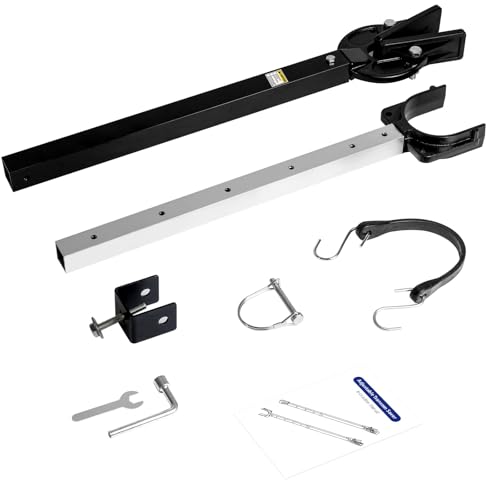
Pextian’s transom saver features a telescoping shaft and a composite head, designed to protect the motor and transom during transport. It operates across 23″ to 35″ and is suitable for motors up to 100 HP. This option is noted for its sturdy aluminum construction and included mounting hardware, making it a practical all-in-one solution. Choose this if you want a complete kit with adjustable length and straightforward installation. A limitation is the reliance on proper alignment with your trailer brackets for optimal support.
- Best for: Those who prefer a complete kit with adjustable length
- Why selected: Durable aluminum build and integrated mounting components
- Limitation: Requires correct alignment with trailer hardware
Buying Guide
- Motor horsepower compatibility: Most transom savers in this comparison target motors up to 100 HP. If your engine exceeds that, seek a higher-capacity model or one explicitly rated for larger horsepower.
- Length adjustability: Look for a 23″–35″ range to fit common trailer setups and keep weight centered over the trailer axle.
- Head material: Composite heads reduce scratching and corrosion; metal heads deliver maximum durability but can scratch engines if misaligned.
- Mounting options: Dual roller and trailer-mount compatibility offer versatility for different trailers. Ensure mounting hardware matches your trailer type.
- Protection vs. practicality: Consider whether you prioritize engine protection (scratch resistance, tilt-cap compatibility) or maximum weight transfer to the trailer for stability on the road.
- Maintenance: Aluminum and composite materials are generally low-maintenance, but inspect fittings and bolts before each trip.
Frequently Asked Questions
- What is a boat transom saver?
– A device that supports the outboard motor and transfers its weight to the trailer, protecting the transom during transport and storage. - How do I choose the right length?
– Choose 23″–35″ to match your typical ground clearance and trailer setup; longer is not always better if it alters weight distribution. - Can I use a transom saver with any trailer?
– Look for models with adjustable length and compatible mounting options; confirm roller or trailer brackets match your trailer hardware. - Is a composite head better than a metal head?
– Composite heads reduce scratching and corrosion, which is beneficial for longevity and engine finish, especially in salty environments. - Do I need to remove the transom saver before launching?
– Some models require removal if mounted for trailer use, so follow the manufacturer’s guidance to prevent interference during launch.