Find the right thru-hull fittings for your boat with clear choices across materials, sizes, and installation needs. This guide helps boaters choose fittings that minimize leaks and maximize durability. Best for: boat owners upgrading bilge, livewell, or water intake connections; sailors needing corrosion-resistant hardware; and DIY installers seeking straightforward options. The following table highlights key specs to compare at a glance.
| Product | Size / Fit | Material | Best For |
|---|---|---|---|
| SEAFLO Thru Hull Fittings (1″) | 1″ hose | Plastic (White) | Standard bilge and transom use |
| Boltigen Thru Hull Fittings (3/4″ ID) | 3/4″ hose | 316 Stainless Steel | Durable, corrosion-resistant installations |
| YOQVQOY 2Pcs Thru Hull Fitting (1″) | 1″ hoses | Corrosion-resistant material | Secure connections, general marine use |
| Seachoice Extra Long Thru-Hull Fitting (1-1/8″ ID) | 1-1/8″ hose | High-impact plastic | Thick transoms or deep threads |
| SEAFLO ¾” Thru Hull Fitting (Polypropylene) | 3/4″ hose | Polypropylene | Overwaterline drains and bilge ports |
Note: Each product supports different hull thickness, hose sizes, and exposure environments. Consult your vessel’s plumbing layout before ordering to ensure compatibility with existing hoses and mounting allowances.
SEAFLO Thru Hull Fittings (1″)

Features include a four-year warranty and a white color suitable for standard white hulls. Sold for 1″ hose connections, this fittings line emphasizes reliability for basic bilge, livewell, and transom drain applications. Best for boaters seeking a straightforward, low-cost through-hull option with durable service life. A potential limitation is fewer size and material options if your system requires non-plastic components or off-standard hose diameters.
Boltigen Thru Hull Fittings for Boats (3/4″ ID)

Best for 3/4″ internal diameter hose connections, with 316 stainless steel offering high corrosion resistance. Suitable for water intakes, bilge pumps, and livewell plumbing. Choose this if you need a durable metal option; avoid if your system requires polypropylene or plastic fittings or if you operate in environments with extremely tight tolerances for barb sizes.
YOQVQOY 2Pcs Thru Hull Fitting (1″)
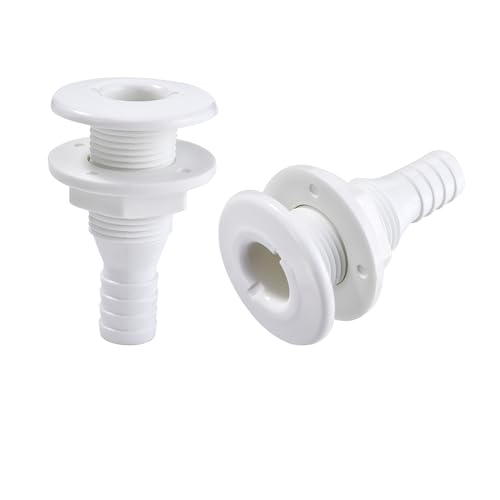
Designed for 1″ hoses, this marine-through hull connector offers corrosion-resistant construction and secure hose connections. It is a practical choice for standard transom drains, bilge outlets, or livewell lines. Best for marine users needing a simple, universal fit; better for those who want a compact profile. A limitation might be availability in other sizes if your system evolves beyond 1″ hose sizing.
Seachoice Extra Long Thru-Hull Fitting (1-1/8 in ID)

Best for installations requiring extra thread length or thicker transoms; designed with a long flange to provide robust mounting in space-constrained areas. Made from molded high-impact plastic to resist rust. Choose this if your hull walls are thick or you need a longer mounting thread; avoid if you require metal corrosion resistance or a shorter profile.
SEAFLO ¾” Thru Hull Fitting (White, 1-Pack)

Polypropylene construction makes this a corrosion-resistant option for upper-surface drains, bilge ports, and livewell piping. Best for environments where metal corrosion risk is a concern and where UV exposure is moderate. Limitation: polypropylene may not be as robust as stainless steel in heavy-duty, long-term use.
Seachoice 90-Degree Angled Thru-Hull Connector (¾ in)
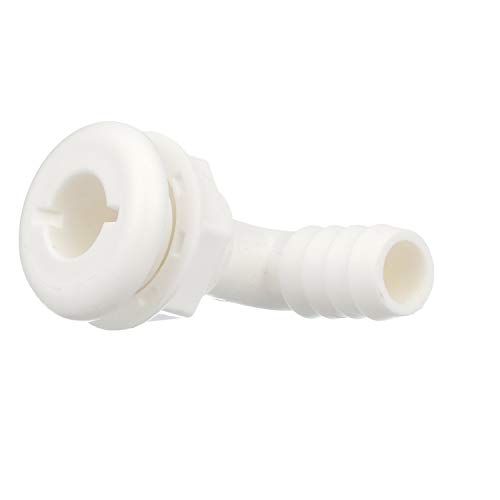
Best for tight installations where a 90-degree turn is needed to connect hoses to the through-hull port. Fits ¾” hose with a 1-1/2″ flange. This angled design is helpful in crowded engine bays or restricted transoms. Caution: ensure adequate clearance around the flange to avoid contact with hull structure.
YOQVQOY 2Pcs Thru Hull Fitting (3/4″)
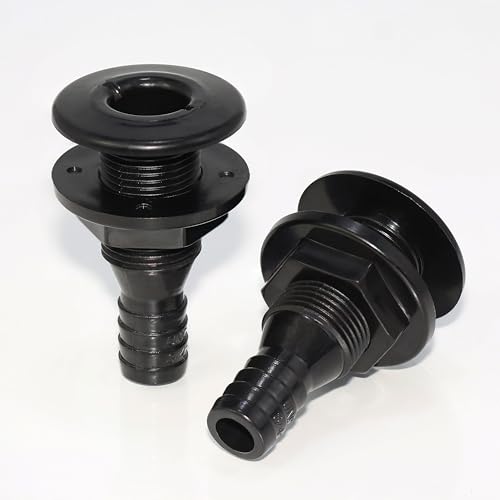
3/4″ hose adaptability makes this suitable for bilge lines, pump connections, and small livewell circuits. Best for smaller craft or sections where space is limited. A potential limitation is compatibility with larger hoses or fittings if your system expands in the future.
NRC&XRC Marine Grade Stainless Steel 3/8″ ID Thru-Hull

Best for heavy-duty marine plumbing with a 3/8″ ID barb and stainless steel construction. The included gasket and gasket-friendly flange ensure a secure seal. Choose this for smaller-diameter feeds in high-stress environments where metal strength is a priority; be mindful of gasket compatibility and the need for proper installation torque to avoid leaks.
Buying Guide
- Material matters: Stainless steel offers superior corrosion resistance; plastics like polypropylene minimize weight and cost but may be less durable in aggressive environments.
- Size compatibility: Confirm hose inner diameter (ID) and barb dimensions match your current hose kit to prevent leaks.
- Hull thickness: Some fittings are designed for thick transoms; others fit standard hulls. Check thread length and mounting flange size.
- Application focus: Bilge drains, livewell plumbing, water intakes, and overboard discharge each have different fit requirements. Choose based on the intended use.
- Installation considerations: Look for compatibility with existing hose clamps, gaskets, and available space behind the hull.
FAQ
- What size thru-hull should I choose for a standard bilge line?
– A common choice is 3/4″ or 1″ hose, depending on your pump and hose availability. - Are stainless steel thru-hull fittings worth it?
– They resist corrosion in saltwater environments and are preferred for long-term durability, especially in high-load areas. - Can I use plastic fittings on a livewell line?
– Yes, plastic fittings are common for non-critical or above-waterline connections, but verify UV exposure and chemical compatibility. - Should I buy one 90-degree angled fitting or a straight fitting?
– Use angled fittings where space is tight to prevent hose kinks; use straight fittings for simple, direct runs. - How do I avoid leaks at the through-hull connection?
– Ensure proper hose sizing, secure clamps, clean mating surfaces, and correct gasket placement or flange seating during installation.