For boat owners and RV travelers, a reliable water pressure regulator protects plumbing, hoses, and appliances from damaging high city water pressure. This guide highlights five top options suited for marine, RV, and camper setups. Each product is evaluated for compatibility, ease of use, and suitability for common user scenarios—from casual weekend boaters to full‑time RV travelers. The following table provides a quick reference to who each regulator best serves.
| Product | Best For | Key Benefit |
|---|---|---|
| Shurflo 183-029-14 | Boaters with wall‑mounted entry | Chrome finish and durable wall‑mount design |
| PENTAIR SHURFLO 183-029-18 | Compact setups needing discreet regulator | Gel white finish, lightweight |
| Camco 40055 | Camper/RV with hoses and plumbing | 40–50 PSI automatic protection |
| SEAFLO Wall Mount | Compact marine installations | White, wall‑mounted inlet |
| RVGUARD Chrome Inlet | RV/trailer with built‑in check valve | Built‑in check valve, 3/4″ hose thread |
Shurflo by Pentair Pressure Reducing City Water Entry

The Shurflo 183-029-14 is a wall‑mount, chrome‑finished regulator designed for city water entry on boats or compact setups. The threaded inlet and outlet provide reliable, universal connections for marine plumbing. This regulator is best for boaters who want a durable, low‑profile unit that blends with chrome fixtures and stays securely fixed to a wall. The design prioritizes steady pressure delivery with straightforward installation, making it a good fit for vessels where space is at a premium. A potential limitation is the absence of explicit PSI range details in the listing, which may require confirmation for specific water pressure targets.
Best for: Boats requiring a wall‑mounted, chrome solution that uses standard threaded fittings. The solid build suits decks or cabins with exposed plumbing.
Why selected: High‑quality brand, simple interface, and reliable wall‑mount installation for compact spaces.
Caution: Check the exact PSI range before purchase to ensure it meets your system’s needs, as the listing does not specify it.
PENTAIR SHURFLO 183-029-18 Pressure Regulator

This SHURFLO unit features a wall‑mount design with a gel white finish. It’s positioned as a compact regulator suitable for boat or RV water systems that favor a subtle, less conspicuous appearance. While the image highlights its form, the product listing provides limited technical details beyond its general purpose. This makes it a solid choice for buyers who want a dependable regulator with a neutral aesthetic that integrates well with standard marine installations. A key caution is that the “Great Product” label offers minimal technical insight, so confirm PSI range and flow capacity before buying.
Best for: Small to mid‑size setups where aesthetics and compact form matter.
Why selected: Simple, unobtrusive regulator that fits standard wall installations.
Caution: Limited technical specs in the listing; verify PSI range and inlet/outlet dimensions for your system.
Camco Brass Marine/RV Water Pressure Regulator
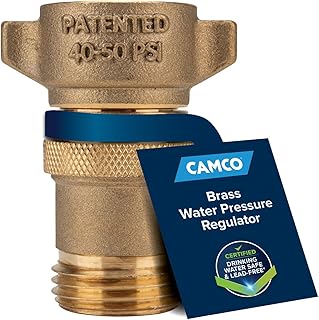
The Camco 40055 regulator is a brass, RV‑friendly unit designed to reduce high city water pressure to a safe, consistent 40–50 PSI. It includes automatic protection features via PSI Guard, which helps guard against pressure spikes, and ensures safe operation for RV plumbing and hoses. This model is particularly well‑suited for campers and boaters who want reliable protection without complicated setup. A potential limitation is that the maximum incoming pressure listed (125 PSI) means you should verify your water source doesn’t exceed this to avoid misalignment with regulator performance.
Best for: RV and boating setups needing guaranteed protection and drinking‑water safety.
Why selected: Brass construction, built‑in protection, and clear target pressure range for reliable performance.
Caution: Ensure your incoming pressure does not exceed 125 PSI to prevent regulator inefficiency.
SEAFLO Wall Mount Pressure Regulated Inlet

SEAFLO’s wall‑mount inlet offers a white, compact option for marine water systems. While details on PSI range aren’t enumerated in the listing, the wall‑mounted approach helps conserve space on boats or within slim compartments. This regulator is best for owners who want a straightforward, unobtrusive unit that can be mounted along a cabin wall or near a water intake. The limitation here is the lack of explicit performance specifications in the product text, so buyers should confirm pressure range and compatibility with their hoses and fixtures before purchasing.
Best for: Small boats or cabins requiring a clean, space‑saving regulator.
Why selected: Lightweight, wall‑mounted design with simple installation.
Caution: Verify PSI range and overall compatibility with your plumbing system before buying.
RVGUARD RV City Water Inlet with Regulator

The RVGUARD unit pairs a chrome wall‑mount water inlet with a built‑in regulator and check valve. It uses a standard 3/4″ garden hose thread for connections, and includes a built‑in screen to filter out impurities. The built‑in check valve helps prevent backflow, and the regulator protects your RV water system from hot or pressure surges. This model is ideal for RV travelers and marine setups that want a ready‑to‑install solution with integrated filtration and backflow protection. A drawback is that some users may prefer a regulator without a built‑in check valve if their system already includes one elsewhere.
Best for: RVs or campers needing an integrated inlet, regulator, and backflow protection in one unit.
Why selected: All‑in‑one design with compatibility for standard hose fittings and a filtration feature.
Caution: If you already have a separate check valve, consider compatibility to avoid redundant components.
Buying Guide: How to Choose the Right Boat Water Pressure Regulator
What pressure range do you need? Most marine and RV setups benefit from regulators that provide a safe, steady 40–50 PSI. Confirm the incoming pressure from your water source so the regulator can perform within its rated range.
What connections do you require? Look for threaded inlets/outlets or 3/4″ garden hose threads that match your hoses and water lines. A built‑in check valve is useful for backflow prevention, especially when your system switches between city water and tank supply.
Is space a constraint? If you have a tight mounting area, a wall‑mount or compact regulator can simplify installation without cluttering the space. Finishes like chrome or gel white help it blend with existing hardware on boats or RV interiors.
Material quality matters. Brass regulators are durable and long‑lasting, while chrome or white finishes offer corrosion resistance and a low‑maintenance appearance. Ensure the regulator is built to resist moisture and salt exposure typical of marine environments.
Maintenance and replacement. Some units include built‑in screens to filter debris. Consider whether you want additional filtration or prefer a simple regulator with minimal components. Plan for periodic checks of inlet screens, seals, and fittings to prevent leaks.
Summary tip: For most boaters and RV users, choose a regulator that clearly states a PSI range around 40–50 PSI, uses standard fittings, and includes a durable mounting option. If you need an all‑in‑one solution, the RVGUARD model provides an integrated inlet, regulator, and check valve in one unit.
FAQ
- What PSI should a boat water regulator deliver? Aim for a regulator that maintains about 40–50 PSI for typical hoses and fixtures. This range protects faucets, hoses, and appliances from pressure damage.
- Do I need a built‑in check valve? A check valve prevents backflow, which can be beneficial when a system can be exposed to tank fill conditions or when another source might backflow into your fresh water line.
- Can I use any regulator for RV or marine use? Not all regulators are designed for salt spray or continuous outdoor exposure. Choose units with corrosion‑resistant finishes and marine‑grade materials when possible.
- How do I know if my regulator is compatible with standard hoses? Look for standard 3/4″ garden hose threads or 1/2″ NPT/IN ports, and verify with the product’s listed inlet/outlet dimensions.
- Is it okay to install a regulator on the city water entry? Yes, a regulator is commonly installed at the entry point to normalize pressure before it reaches hoses and appliances, reducing wear and leaks.
- What maintenance is required for marine regulators? Regularly inspect for leaks, clean inlet screens, and confirm fittings remain tight. Replace any worn seals and ensure the device remains free of corrosion.