If you shop for body filler for fiberglass boats, you want options that bond well to fiberglass, resist water, and cure to a durable, sandable finish. This guide highlights five reliable fillers suited for hulls, decks, and stringers. It explains who each product is best for, plus practical pros and limits to help you pick the right one for your repair goals. The following table summarizes key details to compare quickly.
| Product | Best For | Approximate Working Time | Key Benefit |
|---|---|---|---|
| 3M Bondo Short Strand Fiberglass Reinforced Filler | Small holes and dents on fiberglass boats | Short | High strength from fiberglass strands; water resistant |
| J-B Weld Quart Fiberglass Short-Strained Filler | Cracks up to ½ inch on multiple surfaces | Short | Two-component, durable waterproof repairs |
| TotalBoat Polyester Structural Repair Putty Quart | Structural bonding and large repairs on boats | Moderate | Pre-thickened, long strand glass for high strength |
| Bondo Hair Long Strand Fiberglass Reinforced Filler | Large rebuilds without backing strips | Moderate | Double-strength fiberglass reinforcement |
| Evercoat Body Shop Pro-Grade Reinforced Filler | Rust spots, holes, and weld areas on diverse surfaces | Moderate | Versatile, easy mix, reinforced formula |
3M Bondo Short Strand Fiberglass Reinforced Filler

Best for repairing small holes up to ½ inch on fiberglass without buying backing strips. It uses fiberglass strands to increase strength, creating a solid foundation for subsequent dents or rust-out repairs. This product is waterproof once cured, making it suitable for exterior hull work. Choose this if you need a sturdy, quick-skin patch for minor hull imperfections and want a simple, single-component application. Caution: working time is limited; blend and apply promptly for best results.
J-B Weld Quart Fiberglass Short-Strained Filler

Best for multi-surface repairs, including fiberglass, composites, metal, and concrete. It’s a two-component system that cures into a waterproof, durable repair and provides short-strand reinforcement for stronger bonds. This filler is well suited for thicker repairs and areas where you need more structural integrity. Use this if you want a robust, two-part solution. Limitation: handling and curing require proper mixing ratios to achieve optimal strength.
TotalBoat Polyester Structural Repair Putty Quart

Best for high-strength structural filling and bonding on fiberglass, wood, metal, and laminates. The long strand glass reinforcement enhances elasticity and impact resistance, making it ideal for bonding decks, stringers, and liners to hulls. Choose this for more demanding repairs where you need a stiff, durable fill that resists sagging. Working time is governed by catalyst levels (MEKP); follow the manufacturer’s mix guidance to control cure speed.
Bondo Hair Long Strand Fiberglass Reinforced Filler

Best for rebuilds where you need substantial material with extra strength. Long fiberglass strands deliver twice the strength of standard body filler and can fill holes up to 1 inch wide without backing strips. This versatile filler works across fiberglass, metal, and wood. Caution: handling can be messier due to long fibers; ensure proper ventilation and follow mixing instructions to avoid premature hardening.
Evercoat Body Shop Pro-Grade Reinforced Filler
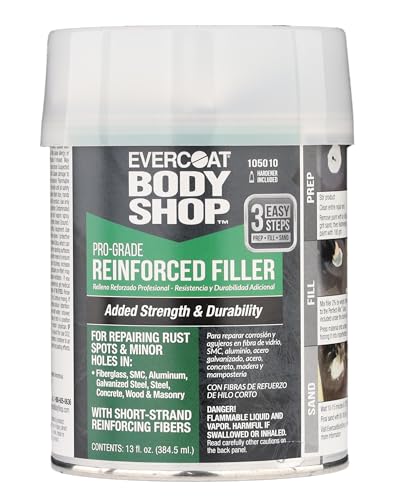
Best for rust spots and minor holes across fiberglass, steel, aluminum, concrete, wood, and masonry. This reinforced filler provides durable, easy-to-mix performance and a smooth finish for contouring and sanding. It’s a solid choice when you need a versatile, general-purpose repair product on various materials. Limitation: may require multiple applications for large, deep repairs to maintain uniform strength.
Buying Guide: Key Considerations For Boat Fiberglass Repairs
- Surface compatibility: Ensure the filler adheres well to fiberglass and is compatible with metal or wood if mixed repairs are required.
- Reinforcement level: Short-strand vs long-strand fiberglass reinforcement affects strength and application behavior. Long strands deliver higher strength, but may be trickier to sand evenly.
- Working time: Catalyzed systems require precise mixing. Short working times demand quick application, while longer times allow more shaping but require careful timing to prevent runs.
- Water resistance: For hull and exterior repairs, choose water- and marine-grade formulations that resist moisture after curing.
- Application size: Consider whether you need a small repair patch or a larger structural fill. Some products are better for holes up to ½ inch, others for bigger rebuilds.
- Ease of finishing: Look for fillers that sand smoothly and take filler-friendly coatings well, to reduce prep time before priming and painting.
- Safety and handling: Follow product instructions for ventilation, curing, and protective gear. Some fillers produce strong odors or dust during sanding.
Frequently Asked Questions
- What type of filler is best for small fiberglass holes?
Short-strand fiberglass reinforced fillers like the Bondo Short Strand are ideal for small holes up to ½ inch, providing strong adhesion without backing material.
- Can I use regular body filler on a fiberglass hull?
For marine repairs, use fiberglass-reinforced or marine-grade fillers to ensure waterproofing and better bonding to fiberglass substrates.
- What is the difference between one-component and two-component fillers?
One-component fillers cure with a moisture environment and are simpler to use, while two-component systems require a hardener or catalyst and offer stronger, more durable repairs.
- How do I prevent sagging on horizontal surfaces?
Choose a putty with appropriate viscosity and avoid over-thinning. Apply in thin layers and let each layer cure before adding more material.
- Are these fillers safe for use on aluminum or wood in addition to fiberglass?
Many of these products are versatile; check the manufacturer’s guidelines to confirm suitability for aluminum or wood in your specific repair.
- How long should I wait before sanding after application?
The cure time varies by product and catalyst level; follow the product’s instructions to determine when the surface is ready to sand.