Answering the common buyer question, these bow anchor rollers are designed to simplify deploying and retrieving anchors, increase bow space efficiency, and resist corrosion in saltwater and freshwater. This guide highlights five solid options suited for anglers, cruisers, and hobby boaters who want smoother self-launching and better hull protection. Each pick has a clear strength: space-saving compact designs for small bows, or longer models that handle heavier anchors. The table below summarizes who each product is best for and why.
| Product | Best For | Why It Stands Out |
|---|---|---|
| FUCNEN Bow Anchor Roller (16.5″) | Small to mid-sized boats | Dual roller design; 316 stainless; fits 11–22 lb anchors |
| Deck Man Bow Anchor Roller (17″) | Freshwater and saltwater anglers | 316 stainless; good for 11–22 lb anchors |
| Pebbly Beach Bow Anchor Roller (6.5″) | Compact bow spaces on small boats | Rubber roller protection; up to 35 lb anchors |
| Threlaco 23″ Bow Anchor Roller | Medium to large boats | Long single roller; wide compatibility |
| Hoffen 15-1/4″ Bow Anchor Roller | Saltwater yachts and cruisers | Electro-polished stainless; supports standard bows |
FUCNEN Bow Anchor Roller With Anchor Lock

Best for: small to mid-sized boats needing a compact dual-roller system. This 16.5″ model is built with marine-grade 316 stainless steel for corrosion resistance in both salt and freshwater. It features a mirror-polished finish and a self-launching dual-roller design compatible with fluke, delta, fortress, and Danforth anchors. The universal fit covers 11–22 lb anchors and most bow designs, making it ideal for center console boats and light cruisers. A potential limitation is that longer, heavier anchors may require the larger 22–44 lb models for optimal balance.
Deck Man Bow Anchor Roller 316 Stainless Steel

Best for: boats that operate in mixed waters and need a robust 17″ option. The Deck Man roller uses marine-grade 316 stainless steel with a mirror-like polish and is designed for 11–22 lb anchors. It provides a sturdy self-launching mechanism and fits most bow configurations, including wing and delta anchors. A practical caveat is its longer length; ensure your bow space can accommodate the 17″ footprint without obstructing winches or rails.
Pebbly Beach Bow Anchor Roller (6.5″)

Best for: small to mid-sized vessels with tight bow space, such as fishing boats and yachts under 30 feet. This 6.5″ unit uses marine-grade 316 stainless steel with a rubber roller for smoother operation and hull protection. It’s rated for anchors up to 35 lbs, and its rubber contact reduces scratches on hull paint. A limitation to consider is that its compact size may not suit larger anchors or heavy-duty launch sequences on bigger boats.
Threlaco 316 Stainless Steel Bow Anchor Roller

Best for: boats needing a longer single-roller solution for yachts, fishing boats, canoes, and kayaks. The 23″ bow roller is made from 316 marine-grade stainless steel and is designed to simplify lowering and retrieving anchors while protecting the hull from chain wear. Fit compatibility is broad, but the length means it’s essential to verify bow clearance and mounting space before installation. It’s a good pick when a single, robust roller is preferred over dual-roller configurations.
Hoffen 316 Stainless Steel Bow Anchor Roller
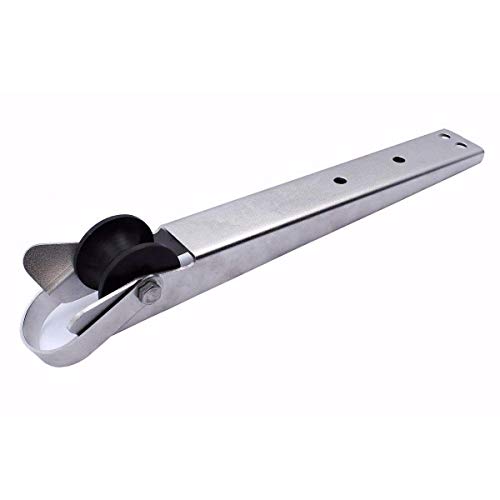
Best for: saltwater cruisers needing a compact, durable bow roller. This 15-1/4″ unit uses polished stainless steel to resist corrosion and offers a compact footprint suitable for most bows. It supports easy lowering and retrieval of anchors and complements setups with optional chain stoppers or tensioners to minimize chain wear. A potential drawback is that its size is mid-range; ensure your anchor and bow layout align with the roller’s dimensions for smooth operation.
Buying Guide: Bow Rollers For Anchors
What matters most when choosing a bow roller?
Material: Look for marine-grade stainless steel (316) for saltwater durability and corrosion resistance. A mirror-polished finish helps reduce drag and wear on anchor chains.
How do I know the right size?
Consider the anchor type and weight you regularly use. Typical ranges are 11–22 lbs for smaller boats and 22–44 lbs for larger bows. Measure bow space and ensure the roller’s length fits without obstructing hatches or railing.
What design features help performance?
- Dual rollers for smoother self-launching and retrieval
- Single long rollers for a broader working area
- Rubber or cushioned rollers to protect hull paint and chain
Which scenarios favor a compact vs. long roller?
Compact rollers on smaller bows save space and reduce weight, making them ideal for kayaks, small cruisers, and center console boats. Long rollers ease handling of heavier anchors on larger vessels and reduce line wear during operation.
Installation considerations
Verify mounting space on the bow and ensure compatibility with anchor styles (fluke, delta, fortress, danforth, wing). Some models benefit from additional accessories like chain stoppers to limit chain movement and further protect the hull.
Maintenance tips
Rinse after saltwater use to prevent corrosion, then dry and apply a corrosion inhibitor if appropriate. Inspect mounting bolts regularly for tightness and signs of wear, and replace rubber components if they show cracking or excessive wear.
Summary of top picks by scenario
- Best for compact bow spaces: Pebbly Beach 6.5″ unit
- Best for mid-sized boats needing dual rollers: FUCNEN 16.5″
- Best all-around for typical 11–22 lb anchors: Deck Man 17″ or Threlaco 23″
- Best for saltwater cruisers needing a durable, long-term option: Hoffen 15-1/4″
Frequently Asked Questions
- What anchor weights do these rollers support? Most models here support typical 11–22 lb anchors, with larger options up to 44 lbs on select models.
- Are these easy to install myself? Yes, most bow rollers are designed for standard bow mounting and can be installed with basic hand tools, following manufacturer guidance.
- Will a dual-roller system always perform better? Dual rollers can provide smoother deployment and quieter operation, but single-roller designs can be sufficient for many boats and save space.
- Do I need a rubber roller? Rubber helps prevent scratches on the hull and chain wear, but some metal-on-metal setups may require careful handling.
- How do I determine compatibility with my anchor type? Check the listed compatible anchor types (fluke, delta, fortress, danforth) and compare with your usual anchors before purchasing.
- What maintenance is required? Rinse after use, inspect mounting hardware, and replace worn parts to maintain smooth operation.