If you’re shopping for a carbon monoxide detector for a boat, choose devices designed for portability, battery power, and marine environments. The best options provide reliable electrochemical sensing, loud alarms, and simple installation with no wiring. They’re ideal for boaters who need safety on small vessels, rental boats, or when staying aboard in marinas. Below are five top picks that balance reliability, portability, and ease of use for offshore and inland boating scenarios.
| Product | Best For | Key Benefit |
|---|---|---|
| Kidde Carbon Monoxide Detector, AA Battery Powered (Portable) | Boaters needing travel-ready CO alert | No-wiring, runs on AA batteries during power outages |
| MTI Industries 62-541-MARINE-WT Detector Marine Co Alarm White | Marine-specific alarm | Marine-certified form factor for boats |
| First Alert CO710 Carbon Monoxide Detector with 10-Year Battery | Long-term boat safety | 10-year battery, digital display |
| MTI Industries 62-542-R-MARINE-WH Detector Marine Co Alarm White | Compact marine CO alarm | Marine-specific design with marine part number |
| Kidde Carbon Monoxide Detector, AA Battery Powered, Travel or Home (COB) | Travel-friendly CO detector | LED indicators, portable, battery powered |
Kidde Carbon Monoxide Detector, AA Battery Powered (Portable)
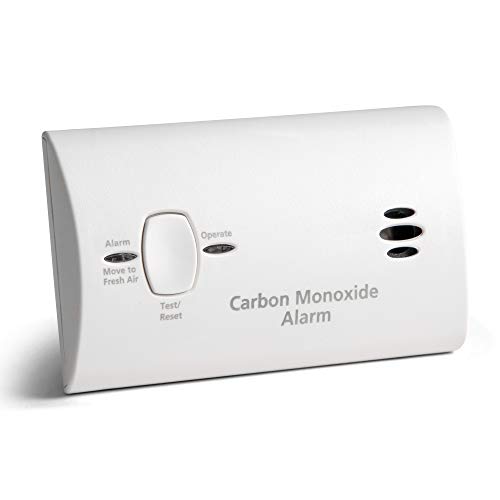
Product name: Kidde Carbon Monoxide Detector, AA Battery Powered, Portable for Travel or Home, 85 dB Alarm, LED Status Indicators, 3rd Edition
Brand: Kidde
Features: Electrochemical sensor detects CO; no wiring required; powers during outages with 2 AA batteries; wall-mount or tabletop placement; green LED shows power, 85 dB alarm with red LED signals CO presence
Best for: Boaters who want a simple, travel-friendly CO detector that can be used on shore power or battery power, and easily stowed in cabins or bunks.
Why selected: It offers reliable electrochemical sensing in a compact, battery-powered form factor, with a clear two-color indicator and audible alert suitable for small cabins.
Caution: Battery life depends on usage; replace batteries if the device does not function after a power outage test.
MTI Industries 62-541-MARINE-WT Marine Co Alarm

Product name: MTI Industries 62-541-MARINE-WT Detector Marine Co Alarm White
Brand: Safe T Alert / MTI Industries
Features: Marine CO alarm; part number 62-541-MARINE-WT; white housing; designed specifically for marine environments
Best for: Boat owners seeking a marine-certified CO alarm with a dedicated marine form factor that fits compact cabins or helm areas.
Why selected: Its marine-focused design can reduce false alarms and fit traditional boat panel layouts, improving reliability on water.
Caution: Information available is basic; check compatibility with your boat’s ventilation and gas sources before installation.
MTI Industries 62-542-R-MARINE-WH Marine Co Alarm
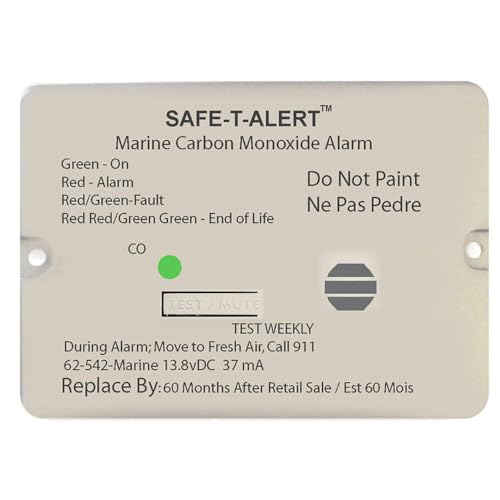
Product name: MTI Industries 62-542-R-MARINE-WH Detector Marine Co Alarm White
Brand: Safe T Alert
Features: Marine CO alarm; part number 62-542-R-MARINE-WH; white housing
Best for: Mariners who prefer a white, discreet CO alarm for navigation stations or living quarters on board.
Why selected: Like other MTI marine models, it emphasizes marine-specific use and compact fitment for boats and RVs at sea.
Warning: Ensure it is installed in a location with adequate air exchange to avoid nuisance alarms in tightly sealed cabins.
First Alert CO400 Carbon Monoxide Detector
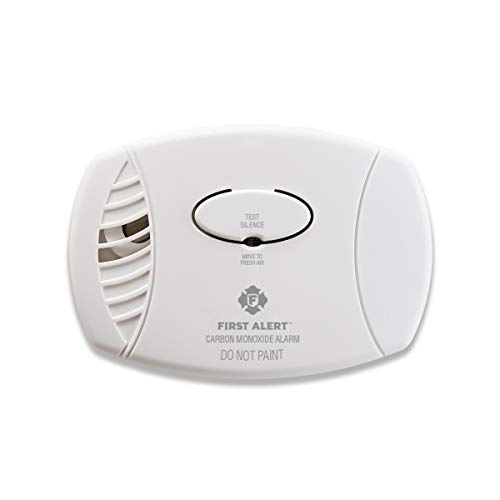
Product name: First Alert CO400 Carbon Monoxide (CO) Detector, Battery Operated Alarm, 1-Pack
Brand: First Alert
Features: Battery-powered CO detector; continuous monitoring during power failures; electrochemical CO sensor; 85 dB alarm
Best for: Boat owners seeking a straightforward, battery-powered CO alarm with reliable sensing and an audible alert for small cabins.
Why selected: Its electrochemical sensor provides accurate CO detection, and the replaceable battery design supports long-term use on boats without wiring.
Caution: The unit uses replaceable batteries; plan periodic battery checks to maintain continuous protection.
Kidde COB Travel-Ready AA CO Alarm

Product name: Kidde Carbon Monoxide Detector, AA Battery Powered, Portable for Travel or Home, 85 dB Alarm, 5th Edition, COB
Brand: Kidde
Features: CO detector with loud 85 dB alarm; LED warning light; test/hush button; wall-mount or tabletop; powered by two AA batteries; travel-friendly
Best for: Boat travelers and temporary stays—hotels, rentals, or cabins—where a compact, battery-powered detector is convenient.
Why selected: Combines portability with clear indicators and a robust alarm for on-the-go safety on boats and shore leaves.
Caution: May require periodic battery changes for consistent protection during longer charters or trips.
Kidde COBD CO Alarm with Digital Backlit Display

Product name: Kidde Carbon Monoxide Detector, AA Battery Powered, Digital Backlit Display, Portable for Travel or Home, LED Status Indicators, 85 dB Alarm, COBD
Brand: Kidde
Features: 85 dB alarm; backlit digital display shows status and operation; test/hush button; wall-mount or tabletop; AA batteries; travel-friendly
Best for: Boat owners needing a digital-readout CO detector that is easy to read in dim cabins or during night watch, with portable usage in hotels or on boats.
Why selected: The digital display provides quick CO level readouts, aiding quick interpretation in dynamic marine environments.
Caution: Like other portable detectors, battery health is crucial; test battery function regularly and replace as needed.
Buying Guide: Choosing The Right Marine CO Detector
- Power source: Battery-powered detectors work well on boats without reliable shore power. Look for AA or 9V options and confirm how long the battery lasts between replacements.
- Sensor type: Electrochemical sensors are standard for CO detection and generally offer better accuracy and stability in marine settings than some older sensor types.
- Marine suitability: For boats, select devices marketed for marine use or compact form factors that fit cabins, helm areas, and tight spaces without obstructing movement.
- Alarm features: An audible alarm (typically 85 dB or higher) plus visual indicators helps ensure alerts are noticed in noisy engine rooms or crowded cabin spaces.
- Display: A digital or backlit display helps quick CO level assessment, especially during night watches or low-light conditions aboard.
- Mounting options: Wall-mount or tabletop placement options increase placement flexibility in cabins, galleys, or lockers on boats.
- Maintenance: Check replacement intervals for both sensors and batteries. Some units offer 10-year sealed batteries or quick tests to verify operation.
FAQ
- Are marine CO detectors different from home models? Marine models are often more compact and designed for vibration and movement with marine-grade housings, though many home models are portable and suitable for boats when battery-powered.
- How long do boat CO detectors last on batteries? It depends on usage and battery type; many battery-powered models rely on AA or similar batteries with varying runtime. Regular testing is advised.
- Can I use a home CO detector on a boat? Yes, if it is battery-powered and portable, you can use it in cabins aboard a boat. Ensure it’s installed away from direct exhaust or airflow obstructions.
- What should I do if CO is detected on a boat? Evacuate to fresh air, turn off potential CO sources if safe, and replace or service the detector after the alarm. Have the boat inspected by a professional.
- Is a 10-year battery a good option for boats? Ten-year battery models reduce maintenance, but verify that the detector meets your boat’s safety standards and that you have a plan for battery replacement if needed.
- How many CO detectors should a boat have? At minimum, place one near sleeping areas and one near the galley or engine room where CO sources are more likely to occur; consider additional units for larger boats.