Answer: For aluminum boats, select a clear coat that bonds well to metal, resists saltwater exposure, and provides durable UV protection. The following products are among the most suitable options for different needs, from fast-drying sprays to robust epoxy primers. This guide helps buyers choose the right coating based on surface type, application, and maintenance goals.
The Top Picks At A Glance
| Product | Best For | Notes |
|---|---|---|
| STAR BRITE Ultimate Aluminum Protectant | Polished & anodized aluminum, anti-salt buildup | Quick protection with UV shielding |
| KBS Coatings 8114 Diamond Finish Clear | Direct-to-metal and over coatings | Very tough, high-gloss finish |
| Toon-Brite P100QT Protective Clear-Coat | Aluminum, fiberglass, and metals | Economical quart size, UV protection |
| STAR BRITE Ceramics Metal Protect | Pontoons, towers, trailers, raw or polished metals | SiO2 ceramic barrier for long protection |
| TotalBoat Aluminum Boat Barrier Coat | Aluminum hulls and pontoons | Two-component epoxy primer for corrosion defense |
STAR BRITE Ultimate Aluminum Protectant

Best for: Polished and anodized aluminum surfaces that need a rapid shine plus a protective barrier. The product uses polymers to shed salt, dirt, and UV rays, making it suitable for towers and outriggers that face harsh marine exposure. It also works on other metals like stainless steel and chrome, providing broad utility for marine setups.
Why selected: Quick protection with an instant shine helps maintain appearance and reduces cleanliness effort after saltwater use. The protective barrier helps minimize corrosion and pitting over time on metal surfaces frequently exposed to harsh environments.
Caution: Not all coatings are designed for heavy-duty underwater use; reapply as needed to maintain a protective layer in high-would wear areas.
KBS Coatings 8114 Diamond Finish Clear

Best for: Direct-to-metal use on steel or aluminum surfaces, including over painted surfaces with minimal prep. Provides high gloss and tough protection with a finish that resists abrasion and environmental damage.
Why selected: DiamondFinish Clear is designed to form a very hard surface that protects against corrosion and adds durability to metal surfaces exposed to salt spray and weathering. It is a strong option when a long-lasting, glossy clear coat is desired.
Caution: Requires proper surface prep per product guidance to maximize adhesion and durability.
Quicksilver 802878Q53 Clear Coat Enamel Spray Paint

Best for: Finishing after applying a base color on Mercury, Mariner, or Force outboard cowls or similar components. This spray is formulated to align with Mercury Marine specifications for performance compatibility in marine engines.
Why selected: The spray format allows easy, uniform coverage on curved or intricate surfaces. It helps seal in a finish and can contribute to a smoother upkeep cycle.
Caution: Designed for specific engine-related components; verify compatibility with non-engine surfaces before broad use.
Toon-Brite P100QT Protective Clear-Coat
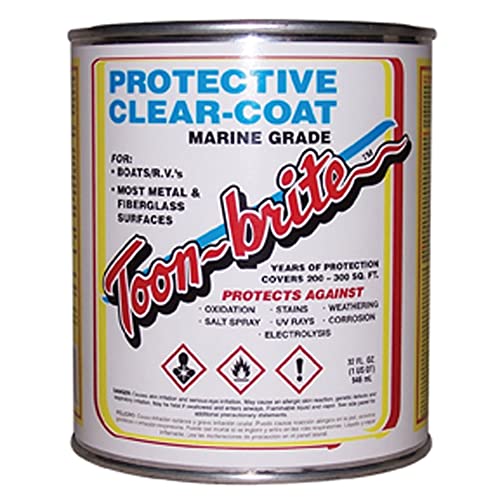
Best for: Aluminum, fiberglass, and metals needing UV protection and stain resistance. Suitable for a range of surfaces, including boats and trailers, to ease future cleaning and maintenance.
Why selected: A versatile, economical option for adding a protective clear layer that resists oxidation and stains, while simplifying ongoing upkeep. It covers multiple surface types with a single product.
Caution: Not all clear coats are optimized for heavy immersion or underwater exposure; recoat as needed for best results on marine hulls.
TotalBoat Aluminum Boat Barrier Coat

Best for: Aluminum hulls and pontoons requiring robust corrosion prevention. This is a high-build epoxy primer/barrier coat designed to be overcoated with bottom paints or other two-part systems.
Why selected: Two-component epoxy provides strong defense against underwater corrosion, helping to extend the life of aluminum boats in harsh marina environments. It forms a durable foundation for additional coatings.
Caution: Requires proper mixing and curing conditions; follow manufacturer guidelines for application windows and surface preparation to ensure full performance.
Buying Guide: Clear Coats For Aluminum Boats
What coating type should I choose for aluminum?
Consider the environment and maintenance you want. Clear coats range from spray-on enamels to two-component epoxies. Sprays are quick and convenient; epoxies offer superior barrier protection for submerged or heavily exposed hulls. For polished or anodized aluminum, look for products that bond well to bare metal and provide UV resistance.
Is direct-to-metal (DTM) application better than applying over existing coatings?
DTM clear coats work well when the surface is clean and sound. Some finishes allow application over painted or coated surfaces, but surface prep and compatibility are crucial for adhesion and durability. If in doubt, a compatible primer or a dedicated clear coat designed for aluminum is advisable.
How important is UV protection for aluminum boat finishes?
UV exposure can degrade clear coats over time, causing chalking or yellowing. Choose products with UV inhibitors or ceramic-based protection to extend the life of the finish and maintain appearance.
What about maintenance and reapplication?
Clear coats vary in longevity. Quick-drying sprays may require more frequent reapplication, while epoxy barrier coats tend to last longer but require proper curing and preparation. Regular cleaning and avoiding abrasive scrubs help preserve the coating’s integrity.
What should I consider for saltwater exposure?
In saltwater environments, choose coatings with corrosion resistance and barrier properties. Ceramic-enhanced or sulfur-resistant formulations reduce salt adherence and make cleaning easier, preserving metal surfaces longer.
Application tips to maximize protection
- Prepare the surface: remove corrosion, oil, and old coatings as instructed by the product label.
- Follow recommended curing times and environmental conditions (temperature, humidity).
- Apply in thin, even coats to avoid runs and ensure thorough coverage.
- For multi-part systems, maintain proper ratios and mixing times.
- Test a small area first to verify adhesion and finish before full application.
FAQ
- Q: Can I use any clear coat on aluminum boats? A: Not all clear coats adhere well to aluminum. Look for products labeled for aluminum, marine use, or anti-corrosion properties.
- Q: Do I need a primer before applying a clear coat on aluminum? A: Some products are designed to be applied directly to aluminum; others require a compatible primer for best adhesion.
- Q: How long does a clear coat typically last on a boat hull? A: Longevity varies by product and environment; epoxy barrier coats tend to last longer in harsh conditions, while sprays offer faster refreshment but may require more frequent reapplication.
- Q: Can I remove a clear coat that yellowed or failed? A: Yes, typically by sanding or chemical refinishing, followed by reapplication with proper surface preparation.
- Q: Is ceramic protection better than standard clear coats? A: Ceramic (SiO2) provides a durable barrier against corrosion and salt damage, often requiring less maintenance, but always follow product-specific guidance.
- Q: Should I apply clear coats to the entire hull or just specific areas? A: Apply where protection is needed, prioritizing high-exposure areas like the hull, transom, and areas near saltwater contact.