If you need reliable cleats to secure lines on a boat, dock, or pier, this guide helps you pick durable options for mooring, tying, and organizing. The top picks cover nylon, stainless, and galvanized metals to suit saltwater, freshwater, and varied deck setups. Best for recreational boaters, kayakers, and marina dock users alike, these cleats balance strength, installation ease, and long-term corrosion resistance.
Summary of selected products:
| Product | Main Material | ||
|---|---|---|---|
| Laorde Nylon Boat Cleats (4/5/6/8″, 4 Pack) | Heavy-duty nylon | 4″, 5″, 6″, 8″ | |
| ZOMCHAIN Boat Cleat (4″) | 316 stainless steel | 4″ | High-resistance mooring in harsh marine environments |
| SHENGHUISS Boat Open Base Cleat (4″, 2 Pack) | 316 stainless steel | 4″ | Versatile surfaces and easy install |
| VEITHI 4″ Electrophoretic Black Dock Cleats (4 Pack) | Iron with electrophoretic coating | 4″ | Budget-friendly deck or pier ties with corrosion resistance |
| VEITHI 10″ Dock Cleats with Bolts (2 Pack) | Hot-dipped galvanized cast iron | 10″ | Heavy-duty mooring on docks and piers |
Laorde Nylon Boat Cleats 5″ 4 Pack

Material and versatility: Heavy-duty nylon provides marine-grade durability for ropes on boats, kayaks, canoes, and docks. Available in multiple lengths—4, 5, 6, and 8 inches—to match different docking needs. Best for lighter mooring, securing gear, and decorative applications around the marina or home waterfront.
Who it’s best for and why: Ideal for casual boaters, kayakers, and homeowners who want a versatile, corrosion-resistant option that also doubles as décor. The 5-inch version offers a balanced size for modest lines and crowded docks.
Caution: Nylon cleats may not handle extreme heavy-duty mooring in rough seas as robust metal cleats do; verify rope diameter and force requirements before heavy-use mooring.
ZOMCHAIN Boat Cleat 4″ Open Base Dock Cleat

Material and build: 316 marine-grade stainless steel with an open base design for versatile mounting. Includes hardware for installation and a polished finish for corrosion resistance. Best for saltwater mooring where durability and a clean look matter.
Who it’s best for and why: A strong choice for boaters seeking corrosion resistance and a compact 4-inch footprint. Suitable for small-to-mid-sized craft and docks that prioritize longevity over size.
Caution: Ensure compatible screw and nut sizing for your mounting surface to avoid installation issues or looseness over time.
SHENGHUISS 4″ Open Base Cleat 2 Pack

Material and design: 316 stainless steel cleat with an open base, suitable for wooden docks, metal roofs, decks, or boats. Easy to install with screws or nails, and adaptable for indoor or outdoor use. Best for users who want straightforward installation and broad mounting compatibility.
Who it’s best for and why: Ideal for DIY dock builders and boat owners who need a reliable, corrosion-resistant cleat with simple mounting. The open base facilitates flexible placement on uneven surfaces.
Caution: May be overbuilt for very light-duty applications where plastic or nylon cleats would suffice; consider load expectations carefully.
VEITHI 4 inch Dock Cleats Black 4 Pack

Material and finish: Black electrophoretic coating on sturdy iron for rust resistance. Features a wide 7/8 inch bottom footprint for added stability, making them suitable for boats, decks, and piers. Best for budget-conscious buyers needing multiple tie-down points.
Who it’s best for and why: Good for homeowners and small boat owners who want robust, affordable cleats with a broad base to reduce movement under load.
Caution: Iron with coating can still corrode in extremely harsh environments; ensure proper maintenance and cleaning to maximize life.
VEITHI 10″ Dock Cleats With Bolts
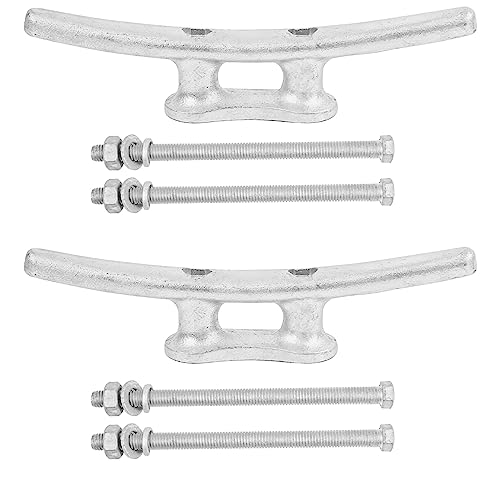
Material and installation: Hot-dipped galvanized cast iron cleats with a wide 1.6 inch bottom footprint and included bolts for ease of installation. Designed for heavy-duty mooring on docks, decks, and piers. Best for larger boats and high-load needs.
Who it’s best for and why: A solid pick for commercial or heavy-use environments where superior strength and long-term outdoor durability are required. The longer 10-inch size provides ample tie-off space.
Caution: Galvanized metal can feel heavy and may require robust mounting hardware and occasional maintenance to prevent corrosion at fastener points.
Buying Guide: How To Choose The Right Boat Cleats
- Material matters: Stainless steel (316) offers excellent corrosion resistance in saltwater; nylon is lighter and versatile but less suited for heavy mooring; galvanized iron provides cost-effective durability but may require maintenance.
- Size considerations: For small boats or kayaks, 4”–5” cleats can be sufficient; larger vessels need 8”–10” cleats to accommodate longer lines and higher tension.
- Mounting base: Open-base designs offer flexibility on uneven surfaces; closed-base can provide a cleaner look and additional strength on flat decks.
- Installation: Look for included hardware or easy mounting options; consider hex or standard bolt patterns to match your surface.
- Surface compatibility: Wooden docks, metal decks, and concrete piers may require different mounting approaches and sealants to prevent corrosion around fasteners.
- Maintenance: Corrosion resistance and protective coatings extend life; regular cleaning helps prevent salt buildup and wear.
Frequently Asked Questions
- What size cleat should I use for a small boat? – For small boats, 4″ to 5″ cleats are typically adequate, depending on rope size and intended load.
- Are stainless steel cleats better than zinc-coated ones? – Yes, stainless steel offers superior corrosion resistance in marine environments, especially in saltwater conditions.
- Is an open-base cleat easier to install? – Open-base cleats provide flexible mounting options on varied surfaces, which can simplify installation.
- Should I choose nylon or metal cleats for a dock? – Nylon cleats are lighter and decorative but may not handle high load mooring as well as metal cleats; choose based on load requirements.
- What maintenance do cleats require? – Clean to remove salt and debris, inspect fasteners, and apply protective coatings or anti-corrosion treatments as needed.
- Can I use cleats for non-mooring tasks? – Yes, many cleats are versatile for securing hoses, gates, or outdoor decor, but ensure load and mounting suitability.