When choosing rivets for boats, look for closed-end aluminum rivets with steel mandrels that resist corrosion and provide watertight seals. This guide highlights five top options suited for marine use, repairs, and DIY boat projects. Each product is chosen for durability, compact size variety, and reliable sealing capabilities in salty or damp environments. Best for boat maintenance, deck repairs, and hull panels where moisture resistance matters.
| Product | Diameter | Grip Range | Best For |
|---|---|---|---|
| ALLCLEAN 120Pcs 3/16″ x 3/8″ | 3/16″ | 3/8″ | General boat repairs, watertight seams |
| METAL MAGERY 50 Closed End Rivets | 3/16″ | 0.062″-0.250″ | Marine environments, corrosion resistance |
| uxcell 100Pcs 3/16″ x3/8″ | 3/16″ | 3/8″ | DIY boat projects, sheet metal |
| uxcell 100Pcs 3/16″ x1/2″ | 3/16″ | 1/2″ | Thicker panels, secure hull joints |
| Zorveiio 60pcs 3/16″ x 3/8″ | 3/16″ | 3/8″ | Watertight seals, lightweight repairs |
ALLCLEAN 120Pcs 3/16″ x 3/8″ Closed End Rivets

Design notes: Aluminum grip with a steel mandrel provides strong, corrosion-resistant performance. These rivets are closed-end to help seal out moisture and contaminants, making them ideal for watertight boat repairs. Available grip lengths include 3/8″ for 0.25-0.375″ material thickness, and its set also supports longer grips in other ALLCLEAN listings. Best for general marine sealing projects and hull panel work where water intrusion must be minimized.
- Best for: Boats, decks, and water-exposed aluminum panels
- Why selected: High corrosion resistance and watertight design.
- Caution: Ensure correct grip length to avoid over- or under-tightening in thin materials.
METAL MAGERY 50 Closed End Rivets

Design notes: Aluminum body with a steel mandrel, offering strong corrosion resistance that suits marine contexts. The closed-end design helps create a watertight seal, making these rivets a solid choice for airplane-adjacent boat repairs, john boats, and any application where appearance matters as well as function. Best for: marine repairs requiring a durable, long-lasting hold.
- Better for: Corrosion-prone environments and visible installations
- Why selected: High quality aluminum with robust sealing capability
- Caution: Not all grip ranges are suitable for very thin skins; verify thickness.
uxcell 100Pcs 3/16″ x3/8″ Aluminum Closed End

Design notes: This kit uses aluminum rivet bodies with a closed-end dome, designed to adapt to differing material thicknesses. Includes 4.8mm body with 9.5mm length, offering a 0.11″-0.2″ riveting range. Best for DIY boat projects where a neat, compact rivet is desirable and corrosion resistance is needed.
- Best for: DIY enthusiasts and small boat repairs
- Why selected: Strong, durable aluminum with watertight-capable design
- Caution: Check length to ensure coverage for thicker panels.
uxcell 100Pcs 3/16″ x1/2″ Closed End Rivets
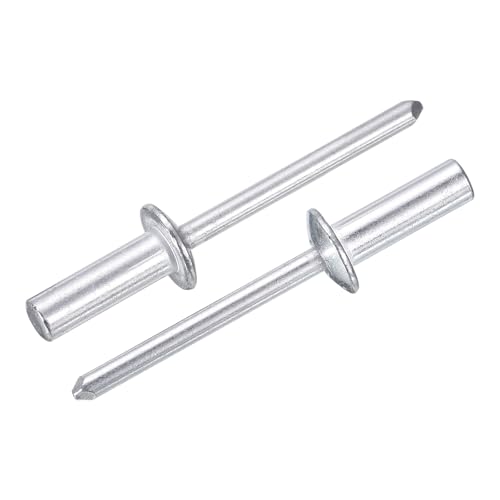
Design notes: Aluminum body with a closed-end design, offering a thicker grip suitable for panels needing a longer reach. The rivet length supports joint assemblies up to 0.59″ in depth. Best for thicker boat hull panels or decks where a robust, watertight seal is required.
- Better for: Thicker materials and heavier-duty marine joints
- Why selected: Longer grip length provides increased hold on thicker sheets
- Caution: If used on very thin skin, risk of over-compression; match to material thickness.
Zorveiio 60pcs 3/16″ x 3/8″ Closed End Rivets

Design notes: Durable aluminum grip with a steel mandrel, engineered for corrosion resistance in challenging environments. The closed-end rivets prevent moisture intrusion, providing reliable seals for boat repairs and marine hardware.
- Best for: Watertight fixes on boats, kayaks, or aluminum hull components
- Why selected: Premium quality materials for long-term marine use
- Caution: As with many rivet kits, ensure correct match between rivet length and substrate thickness.
Buying Guide
What rivet type matters most on boats?
Closed-end rivets seal against moisture and air, reducing corrosion and water ingress compared with open-end rivets. For boats, this matters on hull joints, decks, and interior panels that face splash or salt exposure. Choose rivets with aluminum bodies and steel mandrels for best longevity in marine environments.
How to choose the right grip range?
Grip length should match material thickness. A 3/8″ grip works well for typical boat deck panels around 0.25″ to 0.375″ thick. Longer grips (1/2″) are better for thicker structures but can be harder to set and may protrude if used on thin material.
What about seal integrity and appearance?
Closed-end rivets are preferred when water sealing and neat appearance are priorities. They provide a compact head profile and minimize gaps where moisture could penetrate between joined surfaces.
Which material should I prioritize?
Aluminum rivets with steel mandrels are common for boats due to corrosion resistance. For saltwater environments, prioritize corrosion-resistant finishes and proper installation torque to avoid loosening from vibration or thermal cycling.
How many rivets should I buy?
Consider the repair scope: smaller projects may require 50–100 rivets, while hull repairs or deck replacements can demand 200 or more for consistent coverage. Having multiple sizes helps adapt to varying panel thicknesses.
Installation tips
- Pre-drill holes to match rivet diameter and confirm alignment to avoid leaks.
- Use proper tooling to avoid over-crimping, which can damage the panel.
- Clean surfaces to maximize seal quality and reduce corrosion risk.
FAQ
- Q: Are closed-end rivets truly watertight on boats?
A: Yes, their sealed ends help prevent moisture and air from entering joints, improving corrosion resistance in marine settings. - Q: What grip length should I choose for a hull deck repair?
A: If deck thickness is around 0.25″ to 0.375″, a 3/8″ grip is typically suitable; adjust if you encounter thicker or thinner materials. - Q: Can I use any rivet on aluminum Boat Hulls?
A: Use aluminum rivets with steel mandrels for marine-grade compatibility and corrosion resistance. - Q: Do I need sealant with closed-end rivets?
A: Generally not, but ensure the joint is free of debris and surfaces are clean; sealants can be used for extra protection in high-moisture zones. - Q: How many rivets should I have on hand for a small boat repair?
A: Start with 50–100 rivets of the common size plus a few longer grips for flexibility across panel thicknesses. - Q: Are these rivets prone to rust?
A: When used as intended and in appropriate marine-grade material, corrosion resistance is high; avoid exposure to extreme conditions without proper maintenance.