Finding the right carbon dioxide (CO2) detector for a boat means balancing portability, accuracy, and battery-powered reliability. This guide highlights five top options designed for marine use or versatile travel environments. Each product is evaluated for who benefits most, its key strengths, and any reasonable limitations. Use these picks to improve onboard air safety, especially in cabins, galleys, and sleeping areas where ventilation varies with sea conditions.
Buyer-friendly snapshot of the selected products:
- LSENLTY USB Carbon Monoxide Detector for Boat, Aircraft, RV — best for small, USB-powered boats and travelers who want a portable CO monitor with a bright LED display.
- Pumwry 2 Pack Travel CO Detector — best for multi-room setups or on-the-go safety with battery power and clear audible alerts.
- Dienmern 5-in-1 CO2 Monitor — best for comprehensive indoor air quality with CO2, CO, temperature, and humidity.
- ASIEIT 4-in-1 Portable CO/CO2 Detector — best for compact travel gear with 3-level light indicators and 4-in-1 sensing.
- GasDoc DS-100PRO — best for versatile travel and camping with an all-in-one CO/CO2 detector and magnetic attachment.
The following sections summarize why each product stands out, who should buy, and practical cautions to consider before purchasing for boat use.
LSENLTY USB Carbon Monoxide Detector For Boat
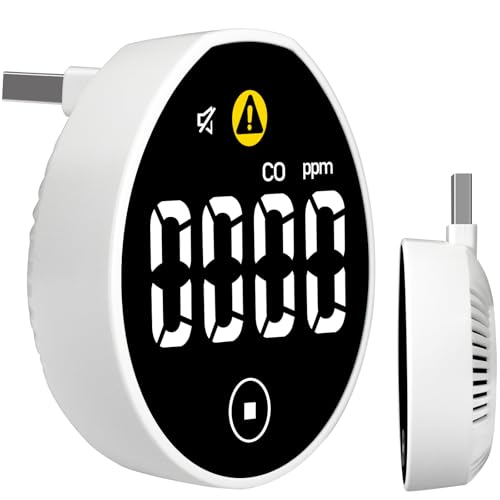
This compact USB CO detector is designed for outdoor and portable use, ideal for boats that rely on USB power banks or small outdoor power sources. It measures 0–1000 ppm with ±5% accuracy. When CO exceeds 50 ppm, an alarm over 85 dB sounds and the screen indicator flashes. The high-definition display shows color-coded cues: green for safe, orange for moderate, and red for dangerous levels. Best for boaters who want a small, USB-powered monitor you can stash in a dash compartment or under a bunk. Limitation: relies on USB power; ensure power availability on longer passages.
Who it’s best for: Sailors or travelers needing a portable CO detector without a hardwired power source, especially on compact boats or during short trips.
Why selected: Clear alarm signaling, portable form factor, and straightforward real-time CO readouts suit cramped cabin layouts where quick situational awareness matters.
Caution: USB-powered operation may require a dedicated power source to avoid false alarms if USB power is interrupted.
Pumwry 2 Pack Travel CO Detector With Battery

This two-pack CO detector uses portable, battery-powered operation with low-battery warnings. It is designed for travel, hotel rooms, and RVs on the go, ensuring protection even during power outages. The device detects CO with an advanced sensor and provides an audible alert; its compact form makes it easy to place on a nightstand or a dashboard. Best for travelers who want redundancy (one detector per level or per sleeping area) and a system that continues to function during power failures. Limitation: focus is on portability; some users may prefer more advanced CO2 sensing as well.
Who it’s best for: Travelers who want a lightweight, battery-powered detector that remains active during power outages and can be moved between spaces.
Why selected: Battery operation and the 85 dB alarm provide reliable safety cues in variable boat cabin environments where power may be intermittent.
Caution: Check battery status regularly and replace on schedule to maintain readiness.
Dienmern 5-in-1 CO2 Monitor
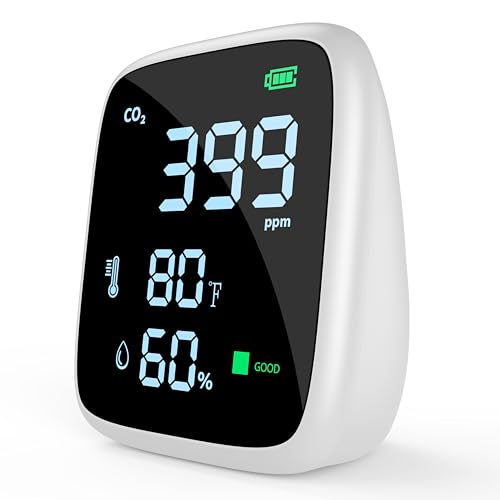
This 5-in-1 monitor tracks CO2, CO, temperature, and humidity with a Swiss-made CO2 sensor for high-precision readings in real time. It features a wide CO2 range (400–5000 ppm) and an alarm that sounds when CO2 levels exceed safe thresholds. Its all-in-one approach makes it suitable for boats with multiple cabins or common areas where air quality varies with occupancy and weather. Best for boaters who want a comprehensive indoor air quality station in one compact unit. Limitation: higher price tier may be a consideration for budget setups.
Who it’s best for: Boats with multiple zones needing CO, CO2, and environmental data in one device; crews tracking air quality over longer passages.
Why selected: The combination of CO and CO2 sensors with temperature and humidity gives a fuller picture of cabin air safety, supporting proactive ventilation decisions.
Caution: Interpreting CO2 data requires understanding indoor air quality standards to avoid over- or under-reacting to readings.
ASIEIT 4-in-1 Portable CO/CO2 Detector
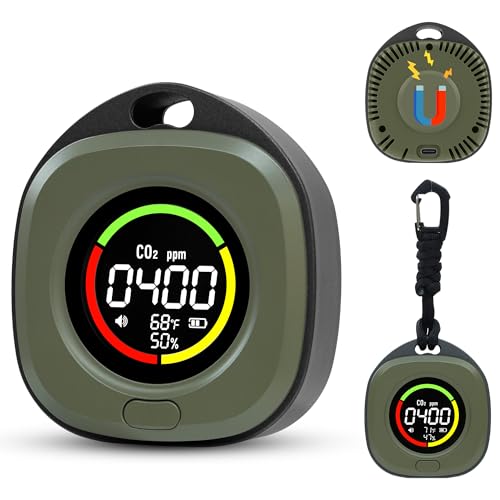
ASIEIT’s upgraded 4-in-1 detector measures CO, CO2, temperature, and humidity with high-precision sensors. It supports a broad detection range for CO (0–1000 ppm) and CO2 (400–5000 ppm). The device is compact (about 3 x 2.75 inches) and includes a lanyard and back for mounting in a boat cabin, car, tent, or RV. Best for sailors needing a multi-parameter monitor in a single, travel-friendly unit. Limitation: CO readings may require occasional recalibration for extreme ambient conditions.
Who it’s best for: Boaters who want a single, portable device to monitor CO and CO2 along with environmental factors like temperature and humidity.
Why selected: Its 3-level display and compact design provide a quick, at-a-glance safety read, which helps during night operations or low-light conditions.
Caution: Ensure the alarms are configured to your preferred thresholds to avoid alarm fatigue on longer trips.
AccUnni CO2 Monitor Air Quality Monitor

This battery-powered CO2 monitor focuses on portable indoor air quality with a clear display and a three-color alert system. It provides audible alarms with adjustable volumes and offers both manual and automatic calibration options for 400 ppm reference. Its size and folding stand make it suitable for boats with compact cabins or sleeping quarters. Best for sailors who want straightforward CO2 awareness with flexible alarm settings. Limitation: primarily centered on CO2 with additional metrics limited compared to 5-in-1 models.
Who it’s best for: Boaters seeking a dedicated CO2 monitor with simple calibration and clear alarms for cabins and compact spaces.
Why selected: The combination of audible alerts and a three-color visual system helps crew members quickly gauge air safety on deck or below.
Caution: Regular calibration ensures that readings remain aligned with ambient conditions, especially after moving between environments.
GasDoc DS-100PRO Portable CO & CO2 Detector
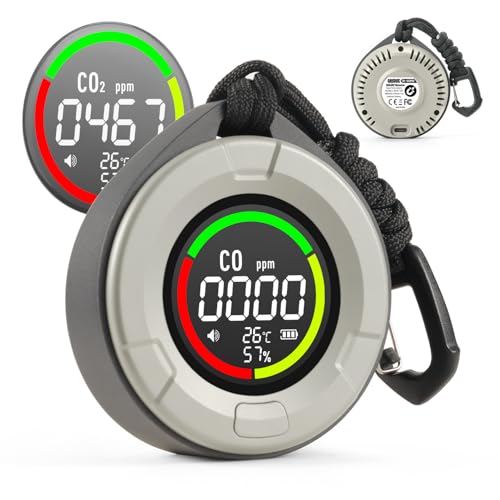
GasDoc DS-100PRO combines CO and CO2 detection with temperature and humidity measurements. It emits alarms at 50 ppm CO and 1500 ppm CO2, featuring a three-color indicator and a loud buzzer. The device is designed for portable use with a magnet and lanyard, and can operate for up to 72 hours on power. Best for campers, boaters, and travelers who want a rugged, all-in-one detector with flexible mounting options. Limitation: alarm thresholds may require adjustment for small crewed boats or cabins with unique air ventilation patterns.
Who it’s best for: Boaters and travelers who need an all-in-one detector that can be attached to gear or taken on trips without constant power supply.
Why selected: The combination of CO and CO2 alarms with magnet mounting makes GasDoc DS-100PRO versatile for tents, cabins, or open deck spaces where quick access to air readings matters.
Buying Guide: Key Considerations For Choosing A Boat CO2 Detector
- Power Source: Should you prioritize USB-powered, battery-powered, or dual-power devices? Boats often vary in power availability, so battery or USB-with-portable options add flexibility.
- Detected Gases: Decide between CO-only, CO2-only, or 4–in–1 models. CO detectors are essential for engine rooms, while CO2 monitoring helps manage cabin ventilation and occupancy risks.
- Alarm System: Look for audible alerts and visual indicators. Three-color LEDs (green/yellow/red) provide quick status, while alarms in decibels help you react promptly at night.
- Portability and Mounting: Compact form factors with lanyard, magnets, or wall-mount options help place devices where occupants sleep or gather.
- Calibration and Maintenance: Regular calibration improves accuracy. Some devices offer automatic calibration modes or reference-based recalibration schedules.
- Readiness for Travel: If you boat seasonally or travel by RV or car, consider devices that work reliably in varied ambient conditions and temperatures.
- Data Readouts: Readouts should be easy to interpret at a glance. High-definition displays with clear ppm measurements help you act quickly.
FAQ: Common Questions About Boat CO2 Detectors
- What is a practical CO2 detector for boats? A device that monitors CO and CO2, plus ambient temperature and humidity, and provides audible and visual alarms for quick safety actions.
- Do these detectors require professional installation? Most listed devices are portable and plug-and-play, suitable for non-professional setup, though some can be mounted for convenience.
- Can I use a CO detector on a boat with limited power? Yes, battery-powered options exist that continue to function during power outages.
- How often should I calibrate? Manual calibration is recommended in a controlled environment at 400 ppm CO2 baseline; automatic calibration options vary by model.
- Are CO and CO2 alarms sufficient for boat safety? They are essential, but good ventilation and regular monitoring are also important for overall air quality on boats.
- Is a 4-in-1 detector worth the extra cost? If you need CO, CO2, temperature, and humidity in one unit for compact spaces, a 4-in-1 model saves space and simplifies monitoring.