If you need dependable deep cycle power for a boat, these 5 top choices balance reliability, weight, and compatibility. Best for trolling motors, RV-style powering on the water, or extended trips, each option serves distinct needs—from lightweight AGM units to advanced lithium models. This guide helps you pick the right battery type, capacity, and features for your fishing boat, sailboat, or small craft.
| Product | Type | Approx. Capacity | Best For |
|---|---|---|---|
| Newport 12V50Ah Deep Cycle AGM | AGM Deep Cycle | 50 Ah | Lightweight trolling-motor setups |
| WEIZE 12V 100Ah Deep Cycle AGM | AGM Deep Cycle | 100 Ah | Extended runs, solar or RV-style use |
| OPTIMA D34M Bluetop | AGM Deep Cycle & Starting | 55 Ah C20 | Versatile mounting and mixed loads |
| Interstate 31M Marine Deep Cycle AGM | AGM Deep Cycle | 100 Ah | High endurance, deep cycling |
| LVGINE 12V 100Ah LiFePO4 | Lithium LiFePO4 | 100 Ah | Lightweight, long life, fast charging |
Newport 12V50Ah Deep Cycle AGM Battery

- Brand: Newport Vessels
- Weight: 32 lbs
- Sealed AGM Lead Acid: Durable, leak-proof construction
- Trolling motor compatible: Optimized for small to mid-sized boats
Best for: boaters needing a lightweight, sealed AGM option that won’t add excessive weight to the deck. It delivers reliable power for trolling motors and other 12V accessories.
Why chosen: This model emphasizes portability and sealed design, making it suitable for anglers and hobbyists prioritizing easy handling on board.
Caution: Not a lithium option; requires standard AGM maintenance-free expectations and replacement cycles.
WEIZE 12V 100Ah Deep Cycle AGM
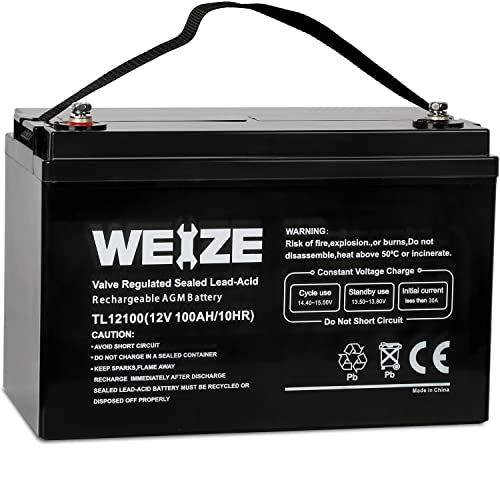
- Brand: WEIZE
- Size: 12.99 x 6.73 x 8.43 inches
- Maintenance-free AGM design
- Low self-discharge (1-3% per month)
Best for: boaters needing solid capacity for longer trips, solar compatibility, or RV-style auxiliary power.
Why chosen: High capacity and low maintenance make it a practical all-around choice for varied marine uses.
Caution: Requires proper temperature management for optimal lifespan; check your charging setup for AGM compatibility.
OPTIMA Bluetop D34M Dual Purpose

- Brand: OPTIMA
- 12-Volt, 750 CCA
- 55 Ah (C20), 120-minute reserve capacity
- SpiralCell Technology for high power and reliability
Best for: boaters needing strong starting power with reliable deep-cycle support and flexible mounting.
Why chosen: Combines deep-cycle reliability with strong starting power, suitable for boats with higher electrical demands.
Caution: Heavier than some AGM options; check space and mounting constraints on smaller boats.
Interstate Batteries 31M Marine AGM

- Brand: Interstate Batteries
- Group Size 31M
- 100 Ah capacity with dual-purpose design
- Extreme deep-cycle capability and long life
Best for: users who want a robust dual-purpose battery for trolling motor power and engine starting requirements.
Why chosen: Known for rugged marine performance with high cycling capability and deep discharge resilience.
Caution: Heavier and larger; ensure fit in your boat’s battery compartment.
LVGINE 12V 100Ah LiFePO4 Battery

- Brand: LVGINE
- 100 Ah capacity, LiFePO4 chemistry
- Very lightweight (approx. 24 lbs) and compact
- Built-in BMS with multiple protections
Best for: boaters wanting a lightweight, long-life alternative with rapid recharge and superb cycle life.
Why chosen: Lithium iron phosphate offers longer cycle life and weight savings, ideal for smaller vessels or boats prioritizing performance/weight saving.
Caution: Typically higher upfront cost; ensure compatible charging system for LiFePO4 chemistry.
Buying Guide
- Battery chemistry matters. AGM batteries are maintenance-free and rugged, good for saltwater environments. LiFePO4 (lithium) offers lighter weight and longer life but higher upfront cost.
- Capacity needs depend on your load. 50-100 Ah covers trolling motors and basic accessories; 100 Ah or more supports longer runs and multiple devices.
- Weight and space affect boat handling and installation. Lithium models can drastically reduce weight; ensure fit and mounting space.
- Maintenance and寿命 Consider self-discharge rate, temperature tolerance, and charging compatibility. AGM units tolerate a wider temperature range; LiFePO4 requires proper charging profiles.
- Charging system Verify your charger supports AGM or LiFePO4 chemistry. Inadequate charging can shorten life or reduce performance.
- Durability Look for sealed designs and vibration resistance for rough water conditions.
- Space efficiency Dual-purpose batteries can replace separate starting and deep-cycle units, saving space on compact boats.
FAQ
- Q: What is the main difference between AGM and LiFePO4 for boats?
A: AGM is rugged, maintenance-free, and generally lower cost, while LiFePO4 is lighter and longer-lasting but more expensive upfront. - Q: How many amps should I choose for fishing boats with trolling motors?
A: For basic trolling motor use, 50–100 Ah is common; larger boats or longer trips benefit from 100 Ah or more. - Q: Can I mix battery chemistries on the same boat?
A: It’s not recommended to mix chemistries due to charging and balancing differences; use matched sets where possible. - Q: How important is weight when selecting a battery?
A: Very important for performance and handling; lighter options like LiFePO4 can significantly reduce load. - Q: Do I need a special charger for LiFePO4 batteries?
A: Yes; LiFePO4 requires a charger with a compatible charging profile and proper balance management. - Q: What should I check before buying?
A: Battery chemistry, capacity, dimensions, weight, terminal style, and whether it fits your boat’s space and electrical load.