Finding the right digital depth gauge for boats means balancing reliability, ease of installation, and real-time depth accuracy. This guide highlights five top options that cater to different boat sizes, hull types, and user needs. Best for anglers and small to mid-size yachts, these devices provide instant depth readings, easy installation, and clear alerts when depth changes. Each product section explains who it’s best for, why it was selected, and any practical limitations to consider.
| Product | Best For | ||
|---|---|---|---|
| DepthTrax 2B Boat Mount In Dash Digital Depth Finder | Power users needing a large display | Uninterrupted readings from 2.5 to 600 feet; 200 kHz transducer; alarm system | Best with deep-water use; dual transducer options |
| Hawkeye Boat Depth Sounder Display Gauge DT2B | Compact dash installations | Small 2-inch display; simple black bezel; reliable under dash use | Limited screen size; basic features |
| Estink Depth Sounder Kit | Budget-friendly dash depth with robust build | 12V to 32V range; stainless bezel; through-hull compatibility | Installation varies by hull type |
| Digital Boat Depth Finder by EIMSOAH | Yachts and larger boats seeking straightforward depth readout | Easy setup; 100 m depth range; white backlight | Average feature set; installation complexity varies |
| Srum Digital Depth Sounder | Rugged, reliable depth indication | Stainless 316L bezel; 0-100 m range; stainless anti-fog glass | Commonly used with 12V systems; buzzer alert |
Below, each product is presented with a clickable Amazon link, a visual reference, core features, and practical buyer guidance. This format helps buyers compare quickly and choose the depth gauge that best fits their boat and sailing style.
DepthTrax 2B In-Dash Depth Finder

The DepthTrax 2B is designed for larger displays and in-dash mounting, making it well suited for boats that require prominent depth readouts. It delivers depth readings from 2.5 to 600 feet with a 200 kHz transducer, supporting dual mounting options for transom or through-hull installation up to 1/8-inch aluminum hulls. The device includes a three-stage Advanced Warning System featuring an audible alarm, a bright LED warning light, and LCD indicators for quick at-a-glance alerts. Best for captains who want a large, easily readable depth display with robust alerting in high-speed water or deep-water conditions. Caution: closer attention to hull material is needed to ensure transducer compatibility in custom builds.
Hawkeye DT2B Depth Sounder Display
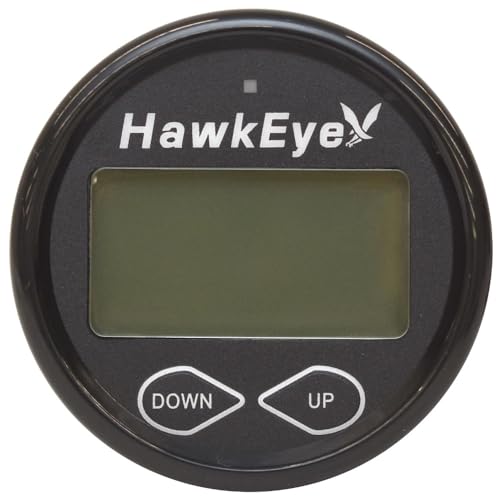
The DT2B offers a compact option for dash installations with a black 2-inch display. It places emphasis on simplicity and reliability, suitable for smaller dashboards or boats where space is at a premium. Best for sailors who need a minimal footprint and straightforward depth readings without extra features. Limitation: limited display area means fewer simultaneous data readouts and less room for additional indicators.
Estink Depth Sounder Kit

The Estink Depth Sounder Kit emphasizes versatility with a 9-32V operating range and the potential to shoot through solid fiberglass or up to 1/8-inch aluminum hulls in some configurations. The kit includes a dash-depth unit with strong durability and fast startup. Best for boaters who want flexible voltage compatibility and robust construction for longer trips. Caution: installation details vary by hull type and may require professional help for optimal transducer placement.
Digital Boat Depth Finder by EIMSOAH

The EIMSOAH model provides a straightforward depth readout with a maximum depth of 100 meters (about 328 feet) and a white backlight for nighttime visibility. It is designed for yachts and various boat sizes, making it a practical middle-ground option. Best for boaters who want clear real-time depth indications without excessive features. Limitation: depth range is modest compared to deep-water models, which may matter for deeper passages.
Srum Digital Depth Sounder
The Srum depth finder uses a 12V system and includes a stainless steel 316L bezel and anti-fog glass, with a depth range up to 100 meters. It features a buzzer alert for quick confirmation of correct connection and readiness. Best for reliability-minded boaters who prefer durable materials and audible feedback. Caution: some installation setups may require careful wiring to ensure consistent beeper operation.
Buying Guide: Key Considerations for Digital Depth Gauges
- Depth Range: Match the gauge range to your typical boating waters. Deeper-water boats benefit from models that read well beyond 100 feet.
- Transducer Type and Hull Compatibility: Through-hull, transom-mounted, or shoot-through-hull options affect installation complexity and hull compatibility. Verify your hull material and thickness before choosing.
- Display Size and Readability: Larger displays are easier to read at a distance, but may require more dash space. Consider backlighting for night use.
- Voltage Requirements: Ensure the device operates within your boat’s electrical system (common ranges include 9-32V). Some units tolerate a broader range for marine versatility.
- Alarm and Alerts: Audible alarms and LED indicators help detect risky shallow or deep conditions quickly. Check if the alert system is configurable.
- Durability: Look for corrosion-resistant bezels (stainless steel 316L is common) and anti-fog glass for challenging marine environments.
FAQ
- What is the typical depth range I need on a fishing boat? Depth gauges for fishing boats commonly range up to 100 meters (328 feet) to cover near-shore and offshore scenarios.
- Can these gauges be installed on any hull type? Most are adaptable, but installation varies by hull material and transducer choice. Some require through-hull or fiberglass-friendly setups.
- Do I need a separate transducer for every depth gauge? In most cases, one transducer can support a single gauge, but dual transom or through-hull configurations are available for redundancy or multi-imeter setups.
- Are digital depth gauges suitable for night navigation? Yes, many units feature white backlighting and clear LCDs designed for low-light conditions.
- What maintenance is needed for depth gauges? Regular checks on the transducer housing, seals, and connector wiring help ensure consistent depth readings and reduce fogging or corrosion.
- Can I upgrade a dash depth gauge without rewiring the entire panel? Many are designed for electronics-friendly dashboards, but some installations may require professional wiring and calibration.