Direct answer: a dual battery boat switch helps you isolate, combine, or share power between two (or more) batteries, ensuring starting reliability and system protection. This guide highlights five top options ideal for boaters seeking safer, easier battery management. Best for small to mid-size boats, heavy-duty use, or emergency power scenarios, these switches balance ease of installation with robust electrical protection.
Buyer snapshot:
| Product | Best For | Key Benefit |
|---|---|---|
| Seachoice Battery Select Switch | Moderate boaters needing simple selection | Clear starting/charging options across two batteries |
| Blue Sea Systems 4-Position Mini Selector | Compact installs with emergency combine | Three mounting methods and battery combine feature |
| Nilight 1-2-Both-Off 600A | High-traffic electrical setups | High current in a 4-position design |
| Nilight 1-2-Both-Off 12-48V (Waterproof) | Rugged marine applications | Waterproof construction with solid 4-position switching |
| Blue Sea e-Series 4-Position 32V | Tight spaces, engine-room mounting | Ignition-protected and versatile mounting |
Notes: All options review compatibility, mounting options, and safety features to help you pick the best dual-battery solution for your vessel. Each product is evaluated for ease of use, durability, and suitability for marine electrical systems.
Seachoice Battery Select Switch

Features: Permits selection between batteries for starting, charging or operation in parallel. For use with two or more batteries and systems under 50V. UL listed, ignition protected and CE approved.
Best for: Boat owners who want a straightforward, code-compliant switch to choose between two batteries for engine start or auxiliary systems. It’s a reliable option when you need clear, manual control without extra complexity.
Why selected: Its simple two-battery selection and parallel operation capability suit many standard marine setups, with strong safety certifications for marine use.
Caution: Limited to systems under 50V, so not suitable for higher-voltage configurations or oversized electrical draws without confirming compatibility.
Blue Sea Systems 4-Position Mini Selector

Features: Compact design for tight spaces; emergency combine to pull power from both batteries during engine start or essential radio use; three mounting options for flexible installation (surface, flush, or rear).
Best for: Small to medium boats with limited cockpit or console space requiring a compact, flexible switch with an emergency power option.
Why selected: The emergency combine feature enhances reliability if one battery is weak, while multiple mounting options simplify installation in constrained areas.
Caution: The compact size may limit current headroom on very high-demand electrical systems; verify your load with the unit’s specifications.
Nilight Battery Switch 1-2-Both-Off 600A

Features: Heavy Duty ABS housing; designed for two batteries; 1-2-Both-Off operation with four positions; 600A continuous at 12VDC, 455A intermittent; prevents battery drain when unused.
Best for: Boaters needing a robust, high-current disconnect with a dependable “both” mode when extra power is needed to start or run essential systems.
Why selected: High continuous current rating and simple 1-2-Both-Off operation make it suitable for mid-range marine electrical needs.
Caution: terminal insulation and mounting should be checked to avoid shorts in exposed environments; ensure the unit’s connectors match your cable sizes.
Nilight 1-2-Both-Off Battery Switch (Waterproof)

Features: Heavy Duty ABS housing; 1-2-Both-Off operation for two batteries; 4-position switch; ratings: 200A continuous, 300A intermittent, 1000A momentary at 12VDC.
Best for: Harsh marine environments where moisture resistance is essential and space is moderate to tight.
Why selected: Waterproof design helps protect electrical connections in exposed or splash-prone areas, while delivering solid multi-battery control.
Caution: Lower continuous current than some high-demand setups; verify your system current draw to avoid overheating.
Blue Sea Systems e-Series 4-Position
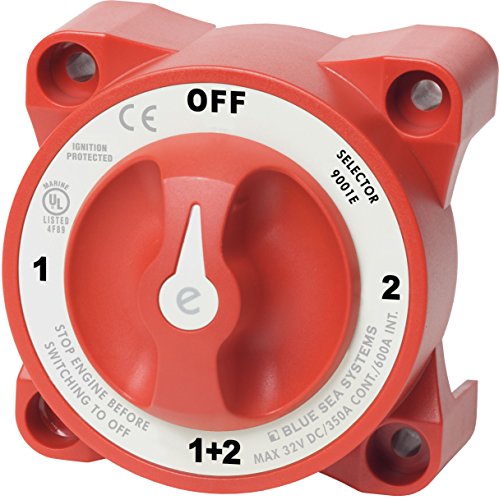
Features: Compact design; multiple mounting options; ignition protected; suitable for engine rooms of gasoline-powered boats.
Best for: Boats needing a space-efficient, ignition-protected selector that can be mounted in engine rooms or tight panels.
Why selected: The ignition protection and adaptable mounting approach suit boats with restricted spaces and critical safety requirements.
Caution: May be pricier than basic switches; confirm compatibility with your vessel’s panel layout and space allowances.
Buying Guide
What should I consider when choosing a dual battery boat switch?
- Current rating: Match the switch’s continuous and intermittent current to your boat’s electrical load. For high-demand systems, prefer 200A+ continuous ratings per battery bank.
- Deployment style: Decide between 2-bank or multi-bank configurations, and whether you need “emergency combine” or “both” modes to keep essential loads running.
- Size and mounting: Measure available panel space. Compact and surface-mount options help on crowded helm stations or engine rooms.
- Safety features: Ignition protection, waterproofing, and proper insulation reduce risk in marine environments.
- Ease of use: Consider whether you want simple on/off control or a more flexible 1-2-Both-Off arrangement for routine and maintenance tasks.
- Compatibility: Ensure the switch supports your system voltage (commonly 12V or 24V) and battery arrangement (2 batteries or more).
Frequently Asked Questions
What is the purpose of a dual battery switch?
To isolate, combine, or distribute power between two or more batteries, improving starting reliability and protecting electrical systems from drain when the boat is stored or unused.
Can I install a dual battery switch myself?
Yes, if you have basic electrical knowledge and follow the manufacturer’s wiring diagram. Always disconnect power before installation and verify polarity and fuse protection.
What is “emergency combine” on a battery switch?
It allows both batteries to contribute power, typically during engine start or when essential electronics require extra current, improving starting reliability.
What should I avoid when selecting a switch?
Avoid switches that exceed your system’s voltage or current rating, or that lack appropriate marine-grade safety features for your vessel’s exposure to moisture and vibration.