Answering the common buyer question, these electric trolling motors are designed to provide efficient, quiet propulsion for rowboats, kayaks, canoes, inflatables, and small to mid-size aluminum boats. This guide highlights five top options and explains who each is best for, why it was selected, and any practical limits to consider. Whether you need saltwater durability, a compact kayak shaft, or higher thrust for bigger vessels, you’ll find clear, comparison-friendly details to help you decide.
| Product | Thrust | Ride Type | Best For |
|---|---|---|---|
| Newport NV-Series 36lb | 36 lb | Saltwater/Transom | Lightweight craft, portability, short trips |
| Newport NV-Series 55lb | 55 lb | Saltwater/Transom | All-around small to mid boats, longer runs |
| Newport NV-Series 62lb | 62 lb | Saltwater/Transom | Lighter-to-medium boats, windy or current conditions |
| Newport Kayak Series 55lb | 55 lb | Kajak/Transom | Kayaks and flat-bottoms needing 24″ shaft |
| LYNICESHOP 1000W (About 1HP) | ~1000W | Transom/All-round | Inflatables and small boats needing higher power |
Newport NV-Series 36lb Thrust: Lightweight Saltwater Trolling Motor

Best for small, lightweight craft such as kayaks, canoes, or inflatables. This 12V trolling motor provides smooth, quiet propulsion with a compact 30″ shaft and a corrosion-resistant build suited for saltwater and freshwater use. A two-blade propeller emphasizes efficiency to maximize battery life for short trips or light loads. The LED battery indicator helps monitor power during extended outings.
Who it’s best for: buyers prioritizing portability and quiet operation on small boats. Why selected: ideal balance of weight, efficiency, and saltwater durability for light-to-medium use. Caution: with heavier gear or strong currents, thrust may feel limited compared with higher-thrust models.
Newport NV-Series 55lb Thrust: Mid-Range Saltwater Trolling Motor
Best for boats that demand a steadier push without breaking the bank. This model offers an eight-speed setup (five forward, three reverse) and a 30″ shaft with an LED battery meter and a 3-blade propeller for improved torque and efficiency. It’s well-suited for longer trips or breezy conditions on medium-sized craft.
Who it’s best for: boaters needing more torque than a 36lb unit without stepping up to extreme thrust. Why selected: balanced power, features, and saltwater ready construction for versatility. Caution: higher thrust requires more battery capacity and may impact run time on smaller batteries.
Newport NV-Series 62lb Thrust: High-Thrust Saltwater Trolling Motor
Best for larger boats or heavier loads in tougher conditions. This high-thrust motor delivers significant push with a 36″ shaft and a robust three-blade prop, plus corrosion protection for salt and freshwater. It helps maintain control in wind and current, making longer runs more manageable.
Who it’s best for: larger rowboats, jon boats, or vessels with heavier gear. Why selected: top-end thrust within the Newport NV range, designed for demanding environments. Caution: increased weight and power consumption may require a bigger battery and secure mounting considerations.
Newport Kayak Series 55lb: Saltwater Transom Motor for Kayaks
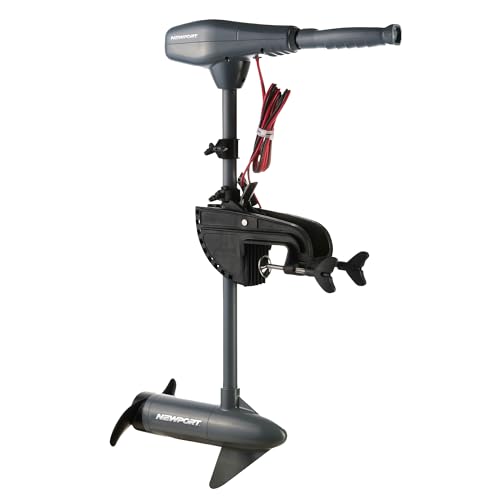
Best for kayaks or small sail-free designs requiring a 24″ shaft. This model uses all-aluminum construction with corrosion-resistant hardware for saltwater use and offers eight speeds (five forward, three reverse). The kayak-specific shaft helps place the propeller where it’s most effective in shallow waters.
Who it’s best for: kayakers seeking a compact, saltwater-ready option with reliable performance. Why selected: kayak-optimized shaft and corrosion resistance suit activity close to shorelines and bays. Caution: ensure the transom height and shaft length match your boat to avoid cavitation or insufficient depth clearance.
LYNICESHOP 1000W Electric Outboard: Higher Power for Inflatable Boats

Best for inflatables or small boats needing substantial power in a compact unit. This 1000W brushless motor operates at around 15 km/h (no-load speed near 3000 rpm) and uses a tiller control with a 180° joystick for flexible handling. It emphasizes reliability through a copper-core design while maintaining relatively low energy use.
Who it’s best for: boaters seeking higher power in a compact package, including inflatable craft. Why selected: strong power-to-weight ratio and silent operation for closer-to-shore or fishing scenarios. Caution: higher power demand can reduce battery life on smaller packs; verify compatibility with your battery system and mounting arrangement.
Buying Guide: Key Considerations for Electric Rowboat Motors
- Boat size and weight: Higher thrust models suit larger boats with more gear. For lightweight craft, a 36–55 lb thrust motor often suffices.
- Shaft length and mounting: Choose a shaft length that places the propeller in ideal depth for your boat’s draft and transom height. A common kayak shaft is around 24″, while bigger boats may use 30″ or more.
- Power source and efficiency: 12V systems are standard; 24V options exist but require two batteries. Consider motor efficiency (propeller design, copper core, and gearing) to maximize battery life.
- Saltwater vs freshwater: Saltwater-rated motors resist corrosion better; freshwater-only units may be lighter or less expensive but require maintenance in brackish or mixed waters.
- Controls and features: Look for LED battery indicators, adjustable tiller handles, and multiple forward/reverse speeds for precise maneuvering in currents or wind.
- Durability and maintenance: Aluminum or stainless hardware, along with corrosion-resistant components, extends life in harsh conditions.
- Installation considerations: Verify mounting options, transom compatibility, and whether the motor’s propeller size suits your boat’s hull design and debris conditions.
- Runtime planning: Align motor thrust with battery capacity and expected run time to avoid mid-trip outages.
FAQ
- What thrust level should I choose for a small rowboat?
– For light rowboats, kayaks, or inflatables, 36–55 lb thrust is typically adequate for calm to moderate conditions. - Are saltwater motors worth it for coastal lakes?
– Yes, saltwater-rated motors resist corrosion and handle exposure to sea air, even in brackish conditions. - How important is shaft length?
– Very important. The shaft should place the propeller below the hull’s stern without hitting the keel or being obstructed by water spray. - Can I mix 12V and 24V systems on the same boat?
– It’s generally not recommended. Each system is designed for a specific battery configuration and motor rating. - Do electric motors create too much noise for fishing?
– Modern trolling motors are designed for quiet operation; a higher thrust model with a proper propeller tends to produce manageable noise levels. - What maintenance is needed?
– Rinse saltwater motors with fresh water after use, check propeller for debris, inspect seals, and ensure battery connections are clean and secure.