Answering the question in plain terms: these electric polishers are designed to remove oxidation, swirl marks, and stains on boat hulls and decks, while delivering a glossy finish. They suit boat owners who want a professional-like buffing result at home, as well as DIY enthusiasts who detail fiberglass, gelcoat, and painted surfaces. The top picks below combine high torque, adjustable speeds, and ergonomic designs for longer sessions. Use the table to compare core specs and pick the best fit for your boat and experience level.
| Product | Brand | Best For |
|---|---|---|
| LDHTHOPI Buffer Polisher, 1600W, 7″/6″ Rotary | LDHTHOPI | Mid-sized hulls and decks; oxidation removal; versatile three-handle use |
| Vkdemer Cordless Car Buffer Polisher, 6 In | Vkdemer | Cordless convenience; quick jobs; smaller boats or tight spots |
| Avhrit Cordless Car Buffer Polisher Kit, 6 Inch | Avhrit | Cordless freedom; beginners to moderate users; multiple speed levels |
| ZOTA Buffer Polisher, 1600W, 7″/6″ | ZOTA | Longer sessions; wide speed range; durable copper motor |
| LDHTHOPI Buffer Polisher, 1800W, 6″/7″ | LDHTHOPI | Deep cleaning and defect removal; heavier-duty jobs; longer cord life |
LDHTHOPI 1600W Rotary Buffer For Boats

Best for: Boat owners who need a balanced, mid-to-heavy duty polisher with multiple speed options. The 1600W motor delivers solid power for removing oxidation and scratches on gelcoat or painted surfaces. The 7-speed range supports delicate buffing up to aggressive polishing, while the three grip options (direct, D-handle, side handle) improve comfort during long sessions. Caution: higher speeds generate more vibration; use appropriate pads and eye protection.
Vkdemer 6 In Cordless Buffer Polisher

Best for: Boat detailing where cord-free operation matters. The dual-battery design (two 21V packs) and a brushless motor offer strong performance with up to 5500 RPM. Six-speed control lets you tailor buffing intensity, from gentle waxing to heavy defect removal. Caution: cordless run-time depends on battery health; ensure batteries are charged before long sessions.
Avhrit Cordless 6 Inch Buffer Kit

Best for: Beginners and intermediate users seeking cordless convenience with wide speed range. The 6-inch pad size suits smaller boats or tight spaces, and the 6-variable speeds support tasks from gentle waxing to swirl removal. Caution: lower-cost cordless kits may require careful maintenance to maximize motor life.
ZOTA 1600W Buffer Polisher Kit

Best for: Boat owners seeking a long power cord and robust copper-wired motor. The 7-speed range covers everything from delicate polishing to aggressive defect removal, with a full copper wire motor designed for durability. Caution: full-copper motors can be heavier; handle with proper grip and support during use.
LDHTHOPI 1800W 6″/7″ Rotary Polisher
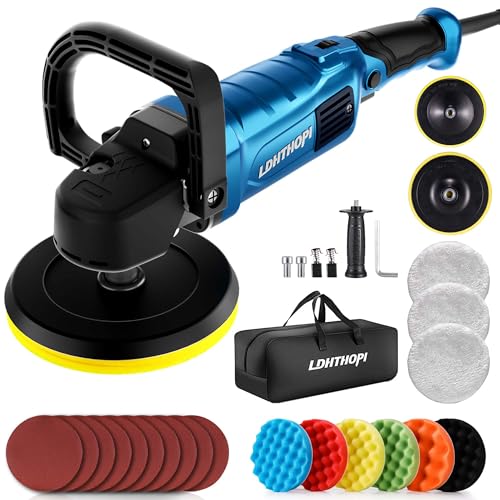
Best for: Heavier-duty boat surfaces and longer sessions. The 1800W copper motor plus six-speed control (750-3100 RPM) supports more aggressive defect removal and oxidation correction. Caution: higher power may require more careful technique to avoid surface damage; start at lower speeds when unfamiliar with the tool.
Buying Guide
What should you consider when choosing an electric polisher for boats?
- Power and motor type: Higher wattage often means better defect removal on gelcoat and painted hulls. Copper motors generally offer durability and longevity.
- Pad size and motion: 5–7 inch pads suit different hull areas. Dual action or orbital designs reduce swirl marks and are easier for beginners.
- Speed options: Look for multiple speeds (at least 6) to handle waxing, polishing, and defect removal across various surfaces.
- Corded vs cordless: Corded polishers deliver uninterrupted power; cordless models add portability for tight spaces but depend on battery life.
- Ergonomics and control: Grips, weight distribution, and optional handles influence comfort on longer sessions.
- Included accessories: Pads, bonnets, and attachments can affect value; ensure compatibility with standard 5–7 inch pads.
- Safety considerations: Wear eye protection, a mask for dust, and follow manufacturer guidance to avoid damaging hull finishes.
Frequently Asked Questions
- Q: Which type is best for gelcoat on boats, corded or cordless? A: Corded polishers are better for longer, uninterrupted work; cordless models offer mobility for tight spaces and overhead areas.
- Q: How do I prevent swirl marks when polishing a boat hull? A: Start with a lower speed, use appropriate polishing pads, and maintain even pressure while moving the polisher in overlapping passes.
- Q: What pad should I use for oxidation removal? A: Begin with coarse or cutting pads for heavy oxidation, then switch to medium and soft pads for finishing and gloss.
- Q: How do I choose the right speed for polishing gelcoat? A: Delicate surfaces require lower speeds; use higher speeds for aggressive defect removal, staying within the pad’s recommended range.
- Q: Can I use these polishers on fiberglass boat decks? A: Yes, but follow pad size and speed guidance suitable for fiberglass, and test on a small area first.
- Q: How long should a typical boat detailing session last? A: Sessions vary by hull size and surface condition; plan in 20–60 minute blocks with breaks to avoid heat buildup.