Answering the common buyer question, these electric winches are designed to make loading and launching boats easier, faster, and safer. The best picks here suit different needs: small to mid-sized trailers, frequent beach launches, and occasional heavy loads. If you mostly tow up to 2,000 lbs, a compact model with dual mode operation works well. For larger craft or frequent use, look for higher pull ratings and robust motors. Below, five top options are analyzed to help you decide which fits your boat, trailer, and environment.
| Product | Best For | Key Benefit | Drawback |
|---|---|---|---|
| Megaflint Trailer Winch | boats up to 6,000 lbs | 30% more power, Dyneema rope | Slightly heavier unit |
| VEVOR Electric Boat Winch | up to 2,000 lbs | Dual control, wired remote | Moderate price point |
| Bravex Trailer Winch 6000LBS | larger crafts | 30% more power, automatic braking | Wiring kit not included |
| Nilight Boat Trailer Winch 3500 lbs | mid-size boats | Waterproof, dual control modes | Some models lighter duty |
| Extreme Max 3006.8918 | versatile heavy duty | 11,000 lbs rolling capacity | Steel cable; heavier |
Megaflint Trailer Winch: 6000 lbs Capable, 12V DC

The Megaflint model offers dual mode operation: Power-in, Power-out, and Freewheel. It uses a Dyneema fiber synthetic rope, which is stronger and more flexible than steel of similar diameter. This makes line handling easier in tight spaces and reduces rope maintenance. The unit touts a 30% higher winching power than standard 6000 lbs trailers, which helps with heavier loads or slower hills on ramps. Best for boaters who want extra torque and smoother rope handling. A potential limitation is weight and mounting space needed on smaller trailers.
VEVOR Electric Boat Winch: 12V, Up to 2000 lbs
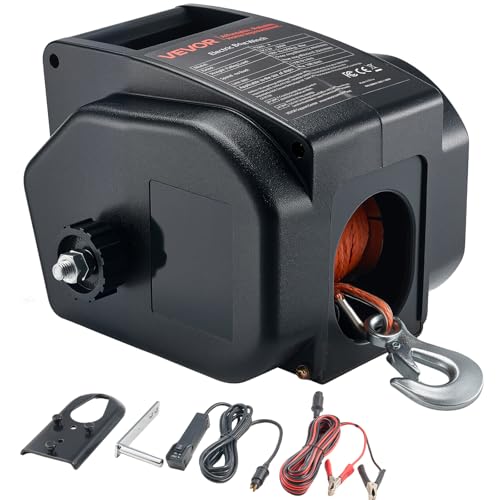
VEVOR’s winch combines a 0.4HP copper motor with 2000 lbs pulling power, designed for boats up to about 18 feet. It uses a polyethylene rope (30 ft) and offers both electric and manual control, with a 20 ft power lead for flexible wiring. This model is ideal for boaters who value a straightforward setup and reliable manual backup. A caveat is the 2000 lbs rating; heavier boats may require a higher-capacity device.
Bravex Trailer Winch 6000LBS: Reversible
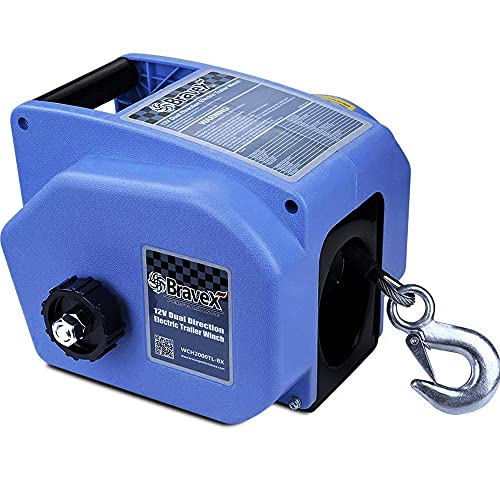
Bravex delivers 30% more power than average in its class and supports dual-direction winching with power-in and power-out. It offers both electric and manual operation, plus an emergency hand crank. A built-in electric braking system enhances control on ramps or uneven surfaces. It’s best for users who need strong performance and a fallback hand-crank option. Note that some compatibility details, such as mounting hardware, may require additional accessories.
Nilight Boat Trailer Winch 3500 lbs

Nilight’s 3500 lbs winch is designed for portability and versatility. It uses a 12 V DC motor with a 265:1 gear reduction and an automatic braking system. The unit supports dual direction winching, with wireless remote and hand crank options for backup. It’s well suited for mid-size boats on trailers and is noted for quiet operation. A limitation is that some setups may require careful alignment for longer pulls or steeper ramps.
Extreme Max 3006.8918 Reversible Winch

Extreme Max provides a flexible solution with rolling capacity up to 11,000 lbs and marine capacity near 9,900 lbs. It features a high-power motor and a standard steel cable (5.5 mm × 11 m). The better-than-average pulling power makes it suitable for heavier boats or frequent launches. The steel cable is durable, but it adds weight and can kink if not properly maintained. Consider splash zones and corrosion protection when choosing this for saltwater use.
Buying Guide: Key Considerations
Power and load rating: Match the winch’s pulling capacity to your boat’s weight and trailer tongue load. For most small to mid-size boats, a 2,000–3,500 lbs unit suffices, while larger boats may need 6,000–11,000 lbs rolling or pulling capacity.
Drive modes: Look for dual action (Power-in, Power-out) plus a freewheel option. This gives smoother loading and safe, controlled spooling when a power source isn’t available.
Rope type: Synthetic Dyneema ropes are lighter, safer to handle, and more flexible than steel cables, but require proper care and inspection. Steel cables are durable but heavier and can kink or rust in saltwater without proper coating.
Control options: Wired or wireless remotes plus a manual hand crank backup are valuable for reliability in variable weather and power outages. Consider how you’ll mount the winch and run cables for easy access.
Installation and compatibility: Some models include mounting plates and hardware; others require additional brackets or hardware. Confirm boat trailer compatibility, including bolt patterns and mounting space.
Durability and weather resistance: Choose models with corrosion-resistant components and sealed motors if you operate in saltwater or rainy environments. A braking system helps control speed on slopes or rough ramps.
Frequently Asked Questions
- What is the typical load rating I should choose for a trailer winch?
– Pick a rating that exceeds your boat’s weight plus tongue load, factoring in possible incline and wind conditions. - Is a synthetic rope safer than steel for boat winsches?
– Yes, synthetic rope is lighter and easier to handle, but inspect it regularly for frays and cut strands. - Do I need a remote control with my boat winch?
– A remote adds convenience and safety, especially from near the water or truck bed. Wireless remotes are common and practical. - Can I use a boat winch in saltwater environments?
– Yes, with corrosion-resistant construction and proper rinsing after use. Ensure seals and gears are rated for marine use. - What maintenance is required for a boat trailer winch?
– Regularly inspect ropes, cables, and gears; lubricate moving parts per manufacturer guidelines; test braking and emergency hand crank.
These options provide a range of capacities, control methods, and build qualities. When choosing, prioritize load requirements, reliability of control, and ease of maintenance to ensure safe and efficient boat loading and launching.