Answering the need for safer, non-pyrotechnic distress signaling on the water, these electronic flares are designed to meet USCG requirements and provide clear daytime and nighttime visibility. This guide highlights five top options and explains who each product suits best, along with practical buying tips. Ideal for boaters who want reliable, reusable marine safety signals without traditional flares.
| Product | Best For | Why It Stands Out |
|---|---|---|
| SIRIUS SIGNAL FOR LIFE C-1003 SOS LED Distress Signal | Small to mid-size boats needing a complete kit | Coast Guard approved, long-lasting, bright visibility up to 10 nm |
| ACR ResQFlare (USCG Replacement) | Boats seeking a compact, certified alternative to pyrotechnic flares | 360° visibility, IP67 waterproof, includes Distress Flag |
| TEKTITE SOSeFLARE 5 with Flag and Audible Signal | Owners wanting high endurance and Morse-code SOS | 30+ hours battery life, floats upright, waterproof to 500 ft |
Note: The table highlights a snapshot of strengths. Each option meets USCG or equivalent safety standards and is designed for different vessel types, budgets, and maintenance preferences.
SIRIUS SIGNAL C-1003 SOS LED Distress Signal
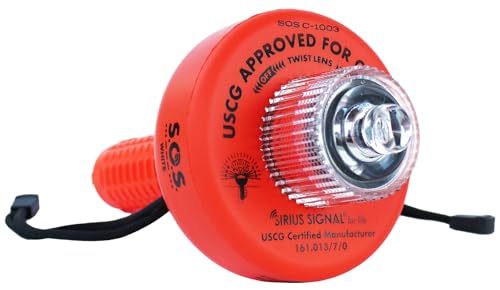
Features include a complete Coast Guard approved kit that fulfills night, day, and audible distress signal requirements. It flashes the SOS signal for up to 60 hours and runs on batteries included. Visibility reaches up to 10 nautical miles. Best for: small to mid-size boats needing a ready-to-use, all-in-one distress signal kit.
Who it’s best for: boaters who want a single package with a day flag and whistle built in for multi-signal compliance.
Limitation: Larger kits may require storage space; ensure mounting options fit your boat layout.
ACR ResQFlare Electronic Distress E-Flare
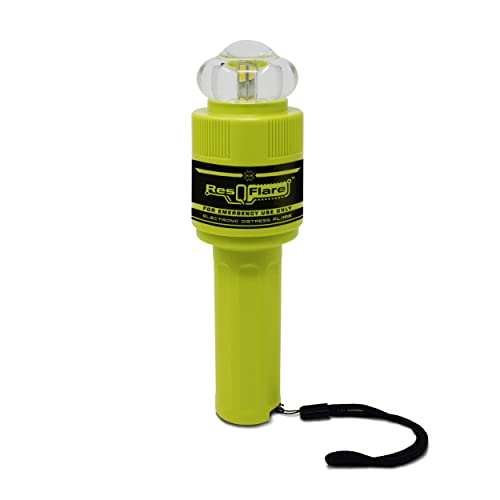
Includes the ResQFlare and a Distress Flag. When used together, they meet USCG pyrotechnic flare replacement requirements. It features 360° visibility, IP67 waterproofing, and automatic buoyancy with no separate flotation ring needed. Best for: maritime vessels seeking a lightweight, certified electronic alternative to traditional flares.
Who it’s best for: boaters prioritizing a compact, certified solution with a daytime signal flag included for daytime signaling.
Limitation: While durable, battery life can be shorter in high-use scenarios; plan for regular checks and replacements as needed.
TEKTITE SOSeFLARE 5 with Flag and Audible Signal
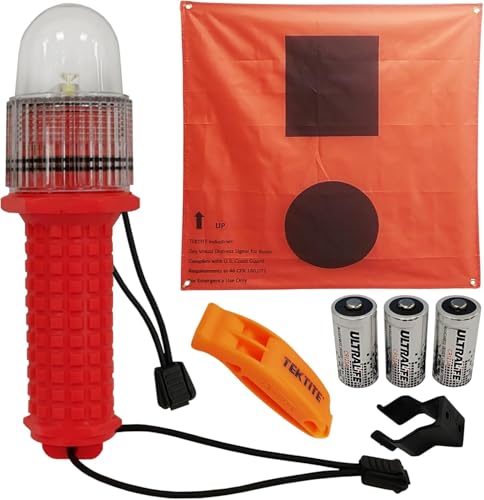
USCG and SOLAS compliant, this kit uses Morse-code SOS with an audible whistle and includes a distress flag for day and night visibility. Powered by CR123 lithium batteries, it lasts 30+ hours, with unused batteries having a five-year shelf life. It floats upright in water up to 500 ft and is built to withstand harsh marine conditions. Best for: vessels needing a reliably long-lasting electronic distress solution with audible signaling.
Who it’s best for: crews who want robust, weatherproof signaling that remains visible in rough seas.
Limitation: Replacement batteries are user-replaceable but require periodic maintenance to remain ready.
ACR ResQFlare E-Flare Safety Kit

This kit emphasizes an extended operational life of about 20 hours, more than three times longer than the USCG requirement for peak intensity. Includes a Distress Flag and is IP67 waterproof with 360° visibility. Best for: boaters who want a longer-lasting electronic distress signal integrated with standard Coast Guard signaling requirements.
Who it’s best for: users needing longer signaling capability without frequent replacements, in a compact, durable form factor.
Limitation: Ensure you have a plan for battery replacement when extended signaling periods are expected.
TEKTITE SOSeFLARE 5 Nighttime Only

USCG and SOLAS approved for nighttime emergencies, this handheld device provides S-O-S Morse signaling with a long 30+ hour battery life using replaceable CR123 batteries. It is waterproof up to 500 ft, floats upright, and is designed for boating safety. Best for: nighttime signaling where Morse SOS clarity is crucial and day signaling is less needed.
Who it’s best for: users prioritizing night-only signaling with robust water resistance and portability.
Limitation: Daytime signaling is not included in this variant, so consider a kit with daytime flag if daytime visibility matters more.
Buying Guide: Key Purchase Considerations
- Compliance and safety standards: Verify USCG and/or SOLAS compliance. Some kits are designed as direct replacements for pyrotechnic flares, while others focus on general distress signaling. Choose according to your vessel’s regulatory needs.
- Signal modes and visibility: Look for SOS (Morse) signaling, 360° visibility, daytime flags, and audible signals. A higher nautical mile visibility and multi-signal capability improve reliability in varied conditions.
- Battery life and replaceability: Consider whether the device uses user-replaceable batteries and the expected run time. Longer run times reduce maintenance frequency, especially on larger vessels.
- Waterproofing and buoyancy: Ensure devices are rated IP67 or better and can float upright. This helps with recovery and continued signaling after immersion.
- Mounting and accessibility: Evaluate whether mounting options (storage mounts, display mounts) suit your cockpit or cabin layout. Easy accessibility is key for rapid deployment.
- Portability and weight: For boats with limited storage, compact and lightweight options offer practical convenience without compromising safety.
- Durability and warranty: Marine environments demand rugged devices. Look for proof of rugged design and consider product warranties as part of total cost of ownership.
Frequently Asked Questions
- What is the main advantage of electronic flares over traditional pyrotechnic flares? Electronic flares provide reusable signaling, immediate deployment, and avoid hazardous materials and expiration concerns.
- Are electronic flares legally accepted as distress signals? Yes, many models are USCG approved or SOLAS compliant, designed to replace or supplement traditional flares where permitted.
- How long do electronic flares typically last? Run times vary; some kits offer 20–60+ hours of operation on a single battery set, with replaceable batteries available.
- Should I choose a kit with a daytime flag? If you operate in daylight-dense environments or want daytime visibility, select a kit that includes a distress flag along with the SOS signal.
- How important is buoyancy for an electronic distress signal? Buoyancy and upright flotation reduce the chance of signal loss if the device falls into water during deployment.
- Can I rely on these devices for all water conditions? They are designed for marine use and withstand typical boating conditions, but always perform regular maintenance and battery checks to ensure readiness.