Direct answer: USCG-approved electronic distress flares provide safer, reusable signaling for night and day emergencies, with longer lifespans and easier maintenance than traditional pyrotechnic flares. This guide highlights five top options suited for different boaters, from occasional anglers to offshore cruisers. Each product is selected for clear visibility, reliable performance, and compliance with Coast Guard rules. The buyer’s choice depends on visibility distance, water conditions, and how you’ll carry and deploy the signal in a real incident.
Summary table of chosen products
| Product | Best For | Key Advantage |
|---|---|---|
| SIRIUS SIGNAL C-1003 SOS LED Distress Signal | Families and small craft | Long-lasting, USCG‑approved, bright up to 10 NM |
| ACR ResQFlare E-Flare Kit | All-around reliability, compact carry | IP67, 360° visibility, includes distress flag |
| TEKTITE SoSeFLARE 5 | Boaters needing long battery life | 30+ hours, USCG & SOLAS compliant, floats upright |
| ACR ResQFlare E-Flare Safety Kit | Nighttime signaling, safety flag included | 20 hours, USCG nighttime signal certified |
| TEKTITE SoSeFLARE 5 (USCG/SOLAS) | Kayakers and multi-scenario crews | 30+ hours, submersible to 500 ft, durable |
SIRIUS SIGNAL C-1003 SOS LED Distress Signal
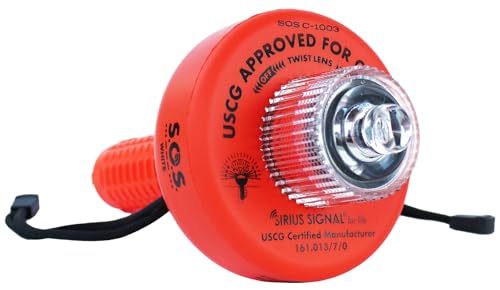
The Sirius C-1003 is a complete Coast Guard–approved distress kit designed for both night and daytime signaling. Best for families and small craft that require a single, straightforward rescue signal with audible alert. It runs on included batteries, offers a long operation window, and projects a bright SOS signal visible up to 10 nautical miles. A daytime flag and whistle are included, aiding visibility in daylight. Caution: while highly reliable, it may be bulkier than ultra-compact devices for very tight storage spaces.
ACR ResQFlare Electronic Distress E-Flare
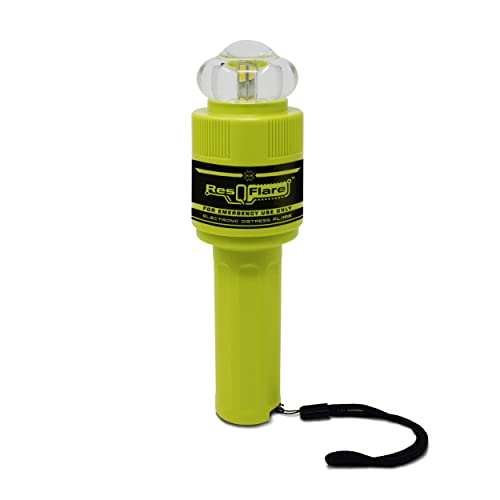
The ACR ResQFlare E-Flare is positioned as a replacement for pyrotechnic flares, pairing a bright 360° signal with a distress flag for daytime visibility. It’s IP67 waterproof and USCG 161.013 certified as a Nighttime Visual Distress Signal. This option is best for users who want a standalone electronic flare with an included day signal. Limitation to note: full advantage comes when used with the accompanying flag; without it, daytime signaling is reduced.
TEKTITE SOSeFLARE 5 Kit
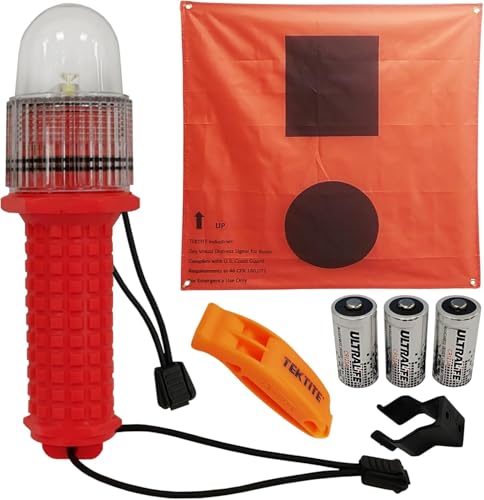
This TEKTITE kit offers a USCG and SOLAS–compliant electronic distress signal, including an audible signal and flag for day signaling. It provides long battery life with user-replaceable CR123 batteries and floats upright in water, surviving depths up to 500 ft. It is suitable for boaters who need a rugged, all-around safety beacon that performs in rough seas. Caution: while highly capable, its complexity may be more than necessary for ultra-lightweight setups.
ACR ResQFlare E-Flare Safety Kit

This kit emphasizes operational life and resilience. It offers up to 20 hours of signaling, substantially exceeding some USCG requirements, and includes a distress flag. It is best for crews who want strong nighttime visibility with extra daylight signaling aids. Limitation: higher complexity and cost compared with single-flare solutions.
TEKTITE SoSeFLARE 5 (Night Use)

Designed specifically for nighttime signaling, this USCG and SOLAS–approved device provides a S-O-S Morse code beacon with a long battery life and water submersion capability up to 500 ft. Best for night-focused signaling on boats, jet skis, and personal watercraft. Limitation: lacks a daytime flag in some variants, so ensure you pair it with a daytime signal if needed.
TEKTITE SoSeFLARE 5 (USCG/SOLAS, Handheld)

This TEKTITE handheld unit emphasizes USCG and SOLAS compliance with a focus on nighttime emergency signaling. Battery life extends over 30 hours with replaceable CR123 cells. Best for handheld signaling on small crafts or as a spare device on larger vessels. Caution: ensure you have a proper daytime signaling option, as this variant focuses on night signaling.
Buying Guide: How to Choose an Electronic Distress Flare
- purpose and setting: If you mostly boat at night or in mixed daylight, choose a kit with both night SOS signaling and a daytime flag for all-conditions visibility.
- battery life: Look for 20–30+ hours of signaling. Longer life reduces the risk of device failure during emergencies.
- visibility: A 360° signal and distance reach (5–10+ NM) improves detection by other vessels and rescuers.
- water conditions: For offshore or heavy seas, prioritize waterproof to IP67 or better and upright-floating design.
- compliance: USCG and SOLAS approvals ensure the device meets official safety standards for maritime signaling.
- maintenance: Consider user-replaceable batteries to extend service life and readiness after long shelf periods.
- portability and storage: Compact, lightweight units fit tight cockpit lockers or life-raft kits, but may trade off battery life.
- included accessories: Distress flags and whistles improve daytime visibility and audible signaling; check packaging for these extras.
- replacement parts: Ensure availability of CR123 batteries and replacement components in your region for long-term readiness.
Frequently Asked Questions
- Are electronic distress flares USCG approved? Yes, several models are certified to meet USCG signaling requirements, with some also meeting SOLAS standards.
- Do I need a daytime flag with electronic flares? For best daytime visibility, yes; many kits include a flag as part of the signal package.
- How long do these devices last on a single set of batteries? Most models provide 20–30+ hours of signaling depending on the mode and usage.
- Can I rely on electronic flares as a replacement for pyrotechnic flares? In many cases, electronic flares qualify as replacements when used with proper flags and signaling equipment as indicated by USCG guidance.
- Are these devices waterproof? Yes, many are IP67 waterproof and float upright, with submersion resistance up to hundreds of feet for offshore use.
- What should I consider for offshore boating? Prioritize long battery life, 360° visibility, buoyant and upright floating design, and USCG/SOLAS compliance.