In an engine room or mechanical space, effective sound control reduces fatigue, improves communication, and protects nearby areas from noise disturbances. The top picks below are suited for different needs—from lightweight studio-like workspaces to vehicle bays and HVAC rooms. This guide highlights five products that balance easy installation, solid absorption, and practical limitations. Choose based on room size, frequency range, and installation constraints.
| Product | Best For | Main Benefit | |
|---|---|---|---|
| Focusound Acoustic Foam Panels (52 Pack) | Excellent noise absorption with triangular grooves | Use included adhesive for quick mounting | |
| uxcell Sound Absorption Mat (Car Hood) | Noise dampening and heat resistance | Single sheet; cover key engine noise paths | |
| Focusound Acoustic Foam Panels (50 Pack) | Strong wall absorption with adhesive included | Place panels where flutter echoes occur | |
| SD SODOCT Pyramid Acoustic Panels (12 Pack) | 3D pyramid design boosts high-frequency absorption | Vacuum-pack restoration; allow to expand 24–48h | |
| Focusound Acoustic Foam Panels (24 Pack, 2″) | Curved designs for enhanced diffusion | 150 adhesive pieces; gentle wall protection |
Focusound 52 Pack Acoustic Foam Panels

Key features include a triangular groove pattern designed to maximize noise absorption and reduce echoes, waves, and flutter in small to medium rooms. The product ships with 300 double-side adhesive tapes, simplifying installation and helping to protect walls from damage. If the foam doesn’t return to shape after compression, recovery is possible by soaking in water briefly and air-drying over 24–48 hours.
Best for: Small home studios, home offices, and voiceover booths where wall damage must be minimized.
Why selected: Strong absorption, practical for compact engine rooms near control panels, with an included mounting solution that minimizes wall traces. The warranty-free caveat is the need for proper ventilation during recovery after compression.
Caution: Do not rely on a single layer for heavy, low-frequency isolation; combine with bass traps if low-frequency control is required.
uxcell 118mil Foam Mat (Car Hood)
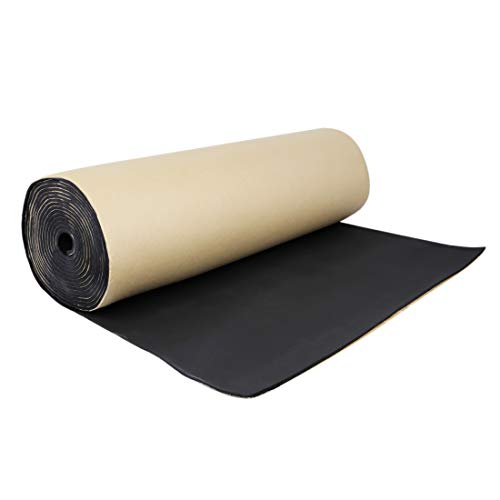
This 3mm cell foam sound insulation mat blends airflow noise reduction with heat-damping properties. It covers roughly 6.46 square feet and is designed to dampen engine, road, and transmission noise within a vehicle environment. The outer surface is foam-clad, helping to block heat transfer while supporting insulation duties.
Best for: Vehicles or engine rooms inside mobile units where heat and noise travel through metal panels.
Why selected: A compact, heat-resistant option that addresses engine noise paths and heat transfer. It’s not a full wall treatment, so plan for targeted coverage rather than a single large panel.
Caution: It’s mainly designed for automotive applications; ensure compatibility with permanent engine room panels before installation.
Focusound 50 Pack Acoustic Foam Panels

These 1″ thick wedge panels offer solid noise absorption with a reinforced double-side adhesive tape kit for wall protection. The foam is described as high-density and non-toxic, with a recommendation to allow expansion after compression by placing in a ventilated area for 24–48 hours.
Best for: Small studios or engine rooms where wall preservation matters and high-density foam is preferred.
Why selected: Consistent absorption performance, with a practical install kit that minimizes surface damage. A noted limitation is the need for air-drying to recover original shape after packaging compression.
Caution: Avoid relying on these panels to achieve bass management in larger rooms; pair with bass traps for deep low-frequency control.
SD SODOCT Pyramid Acoustic Panels (12 Pack)

The 12-pack features a 3D pyramid design to boost absorption of flutter echoes and higher frequencies. Each tile covers about 1 square foot at the highest point, with a total area of 12 square feet. The package is vacuum-sealed; after opening, air out for 24–48 hours to regain shape. Water soaking or gentle heat can assist reshaping if needed.
Best for: Professional studios or control rooms seeking a noticeable high-frequency reduction with a distinctive aesthetic.
Why selected: The pyramid geometry enhances surface contact with sound waves, offering more efficient treatment in rooms with reflective ceilings or hard surfaces. Limitation: larger panels may require more surface preparation for even coverage.
Caution: Vacuum-sealed packaging may cause initial deformation; allow time for full expansion before final placement.
Focusound 24 Pack Curved Acoustic Panels (3″)

These curved panels feature a 3″ thickness and curved grooves to diffuse and absorb sound waves more effectively than flat faces. The kit includes 150 pieces of double-sided adhesive for installation and wall protection. If panels don’t return to shape after unpacking, soak briefly in water and air-dry for 24–48 hours.
Best for: Medium-sized engine rooms or workspaces where diffuse absorption reduces flutter and standing waves.
Why selected: The curved design offers enhanced diffusion, which can improve speech intelligibility in mechanical spaces. Limitation: heavier panels require secure mounting and may increase installation effort on larger walls.
Caution: Ensure walls can bear the weight of multiple curved panels; distribute coverage evenly to avoid hotspots.
Buying Guide
What room size and frequency range should guide your choice?
Smaller rooms with mid-to-high frequency noise benefit most from foam panels with geometric patterns (wedge or pyramid) and lighter thickness. Larger spaces or rooms with significant low-frequency issues may require thicker panels or complementary treatments like mass loaded vinyl (MLV) or bass traps.
Is installation ease important?
Panels that include adhesive backings reduce the need for drilling and wall damage, making them ideal for temporary setups or rental spaces. If you must drill, consider heavier panels with toggle bolts and even distribution to avoid sagging.
Should you prioritize absorption or diffusion?
Absorptive foam panels reduce echoes by soaking up sound energy, while curved or 3D designs also diffuse sound to minimize flutter. A combination approach often yields the most balanced room acoustics in engine rooms.
How do you manage long-term maintenance?
Foam panels are usually easy to clean with light dusting. For panels that are compression-affected, following the suggested recovery steps (water soak and air-dry) restores shape. If humidity is high, consider vented installations to prevent mold and odor accumulation.
What about non-foam options?
Mass loaded vinyl and specialty blankets offer excellent blocking capabilities for high-noise environments, especially where low-frequency control matters. They are heavier and less forgiving for on-wall installations, but they pair well with foam for a comprehensive solution.
How to plan a balanced installation?
Aim for a mix of absorption and diffusion: place wedges or curved panels on walls with strong reflections, add heavier bass management as needed, and maintain airflow for equipment cooling. Documenting coverage areas helps ensure even sound treatment across the room.
Quick FAQ
- What thickness should I start with for a small engine room? Start with 1″ to 2″ panels for general absorption; add 3″ or thicker items if low-frequency issues persist.
- Can I install foam panels on painted walls? Yes, especially when using adhesive-backed panels. For rental spaces, adhesive compatibility matters; use low-residue tape if needed.
- Will foam panels block all noise? No; they reduce reverberation and echoes but do not completely seal out noise. Consider additional barriers for major sound blocking.
- Do curved panels work better than flat ones? Curved panels can diffuse sound more effectively, reducing flutter and improving clarity in some spaces.
- How long do panels take to settle in? Allow 24–48 hours for foam to recover its shape after unpacking or compression.
- Should I mix brands? Mixing panels with similar absorption properties can work, but consistency helps predictable results. Align thickness and density across the treated area.