Answering the question for boat owners: epoxy bottom paints deliver durable, low-drag protective coatings that guard against corrosion, fouling, and wear. This guide highlights five top epoxy and barrier coat products suited for fiberglass, wood, steel, and aluminum hulls. It targets boaters who want long-lasting protection, reduced drag, and easier maintenance, from saltwater cruisers to freshwater anglers. The summary table below compares core details to aid quick decisions.
| Product | Best For | Coating Type | Ideal Use |
|---|---|---|---|
| Fasco Epoxies Super Slick 2000 Epoxy Bottom Coating (Quart) | Airboats, PWCs, jet skis, aluminum hulls | Two-part epoxy with PTFE | Friction-reducing, anti-drag protection |
| Fasco Epoxies Super Slick 2000 Epoxy Bottom Coating (Gallon) | Big hulls, heavy-use boats | Two-part epoxy with PTFE | High-build protection with slick finish |
| TotalBoat TotalProtect Epoxy Barrier Coat System (White, Gallon) | Fiberglass, all underwater metals | Two-part epoxy primer / barrier coat | Above and below waterline protection |
| TotalBoat Underdog Marine Antifouling Bottom Paint (Black, Gallon) | Saltwater and freshwater boats with frequent use | Copper-based antifouling | Prevents barnacles and mussels, easy maintenance |
| TotalBoat JD Select Ablative Antifouling Bottom Paint (Black, Gallon) | Fiberglass, wood, steel boats | Ablative antifouling | Self-polishing protection that minimizes buildup |
Fasco Epoxies Super Slick 2000 Epoxy Bottom Coating (Quart)

Best for light to moderate hulls that prioritize ultra-low drag. This two-part epoxy uses PTFE and friction-reducing additives to create an exceptionally slick surface that cuts drag across grass, mud, sand, and water. It strengthens abrasion resistance and provides long-lasting protection for airboats, jon boats, aluminum hulls, fiberglass, PWCs, and jet skis. Best choice for boater-owners seeking maximum glide and fuel efficiency in mixed-use environments. Caution: application requires proper surface prep and mixing; read the manufacturer’s instructions to ensure complete cure and performance.
Fasco Epoxies Super Slick 2000 Epoxy Bottom Coating (Gallon)

Best for larger hulls or boats that demand a high-build, slick bottom layer. This gallon kit extends the same two-part epoxy technology with PTFE to deliver superior abrasion resistance and long-lasting protection for boats, airboats, jon boats, aluminum hulls, fiberglass, PWCs, and jet skis. Choose this if you need extended coverage and a consistently slick finish for heavy usage. Limitation: larger quantity requires careful storage and proper mixing ratios to maintain performance.
TotalBoat TotalProtect Epoxy Barrier Coat System (White, Gallon)

Best for protection both above and below the waterline, this high-build two-part epoxy primer acts as a barrier coat and primer. It is ideal for preventing gelcoat blistering and is suitable for fiberglass boats and other underwater metals. Choose this when you need a robust base layer that enhances adhesion and seals hull surfaces prior to topcoat applications. Caution: ensure proper curing between coats and follow environmental guidelines when used below the waterline.
TotalBoat Underdog Marine Antifouling Bottom Paint (Black, Gallon)
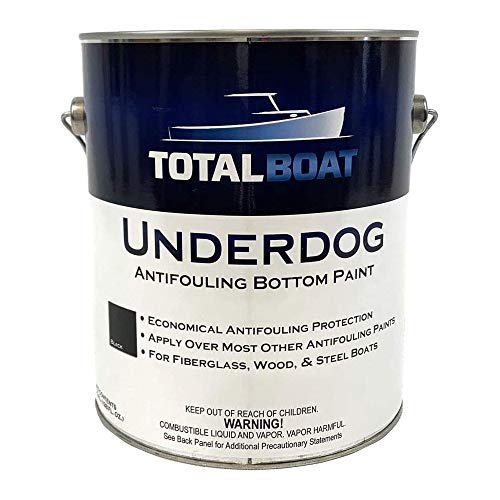
Best for boats that operate in regular saltwater conditions or experience frequent use. This economical antifouling bottom paint uses copper biocide to prevent barnacles and mussels from clinging to hulls and is durable enough for travel and beaching. It’s suitable for fiberglass, wood, steel, and iron bottoms. The protection lasts a single season with reapplication recommended for continued antifouling performance. Caution: copper-based formulas may require marina compliance checks for certain water bodies.
TotalBoat JD Select Ablative Antifouling Bottom Paint (Black, Gallon)

Best for boats requiring a self-polishing solution that sheds old coating as the hull moves through water. This ablative antifouling paint is suitable for fiberglass, wood, and steel boats in both saltwater and freshwater. It reduces bottom paint buildup, simplifying next-season preparation. It has low odor and low VOCs with easy cleanup using soap and water. Choose this when you want consistent performance with regular hull polishing for smoothness, speed, and fuel efficiency. Limitation: ablative paints gradually wear away, so reapplication timing depends on usage and water conditions.
Buying Guide: Key Considerations For Epoxy And Antifouling Boat Bottom Paints
- Surface compatibility: Confirm substrate compatibility (fiberglass, wood, steel, aluminum) and whether a barrier coat is recommended before topcoat.
- Water exposure: Choose antifouling paints for boats in saltwater or mixed-use environments; consider ablative vs non-ablative options based on maintenance goals.
- Drag reduction: If maximizing speed and efficiency is a priority, prioritize products with friction-reducing technologies (like PTFE additives).
- Application and curing: Review surface prep, mixing ratios, temperature, and cure times to ensure proper adhesion and performance.
- Environmental impact: Check VOC levels and marina restrictions; some products offer low-VOC formulas.
- Maintenance cycle: Antifouling coatings require seasonal reapplication; barrier coats provide long-term protection but may need topcoats for antifouling properties.
- Cost and coverage: Larger volumes may reduce per-gallon cost but require adequate storage and handling; verify coverage per coat and total coats needed.
Frequently Asked Questions
- What is epoxy boat bottom paint best used for? Epoxy bottom paints provide strong, durable protection and can reduce drag when formulated with friction-reducing additives. They are ideal for boats that require long-lasting hull protection and performance in mixed environments.
- Do I need a barrier coat before epoxy bottom paint? Yes. Barrier coats strengthen adhesion and help prevent blistering on fiberglass and other substrates, especially when applying topcoat epoxy.
- What’s the difference between ablative and non-ablative antifouling paints? Ablative paints wear away over time as the boat moves, reducing buildup and easing maintenance; non-ablative paints slowly leach biocides and can require more frequent sanding between seasons.
- Are copper-based antifouling paints safe for all marinas? Copper-based paints are effective but may be restricted in some marinas and water bodies. Check local regulations before use.
- Can I mix epoxy barrier coat with antifouling paints? Some combinations are common, but always follow product labels and manufacturer guidelines to ensure proper adhesion and performance.
- How often should antifouling bottom paint be reapplied? Reapplication depends on usage, water conditions, and the product type; muitos owners plan annual or biannual refreshes.