Answering the question for buyers seeking improved docking and precise handling: external bow thrusters are designed to push a bow sideways, helping you steer in tight marinas, mitigate wind or current, and enhance overall maneuverability. The top picks below target different boat sizes, mounting options, and maintenance needs. Ideal buyers include new boat owners seeking easier berthing, cruisers needing steady control in gusty conditions, and professionals who rely on confident docking in crowded waters.
| Product | Best For | Thrust Range | Boat Size |
|---|---|---|---|
| Sleipner SE30 Tunnel Bow/Stem Thruster | Smaller boats, tight marinas | 30–40 kg | 20–28 ft |
| DAUZ Underwater Bow Thruster | Underwater applications, versatile mounting | High power (varies by model) | Various small to mid vessels |
| Sleipner SE60 Tunnel Bow/Stem Thruster | Mid-size boats, balanced power | 60–73 kg | 29–38 ft |
| Sleipner SE80 Tunnel Bow/Stem Thruster | Larger boats, robust control | 80–96 kg | 35–48 ft |
| Cryfokt Mini Underwater Bow Thruster | Compact systems, DIY setups | Low to moderate thrust (CW/CCW variants) | Small to mid vessels |
Sleipner SE30 Tunnel Bow/Stem Thruster 12V

Features: SE30 is a compact thruster with 30-40 kg thrust, suitable for boats between 20-28 feet. It can be mounted as a bow or stern thruster. The installation is flexible, allowing mounting at any angle in the tunnel, and the motor bracket rotates 90 degrees. It is galvanically isolated and uses Sleipner’s patented IPC technology for intelligent power control and safety.
Best for: Small to mid-size boats needing strong, flexible bow control for easy berthing and maneuvering in tight spaces.
Why selected: Combines compact size with substantial thrust and installation flexibility, backed by Sleipner’s long-standing tunnel thruster design.
Limitations: Some setups may require precise tunnel preparation; verify compatibility with boat layout and mounting space.
DAUZ Underwater Bow Thruster, 4 Blades

Features: Underwater thruster with four-blade alloy propellers, designed for high power, with water sealing and robust aluminum body. Suitable for a wide range of underwater applications, including boats, kayaks, and underwater robotics. The body is CNC-machined 6061 aluminum with durable blades.
Best for: Boats requiring powerful underwater thrust and versatile mounting for rugged environments.
Why selected: High power and rugged construction offer reliable control for complex tasks or deeper water operations.
Limitations: Fully submerged operation may require careful waterproofing and installation in a capable tunnel or housing.
Sleipner SE80 Tunnel Bow/Stem Thruster 12V

Features: SE80 delivers 80–96 kg thrust and is suitable for boats between 35-48 feet. Like other Sleipner tunnel thrusters, it offers mounting flexibility with tunnel angle and a rotatable motor bracket. Sleipner notes its status as a top-selling model with extensive global installation experience.
Best for: Larger boats needing substantial lateral power for confident navigation in close quarters.
Why selected: High thrust combined with proven reliability and flexible installation supports demanding berthing tasks.
Limitations: Higher power units may require more robust electrical and mounting provisions on board.
Cryfokt Mini Underwater Bow Thruster CW
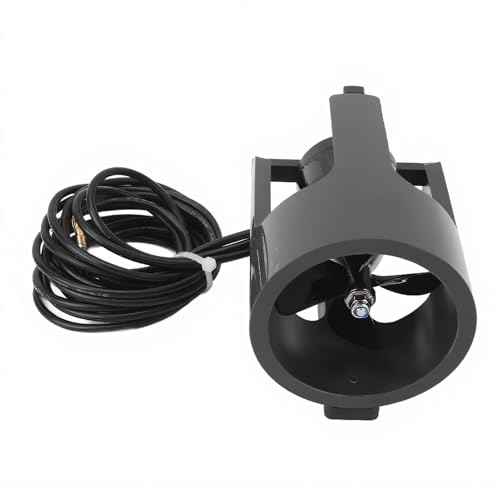
Features: 12-25.2V brushless motor with CW rotation; designed for underwater use with sealed cabin structure for water isolation. Suitable for underwater robots, RC fishing boats, net pulling boats, and water simulation. Twin CW/CCW variants provide directional options.
Best for: Small craft or DIY setups where compact, brushless performance is needed with underwater installation.
Why selected: Compact form factor and brushless efficiency make it a practical choice for lightweight applications and hobbyist installations.
Limitations: Underwater operation may require careful sealing and electrical planning for long-term reliability.
Cryfokt Mini Underwater Bow Thruster CW (Another Variant)

Features: Similar to the CW variant, with a focus on underwater thrust and sealed operation for multiple small craft applications. Includes the same versatility in usage scenarios as the other Cryfokt unit.
Best for: Buyers needing a second Cryfokt unit or a CW option for additional bow control with compact dimensions.
Why selected: Consistent performance across Cryfokt small thruster options for budget-conscious installs.
Limitations: Similar to other underwater thrusters, ensure proper installation and waterproofing for long-term use.
Buying Guide
What size boat should drive your choice? Consider boat length, weight, and desired maneuverability. Larger boats typically benefit from higher thrust models (SE60, SE80), while smaller craft pair well with compact options like SE30 or Cryfokt units.
Which mounting method fits your setup? External bow thrusters are installed in a tunnel at the bow; some products are described as underwater or versatile for different mounting. Confirm tunnel dimensions and installation access before purchase.
Power considerations matter. 12V systems are common, but ensure your electrical capacity and fusing are compatible with the selected thruster’s current draw and duty cycle.
Reliability and serviceability are key. Long-standing brands with wide installation bases (like Sleipner) may offer better aftermarket support, easier integration with existing controls, and proven performance in varied conditions.
Installation flexibility can influence performance. Models that allow tunnel angle adjustment and 90-degree motor bracket rotation generally provide easier alignment with hull contours and better steering response in gusty winds or heavy current.
FAQ
- What is the main benefit of an external bow thruster? It provides lateral bow movement to improve docking, sideward control, and precise maneuvering in tight spaces.
- Do I need more than one bow thruster? Most boats benefit from a single well-placed bow thruster; larger boats or complex docking needs may justify dual-thruster setups in some cases.
- Are underwater bow thrusters the same as external tunnel thrusters? Not exactly; underwater thrusters operate below the waterline and may require different mounting and sealing compared to tunnel/inline external units.
- What maintenance is typical for these thrusters? Regular inspection of mounting hardware, seals, electrical connections, and propeller wear is advised; consult the manufacturer guidelines for service intervals.
- Can I install a bow thruster myself? Basic installations are feasible for experienced DIYers with suitable tools and skills; complex setups may require professional installation to ensure reliability and safety.
- How do I know which thrust rating to choose? Choose based on boat size and expected docking conditions; larger boats in crowded marinas typically require higher thrust for effective maneuverability.