Answer: Fiberglass tape designed for boats provides strong, durable reinforcement for seams, repairs, and sealing tasks on watercraft. This guide highlights top options best suited for boat repairs, with guidance on where each tape excels and potential limitations. Ideal buyers include DIY boaters, boatyard repair technicians, and marine enthusiasts seeking long-lasting, water-resistant fixes.
Below is a quick summary of five recommended products, focused on boat repair and reinforcement. The table shows each product’s best use, material characteristics, and key strength to help you compare at a glance.
| Product | Best For | Width × Length | |
|---|---|---|---|
| Acuteye Fiberglass Cloth Roll | General boat seam reinforcement | 4″ × 99 ft | Non-adhesive fiberglass cloth |
| Better Boat Waterproof Tape | Marine seals and leaks | 4″ × 15 ft | Rubberized vinyl with strong adhesive |
| TOAXUUL Fiberglass Cloth Tape | Reinforced repairs on multiple surfaces | 1″ × 99 ft | Woven fiberglass fabric |
| SICCOMA Fiberglass Cloth Roll | Boat seams and molding edges | 2″ × 99 ft | Plain weave E-glass, non-adhesive |
| SIMPLYHARDWARE 1708 Fiberglass Mat | Marine repair with resins | 8″ × 360″ (10 yds) | 1708 biaxial fiberglass mat |
Acuteye Fiberglass Cloth Roll For Repairs

Acuteye’s fiberglass cloth roll is a non-adhesive 4″ wide tape that runs 99 feet, designed for easy cutting into customized shapes for boat repairs, pipes, sinks, and other reinforced areas. The fabric is woven from high-quality fiberglass, featuring lock edges to resist fraying. It excels where a clean, machine-cut reinforcement is needed without pre-applied adhesive. This makes it ideal for wet-out with resin systems, where users want precise control over saturation and bond thickness. Best for: a DIY boat owner performing targeted seams repair or reinforcement using epoxy or vinyl ester resins. Limitation: no built-in adhesive, so requires a compatible resin system and fabric tape to secure the repair.
Why it was selected: The non-adhesive format provides predictable, resin-compatible bonding for marine repairs, while its 99-foot length offers ample material for multiple tasks. It’s well-suited for reinforcement around hull seams or repair patches where precision matters and adhesive is applied separately.
Better Boat White Waterproof Tape For Leaks
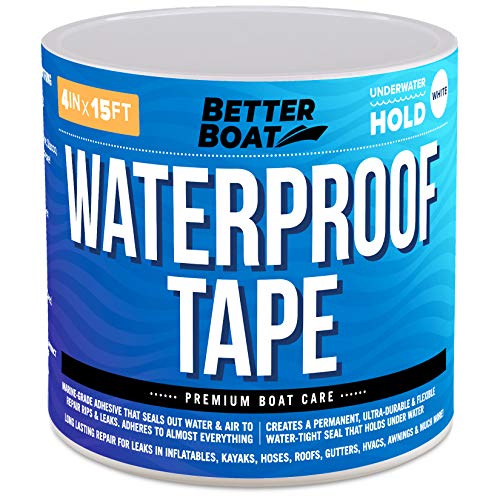
Better Boat’s 4″ × 15 ft white waterproof tape is designed to stop leaks and seal surfaces quickly. It features a thick, rubberized vinyl adhesive that adheres to vinyl, plastic, rubber, wood, fiberglass, tile, metal, and more. The tape claims permanent seals even when submerged, making it useful for boat hull patches, leaks around deck fittings, and pool or RV applications. Best for: quick, dry-to-wet surface repairs where a strong, flexible bond is needed and a temporary or semi-permanent fix is acceptable. Limitation: some users may require surface preparation to optimize adhesion on rough or highly curved surfaces.
Why it was selected: Its marine-grade performance and ability to seal in challenging conditions—wet surfaces included—make it a practical, ready-to-use option for sealing leaks or gaps on boats without waiting for curing times associated with resin-based repairs.
TOAXUUL Fiberglass Cloth Tape

TOAXUUL offers a 1″ width, 99 ft roll of woven fiberglass cloth tape with heat resistance and electrical insulation properties. It is designed for multi-surface repairs, including concrete, wood, fiberglass, and metal, with interlocking fiberglass bridges for larger repairs. Best for: smaller, precision repairs on a boat deck, hull liner seams, or around hardware where a narrow strip provides reinforcement without bulk. Limitation: 1″ width may require multiple strips for larger repairs, which can be less efficient than wider rolls.
Why it was selected: Its narrow width and reinforced fabric construction make it a practical choice for detailing work and edge sealing on boats, where precision is essential and resin saturation is planned.
SICCOMA Fiberglass Cloth Roll For Reinforcement

SICCOMA’s non-adhesive woven fiberglass cloth strip measures 2″ in width and 99 ft in length. It uses a plain weave E-glass, with selvage edges designed to minimize fraying. It’s intended for winding pipes, sealing seams, and reinforcing boat moldings. Best for: projects requiring a wider strip than ultra-narrow tapes but not as wide as full rolls, especially around pipe penetrations or large seams. Limitation: non-adhesive format means it requires resin or another binder to hold the repair in place.
Why it was selected: The combination of a durable plain weave and a 2″ width offers a versatile middle-ground option for boat repairs where more coverage is needed than 1″ tapes but without the bulk of wider mats.
SIMPLYHARDWARE 1708 Fiberglass Mat Roll

SIMPLYHARDWARE presents an 8″ wide by 360″ (10 yards) 1708 biaxial fiberglass mat, designed for resin-compatible reinforcement in marine repairs. It is commonly used as reinforcement in composites and is compatible with epoxy, polyester, and vinyl ester resins. Best for: robust boat repairs and molding work where biaxial reinforcement improves laminate strength and durability. Limitation: wider mat requires careful saturation with resin to avoid air bubbles and ensure thorough wet-out.
Why it was selected: The 1708 biaxial configuration provides superior strength and is ideal for larger structural repairs on boats, chafed decks, or damaged transoms when resin compatibility is required for long-lasting bonding.
Buying Guide: Key Factors For Fiberglass Tape On Boats
What type of fiberglass tape should I choose for my boat?
Non-adhesive cloth tapes are ideal when you want to control resin saturation and bond thickness. Adhesive-backed tapes are convenient for quick seals on dry surfaces. For structural repairs, resin-compatible cloth mats and biaxial fabrics offer higher strength and durability.
What width is best for boat repairs?
Wider tapes (2″ to 8″) cover more area and are efficient for seams and larger patches. Narrow tapes (1″ or less) provide precision for edges, small patches, and detailed work around hardware.
Which resin should I pair with fiberglass tape?
Epoxy and vinyl ester resins are common marine choices. Polyester resins can also work, but epoxy offers better moisture resistance and bonding in many boat repairs. Ensure the tape material is compatible with your chosen resin.
How should I prepare the surface?
Clean and dry the surface before applying adhesive tapes. For non-adhesive cloths, apply resin evenly and press the fabric into place to achieve thorough wet-out.
What are typical limitations to watch for?
Adhesive-backed tapes may be less effective on rough or curved surfaces. Non-adhesive cloths require proper resin bonding. Some tapes are not intended for long-term exposure to extreme UV or flexing surfaces without proper sealing.
FAQ
-
Can fiberglass tape be used underwater?
Yes, many marine-grade tapes are designed to seal and reinforce while exposed to moisture. Confirm resin compatibility and follow curing instructions for best results.
-
Is adhesive necessary for boat repairs?
Adhesive-backed tapes are convenient for quick patches, but non-adhesive cloths with resin bonding offer controlled reinforcement and longevity.
-
Which tape is best for sealing leaks?
High-adhesion, rubberized vinyl tapes perform well on leaks and rough surfaces, especially on hull penetrations and deck fittings.
-
Can I use these tapes with epoxy or polyester resin?
Most tapes are designed to work with common marine resins. Always verify compatibility with the specific resin you plan to use.
-
How do I ensure a strong bond on a curved surface?
Use flexible, biaxially reinforced mats or multiple narrow strips to follow the contour, ensuring complete wet-out and avoiding air pockets.
-
What maintenance helps extend repair life?
Keep repaired areas clean and dry when possible, recoat with resin or sealant as recommended, and inspect for UV exposure or moisture ingress periodically.