Answering the common question, this guide highlights top outboard motors for fishing boats and kayaks. It compares entry-level to mid-range power, noise, fuel use, and durability so buyers know which model fits their vessel and fishing style. The best picks span lightweight portable models suitable for kayaks to robust shaft-mounted engines for small fishing boats. Ideal buyers include weekend anglers, boaters with saltwater or freshwater use, and those seeking reliable CDI ignition, water cooling, or extra thrust for heavy loads.
Summary of selected products
| Product | Best For | Key Benefit | Notes |
|---|---|---|---|
| LIWBYYG 2 Stroke 18HP Outboard Motor | Powerful small boats and kayaks | High power and quiet operation with water cooling | 5500 RPM max, 18 HP, robust aluminum |
| Minn Kota Endura C2 30 Lb | Electric trolling on small boats | Easy control with telescoping tiller and versatile mounting | Freshwater use, 30 in shaft |
| NAZEAOB 18HP 246CC Outboard | Heavy loads, faster travel | Strong power with long shaft option | 4,500–5,500 RPM, 2,204 lb load capacity |
| DUIBAII 18HP HangKai Outboard | Balanced power for mixed watercraft | Fuel efficiency and water cooling | 6.34 gal external fuel tank, 18 HP |
| BJTDLLX Short Shaft 12HP | Compact inflatable and small boats | Three gear options and solid corrosion resistance | 5500 RPM, compact short shaft |
LIWBYYG 2 Stroke 18HP Outboard Motor

The LIWBYYG 18HP outboard motor uses a lightweight aluminum alloy build with a water cooling system and CDI ignition. It delivers up to 18 horsepower and 5500 RPM, paired with an 8-inch, three-blade propeller to reduce water resistance and boost thrust. A noise-reducing muffler helps keep operation around 80 decibels for better awareness on the water. Best for boaters needing strong propulsion on small craft or kayaks while maintaining moderate noise and heat management. Not ideal for very long runs without refueling due to two-stroke design.
Who this is best for: Anglers with compact boats seeking reliable power, quick-start CDI ignition, and decent top speed. Limitations: Two-stroke engines typically require more frequent maintenance and fuel planning than some four-stroke designs.
Minn Kota Endura C2 Transom-Mount Electric Trolling Motor
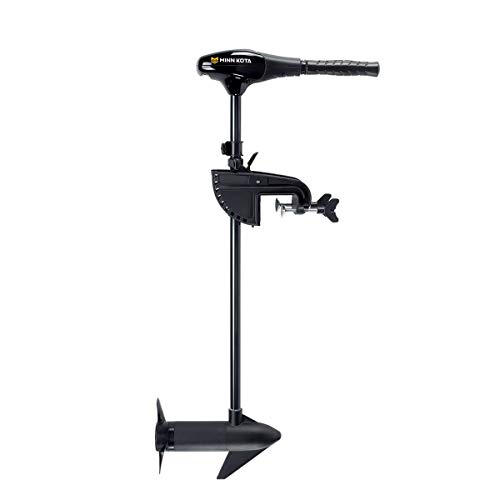
The Minn Kota Endura C2 is a transom-mount electric trolling motor designed for freshwater use. It features a 30 Lb thrust, a 30-inch shaft, a telescoping tiller, and a 10-position lever lock bracket for easy angle adjustments. The reinforced composite housing resists warping and UV damage, while a power prop boosts thrust through vegetation. This motor excels in quiet, precise trolling and is best for anglers prioritizing stealth and day-long reliability over raw speed or saltwater compatibility.
Who this is best for: Anglers who fish mostly in calm freshwater and value quiet operation, easy steering, and reliable depth control. Limitations: Not designed for saltwater use or high-speed propulsion in rough conditions.
NAZEAOB 18HP Outboard Motor

NAZEAOB offers a high-quality aluminium alloy construction with a CDI ignition and a water cooling system. Its 18 HP output operates in the 4,500–5,500 RPM range, supporting fast travel and efficient operation. It has a maximum load capacity around 2,204 pounds, making it suitable for boats that may carry heavier gear or multiple passengers. Best for anglers needing robust performance with sufficient payload capacity and corrosion resistance for enduring use.
Who this is best for: Those with small to mid-sized boats that require more power and load-bearing capability. Limitations: Heavier engines may require a larger mounting setup and adequate space for the shaft and fuel management.
DUIBAII 18HP HangKai Outboard Motor

The DUIBAII HangKai outboard is a 2-stroke, 18 HP engine with a water cooling system and CDI ignition. It features an 8-inch, three-blade propeller for improved thrust and efficiency, and a relatively large external fuel tank of 6.34 gallons, enabling longer operation between fill-ups. Best for anglers who need a balance of speed, reliability, and fuel economy in coastal or inland waters. A potential limitation is external tank placement and weight distribution for smaller vessels.
Who this is best for: Fishermen with mid-sized boats who want extended run-time and solid top-end speed. Limitations: External tank setup may affect balance on very small crafts.
BJTDLLX Short Shaft 12HP Outboard Motor

The BJTDLLX Short Shaft Outboard offers a 12 HP, 2-stroke engine with water cooling and CDI ignition. It features a 5500 RPM range and a compact, corrosion-resistant aluminum build suitable for inflatable boats and smaller vessels. The 12 HP output provides a solid balance of portability and performance for light-duty fishing craft. Best for boaters needing a lightweight, space-saving motor that still delivers reliable propulsion. Limitation: Lower horsepower may limit performance with heavier loads or larger boats.
Buying Guide
What should you consider when choosing a fishing boat outboard motor?
- Boat type and shaft length: Short shafts fit small boats and inflatables; long shafts suit larger boats with more water clearance needs. Ensure mounting compatibility with your transom.
- Power and weight: Higher HP provides faster speeds and better load handling, but increases weight and fuel needs. Match horsepower to your boat’s weight and typical load.
- Fuel type and efficiency: Two-stroke engines deliver high power with simpler mechanics but lower fuel efficiency and more maintenance. Four-stroke equivalents are quieter and cleaner but heavier.
- Cooling and ignition: Water cooling helps prevent overheating on extended runs. CDI ignition offers quick, reliable starts; verify compatibility with your fuel and fuel tank setup.
- Durability and environment: Aluminum alloy construction resists corrosion in saltwater and freshwater. Consider coatings, antilock features, and ease of maintenance for your water conditions.
- Noise and maneuverability: Mufflers reduce noise; trolling motors offer precise control for fishing spots. Decide whether you need a standalone outboard or electric trolling as part of your setup.
- Fuel capacity and run-time: External fuel tanks increase run-time for longer trips but add weight and balance considerations. Ensure you have space and security on your craft.
Key buyer questions
- What is the right horsepower for my boat size? Choose horsepower based on load and boat weight to maintain safe speeds.
- Are two-stroke engines still a good choice? They offer high power-to-weight but require more maintenance and fuel planning than four-stroke engines.
- Is saltwater use a concern? Look for corrosion-resistant aluminum alloys and proper coatings for longevity in saltwater.
- Should I opt for electric trolling or a gasoline outboard? Combine both if you need quiet, precise spot fishing with occasional faster travel.
- How important is shaft length? Short shafts fit inflatables and small boats; long shafts help with deeper water clearance and larger vessels.
- What maintenance is essential? Regular fuel mix checks, spark plug inspection, and cooling system maintenance are key for longevity.
FAQ
- What is the typical RPM range for these motors? Most listed motors run within a broad 4,500–5,500 RPM window for efficient operation.
- Can these motors be used in saltwater? Some models are designed for freshwater use; check coatings and corrosion resistance for saltwater compatibility.
- Do these motors require special tools to install? Basic mounting hardware is included; some models may require standard boat maintenance tools for mounting.
- Is external fuel tank usage common? Yes, some models use external tanks to extend runtime; ensure your boat has adequate space and balance.
- Which motor is best for inflatables? Short-shaft and lighter-weight models are typically best, offering easier mounting and handling.
- What about warranty and service? Warranty details are not specified here; refer to the retailer for the most current terms.