Answering the common buyer question: which fogging oil best protects boat engines during off-season storage? This guide reviews five top options, highlighting who each product is best for and why it’s a strong pick for stored or seasonal-use engines. The selections emphasize protection from rust and corrosion, lubrication of internal components, and ease of startup after storage. Ideal buyers include boat owners with long-term winter storage, seasonal sailors needing reliable spring startups, and anyone seeking simple, proven protection for small marine two- and four-stroke motors.
Summary of chosen products
| Product | Brand | Best For |
|---|---|---|
| STA-BIL Fogging Oil (12 oz) | STA-BIL | All 2- and 4-cycle engines; compact storage solutions |
| Quicksilver Storage Seal Engine Fogging Oil (12 oz) | Quicksilver | All engines needing dense protective barrier; versatile storage |
| FOGGIT High Performance Fogging Oil (12 oz) | FOGGIT | Internal rust protection for multiple engine types |
| STAR BRITE Deep Penetrating Fogging Oil (12 oz) | STAR BRITE | Long-term protection; broad engine applications |
| Yamaha Yamalube Engine Fogging Oil Spray (12 oz) | Yamaha Motor | OEM-specified storage for Yamaha-compatible engines |
STA-BIL Fogging Oil — 12 oz

STA-BIL Fogging Oil coats internal engine components to prevent corrosion and displace moisture from metal. It lubricates cylinders to prevent scuffing at startup, making it suitable for both 2- and 4-cycle engines. Best for boat owners seeking a compact, readily available fogging solution that also acts as a moisture displacer during storage. Limitation: may require separate fuel stabilizers for complete seasonal care.
Quicksilver Storage Seal Engine Fogging Oil — 12 oz
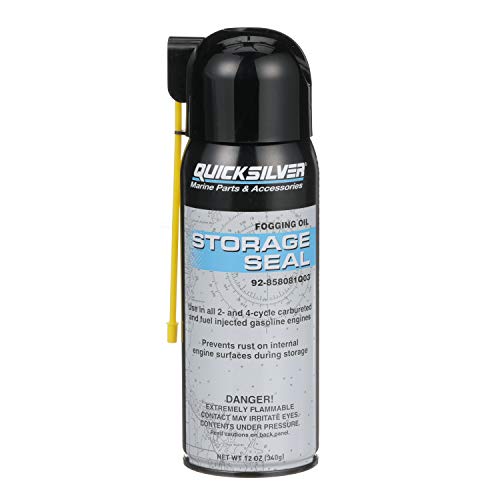
Quicksilver’s fogging oil forms a heavy, sticky protective barrier to prevent rust on internal metal surfaces. It keeps cylinders lubricated to reduce damage when starting after off-season storage. This product is versatile for off-season use across engines and other equipment (cars, ATVs, lawn care tools). Choose this if you want a robust barrier that remains effective across a wide range of equipment. Caution: very sticky formulation may require thorough wiping for some surfaces or accessories.
FOGGIT High Performance Fogging Oil Cylinder Lube — 12 oz

Foggit uses a unique formula designed to coat internal components that may form surface rust within days. It protects cylinder walls from damage caused by rust and lubricates cylinders to help prevent wear when starting after storage. Best for boaters seeking rapid, comprehensive protection against corrosion in diverse engine types. Limitation: product claims emphasize rust protection; users should verify compatibility with their specific engine models and carburetion or injection systems.
STAR BRITE Deep Penetrating Fogging Oil — 12 oz

STAR BRITE’s fogging oil delivers maximum rust and corrosion protection for long-term storage. It supports quick startup after periods of inactivity and is versatile for marine engines, lawn care equipment, snowmobiles, ATVs, and more. Best for owners with mixed equipment needing a single storage solution. Limitation: broader application may come with a slightly higher viscosity, which could affect very small engines or carbureted units if not used as directed.
Yamaha Yamalube Engine Fogging Oil Spray — 12 oz

Yamaha Yamalube Engine Fogging Oil is Yamaha’s OEM-recommended storage solution for both 2-stroke and 4-stroke outboard motors. This makes it a strong choice for Yamaha-powered boats seeking alignment with manufacturer recommendations. Best for Yamaha engines or owners preferring OEM formulations. Limitation: primarily marketed for Yamaha systems; cross-compatibility should be confirmed for non-Yamaha equipment.
Buying Guide
What should I consider when choosing fogging oil?
- Engine type compatibility: Ensure the oil supports your 2-stroke, 4-stroke, outboard, sterndrive, or mixed fleet.
- Storage duration needs: Longer storage requires stronger corrosion protection and a reliable startup boost.
- Application method: Sprays, aerosols, and bulk cans vary in ease of use and coverage.
- Compatibility with fuel stabilizers: Some kits combine fogging with fuel stabilization for comprehensive storage.
Oil vs. spray formulations: what’s the difference?
- Oil-based fogging products lubricate cylinder walls and displace moisture, reducing startup wear.
- Sprayable or aerosol formulas offer quick coverage for smaller engines or hard-to-reach components.
Best practices for storage preparation
- Run the engine briefly before storage to confirm lubrication is distributed.
- Use a compatible fuel stabilizer to keep fuel from varnishing and gum formation.
- Store in a cool, dry place away from direct sunlight and moisture.
Which product should I choose?
- Best overall protection: STA-BIL Fogging Oil or STAR BRITE for long-term rust and corrosion defense.
- Best for broad equipment use: Quicksilver Storage Seal Engine Fogging Oil, due to versatility.
- OEM compatibility: Yamaha Yamalube for Yamaha-powered boats and alignment with manufacturer guidance.
- Best value in a multi-pack option: STA-BIL Fogging Oil 6-pack for larger storage needs.
Notes on usage considerations
- Follow product-specific directions for amount and method of application to avoid over-application.
- Be mindful of ventilation when applying in enclosed spaces and ensure safe storage practices.
Quick FAQ
- Q: Do I need fogging oil if I’m storing for only a couple of months? A: Short-term storage often benefits from corrosion protection and cylinder lubrication, especially in humid climates.
- Q: Can I use fogging oil on modern fuel-injected engines? A: Many fogging oils support both carbureted and fuel-injected engines, but always check the product label for compatibility.
- Q: Should I drain fuel before fogging? A: In many cases, stabilizers are used in storage; fogging oil focuses on protecting internal components to ease startup.
- Q: Is OEM fogging oil necessary for all outboard motors? A: OEM products are recommended when available, particularly for brand-specific engines.
- Q: How often should I fog engines during off-season storage? A: For long-term storage, single application per off-season is common, but follow manufacturer and product guidelines.
- Q: Can fogging oil affect engine seals or gaskets? A: If used as directed, most products are formulated to minimize adverse effects; avoid excessive amounts.