Direct answer: For outboard motors, use fuel additives that fight ethanol-related corrosion, stabilize fuel for storage, and clean the fuel system. The top options below are best for marine users who want to keep engines running smoothly between trips, prevent gumming, and extend engine life. The best pick depends on fuel type (gasoline with ethanol), storage needs, and maintenance goals.
Overview of selected products:
- Yamaha Yamalube Outboard Ring Free Plus Fuel Additive – 12 Ounce
- Sea Foam Motor Treatment – 16 oz (pack of 3)
- Yamaha Yamalube Outboard Fuel Stabilizer & Conditioner Plus – 12 Ounce
- Mercury Quickare Fuel Treatment Additive – 12 oz
- Quicksilver Quickare Fuel Treatment Additive – 12 Oz
| Product | Best For | Key Benefit |
|---|---|---|
| Yamaha Ring Free Plus | Owners seeking ethanol protection for Yamaha engines | Decarbonizes and prevents ethanol corrosion, extends life |
| Sea Foam Motor Treatment (Pack of 3) | General fuel system cleaning for gas and diesel | Deep cleaning of fuel system, stabilizer, and oil treatment |
| Yamaha Fuel Stabilizer & Conditioner Plus | Storage with ethanol-laden fuel | Prevents oxidation and phase separation for up to a year |
| Mercury Quickare | Quick, broad-spectrum fuel maintenance | Cleans varnish and gum; controls ethanol-related issues |
| Quicksilver Quickare | Maximizing performance across ethanol blends | Removes varnish, prevents gum buildup, stabilizes fuel |
Yamaha Yamalube Outboard Ring Free Plus Fuel Additive

Features highlight Ring Free PLUS, Fuel Stabilizer & Conditioner PLUS work to fight fuel system corrosion, phase separation, and fuel oxidation. Designed to extend the life and improve performance of Yamaha marine engines. Ring Free has a history of more than two decades, originally for decarbonizing engines and later updated to combat ethanol sulfate salt corrosion. This product is intended for marine applications only.
Best for Yamaha outboards that run on ethanol-containing fuel and need protection from fuel-related deposits. It’s a strong choice for Yamaha owners seeking a proven decarbonizer plus corrosion protection. A potential limitation is that it’s specifically marketed for Yamaha engines, so cross-application to non-Yamaha engines may vary.
Sea Foam Motor Treatment (16 oz, Pack of 3)

Features include deep fuel system cleaning to restore power and smooth idle, plus fuel stabilizer and oil treatment for both gas and diesel engines. It cleans injectors, carburetors, and chamber areas, and is recommended every 3,000 miles or as needed to prevent varnish buildup. Suitable for mixed gasoline blends and conventional or synthetic oils.
Best for boats that see varied fuel quality or extended idle periods where deposits and varnish may form. A potential limitation is that bulk packs require proper dosing per tank and periodic use to maintain cleanliness.
Yamaha Yamalube Outboard Fuel Stabilizer & Conditioner Plus

Designed as a strong recommendation for E10 fuels, this alcohol-free formula helps prevent fuel oxidation from moisture absorption and phase separation. When used over time, it keeps fuel fresh, potent, and free from gum and varnish for storage up to one year. Its protective film shields steel and aluminum components via its metal filmers.
Best for boats stored for extended periods with ethanol-containing gas. Choose this if you want long-term storage stability and metal protection. A limitation is the requirement to ensure compatibility with your specific fuel system and hull components.
Mercury 8M0047930 Quickare Fuel Treatment Additive
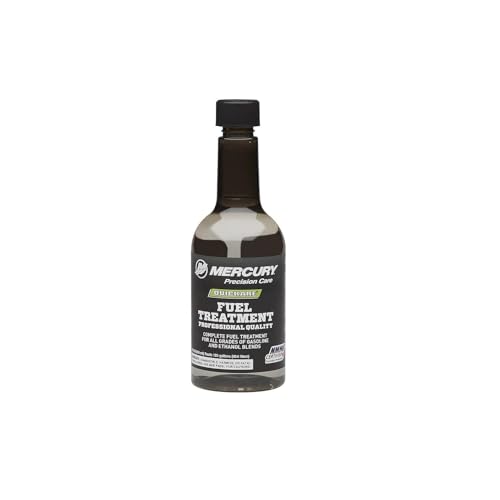
Effects include keeping fuel fresh between fill-ups for up to 3 months, and cleaning varnish and gum deposits throughout the fuel system. It also helps control corrosion and gum buildup associated with ethanol-blended fuels.
Best for boaters who want quick, straightforward maintenance with broad compatibility. A caveat is that results depend on existing deposits; heavy buildup may require additional cleaning or multiple doses.
Quicksilver Quickare Fuel Treatment Additive
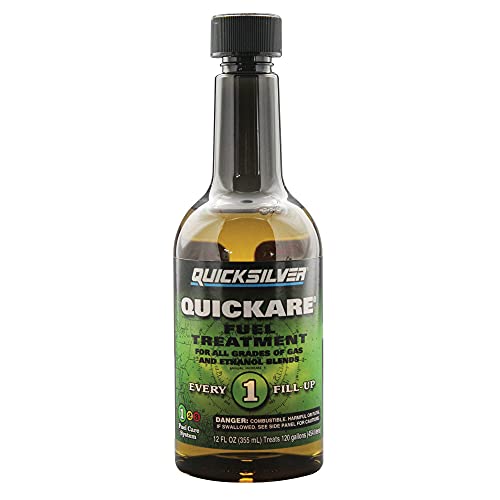
Designed to maximize engine performance with all grades of gasoline and ethanol blends, it removes varnish and gum from fuel lines, tanks, carburetors, injectors, intake valves, and spark plugs. It also helps prevent phase separation and related ethanol issues.
Best for boaters seeking a versatile additive that supports engines across varied fuel types. A potential limitation is that performance depends on existing fuel system conditions; severe varnish interiors may require prior cleaning.
Buying Guide
What should you consider when choosing a fuel additive for your outboard?
- Fuel type and ethanol content: If your fuel contains ethanol, prioritize ethanol protection and phase separation prevention (look for stabilizers and corrosion inhibitors).
- Storage duration: For long-term storage, choose stabilizers that protect against oxidation and give a storage window of up to a year.
- Engine compatibility: Some formulas are marketed for specific brands or marine applications; ensure compatibility with your outboard model and hull materials.
- Maintenance goals: If you want cleaning action, pick products that claim deep fuel system cleaning; for preventive maintenance, choose stabilizers and corrosion inhibitors.
- Frequency of use: Some products are suitable for periodic use, while others are designed for daily or per-tank dosing. Plan according to your boating schedule.
FAQ
- Do I need a fuel stabilizer for all outboards? Not always, but stabilizers are beneficial for engines stored between trips or used with ethanol-containing fuels to prevent oxidation and phase separation.
- Can I mix different brands of fuel additives? In principle, many additives mix, but follow manufacturer guidelines. For consistency, limit to one brand when possible.
- How often should I treat the fuel system? Use per the product’s instructions; treating per tank or on a schedule is common for seasonally stored vessels.
- Will these additives damage my engine? When used as directed for marine engines, reputable additives are designed to be safe. Avoid excess dosing and incompatible products.
- What’s the best all-around option for ethanol-rich fuel? Look for a product that combines fuel stabilization, corrosion protection, and varnish/varnish removal to maintain fuel system cleanliness.
- Are there any drawbacks to using additives? Overuse can lead to excessive residues or altered fuel properties. Always follow dosing guidelines and discontinue if you notice engine issues.