When you’re out on the water, reliable fuel storage is essential. This guide highlights five top fuel bladder solutions designed for boating, yachting, sailing, and extended-range trips. Each option is best for different vessels and use cases, from emergency refueling to long-distance cruising. Read on to compare capacity, material durability, portability, and practical caveats so you can pick the right bag for your craft and itinerary.
Buyer snapshot: the following products cover portable 20–400 liter capacities and are aimed at motorboats, yachts, fishing boats, and off-road/overland trips that require dependable fuel storage in a flexible bladder. The table summarizes key specs to help you compare quickly.
| Product | Capacity | Material | Best For |
|---|---|---|---|
| TezzeO Portable Fuel Bladder (200L) | 200L | TPU | Emergency refuel on long trips |
| MUKETA Marine Fuel Bladder (60G) | 60 gallons | 2000D TPU | Extended-range sailing and yachting |
| MEIRUHUA 110L Fuel Tank | 110L | TPU | Compact, portable storage for boats |
| ATL FueLocker 50G | 50 gallons | Rubberized bladder | Standard spare fuel for small to mid-size boats |
| ATL FueLocker 300G | 300 gallons | Rubberized bladder | Heavy-range endurance and remote refueling |
TezzeO Fuel Bladder, 200L

Best for: small-to-mid-sized boats needing emergency fuel storage or temporary refueling during long-range trips. This TezzeO bladder uses a TPU barrier design for oil resistance and UV protection. It folds flat when not in use, saving storage space on deck or in cabins. The material is described as tear- and scratch-resistant for rough sailing conditions. A potential limitation is that capacity is fixed; plan refuels to match the bag’s volume.
- Capacity: 200 liters (53 gallons)
- Material: TPU with barrier layer; oil resistance and UV protection
- Portability: Foldable, compact when empty
- Use case: Emergency range extension, temporary refueling
MUKETA Marine Fuel Bladder, 60 Gallons
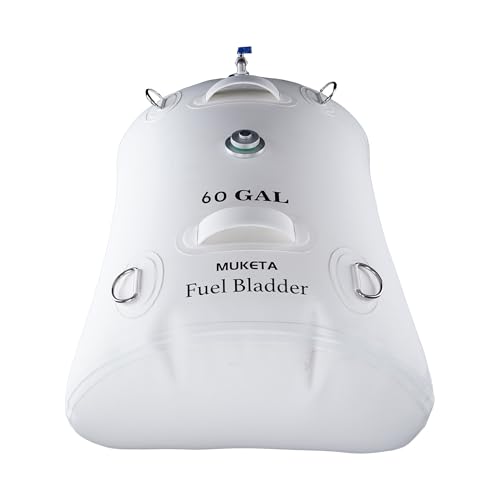
Best for: sailors and boaters who need a robust, long-lasting bladder with high-strength materials for extended voyages. This bladder uses 2000D TPU with improved tensile and puncture resistance. It’s designed to safely store gasoline or diesel and accommodates quick refueling with standard nozzles. A caveat is that it requires careful handling to avoid punctures during rugged deployments.
- Capacity: 60 gallons
- Material: 2000D TPU; anti-static properties
- Use case: Extended-range boating and safe storage
- Limitation: Requires mindful handling to prevent punctures
MEIRUHUA 110L Fuel Bladder

Best for: boaters seeking a compact, portable fuel solution with a sizable capacity for mid-range cruising. The bag uses thickened TPU for durability and is designed for easy folding storage. It is compatible with both gasoline and diesel. Caution: verify nozzle compatibility and ensure proper venting during refueling operations.
- Capacity: 110 liters
- Material: TPU; reinforced for puncture resistance
- Use case: Onboard fuel extension for day trips
- Caution: Confirm venting and nozzle fit during refueling
ATL FueLocker 50G

Best for: small- to mid-size boats needing a compact, rugged auxiliary bladder with standard fittings. The FueLocker 50G includes a 2″ fill/stand pipe, pressure-relief valve, anti-backflow flap, and a 1/2″ ball valve with safety lock. It’s a reliable option for on-deck operations where space is limited. Limitation: not as high-capacity as larger bladders for long-range expeditions.
- Capacity: 50 gallons
- Hardware: 2″ fill/stand pipe, pressure-relief, anti-backflow, 1/2″ ball valve
- Use case: Regular boat fueling and emergency top-ups
- Limitation: Lower capacity than larger models
ATL FueLocker 300G
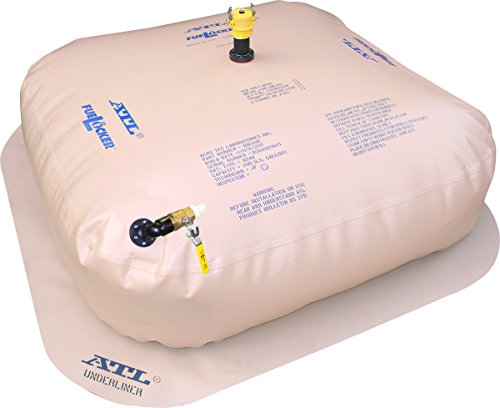
Best for: vessels requiring maximum range extension and heavy-duty refueling capacity. The 300G bladder uses rugged mil-spec rubberized material with a two-inch fill/stand pipe, a pressure-relief valve, anti-backflow flap, and a 1″ ball valve outlet with safety lock. Choose this if you operate large boats or undertake long offshore trips. Caution: heavier and bulkier, requiring more storage space.
- Capacity: 300 gallons
- Hardware: 2″ fill/stand pipe, pressure-relief valve, anti-backflow, 1″ ball valve
- Use case: Long-range fueling and heavy-duty needs
- Caution: Bulky; ensure storage and handling space
Buying Guide: Key Considerations For Fuel Bladders On Boats
What capacity do you actually need?
Assess your vessel size, typical voyage length, and fuel consumption. Smaller boats benefit from 20–60 gallon bladders for emergencies or short trips, while larger yachts may rely on 110–300 gallon solutions for extended range. Always match capacity to expected refueling frequency and stowage space.
Which material offers the best balance of durability and flexibility?
Most marine fuel bags use TPU blends. Higher density TPU, like 2000D or mil-spec variants, provides superior puncture resistance and abrasion protection, especially for rough seas or off-road deployments. Consider UV resistance if you’ll store bags where sun exposure is frequent.
What are the important fittings and safety features?
Look for a secure fill/stand pipe, pressure-relief valve, anti-backflow flap, and a reliable valve outlet. A safety lock on the outlet prevents accidental leakage during rough weather. Venting and nozzle compatibility are also critical for efficient fueling.
Portability and storage needs on board
Foldable designs save cabin or deck space when bags are not in use. Consider how easy the bladder is to deploy, fill, and drain. Heavier bags may require two people or mechanical help for lifting during refuel operations.
Usage scenarios and compatibility
Choose a bladder based on your typical boating activity: emergency top-offs, extended cruising, or remote refueling at anchor. Ensure the bladder is compatible with common fuel types you carry (gasoline or diesel) and that your vessel’s setup supports the chosen size and fittings.
Frequently Asked Questions
- What is a fuel bladder used for on boats? It is a collapsible container that stores fuel for extended trips, emergency refueling, or remote fueling operations.
- Can I use these bladders for both gasoline and diesel? Many models are compatible with both, but verify the product specifications for fuel compatibility before use.
- How do I prevent leaks on a portable bladder? Ensure fittings are tight, valves are secured, and the bag is stored away from sharp edges. Regular inspection for wear helps prevent leaks.
- Which bladder is best for a small boat? A 50–60 gallon option is usually sufficient for small to mid-size boats, balancing capacity and onboard space.
- Are these bladders easy to transport? Yes, most are foldable and designed to be lightweight when empty, aiding on-water deployment and on-shore handling.
- What should I consider for long-range trips? Prioritize larger capacities (100+ gallons) with secure fittings, and ensure you have storage space on deck or in the cabin for safe transport.