If you boat seasonally or store marine engines for long periods, you need a reliable fuel stabilizer that prevents ethanol-related damage, corrosion, and gum buildup. This guide highlights five top options to help you choose the right product for your boat and engine type. The selections cover in-season protection, long-term storage, and fuel-system cleaning. Perfect for boaters seeking smoother starts, improved fuel economy, and reduced maintenance headaches.
Who should consider these options? For frequent boaters who operate in-season, look for cleaners that protect fuel systems and prevent corrosion. If you store your boat for weeks or months, storage stabilizers help keep fuel fresh. For older engines or ethanol-heavy fuels, enzyme-based formulas address ethanol-related issues and varnish buildup. The following table compares the five recommended products to aid quick decision-making.
| Product | Best For | Key Benefit | Approximate Treats |
|---|---|---|---|
| STA-BIL 360 Marine Ethanol Treatment and Fuel Stabilizer | In-season performance and fuel-system cleaning | Cleans fuel system; corrosion protection; performance boost | Up to 80 gallons |
| STA-BIL 360 Marine Fuel System Treatment (32 oz) | Large boats and frequent use | Fuel system cleaner; corrosion and ethanol protection | 320 gallons |
| Star Tron Enzyme Fuel Treatment (32 oz, Concentrated) | Enzyme-based stabilization and cleanliness | Enzyme technology; reduces ethanol problems; improves economy | Up to 512 gallons |
| Yamaha Yamalube Fuel Stabilizer & Conditioner (32 oz) | Yamaha-powered boats or Yamaha engines | Stabilizer and conditioner for Yamaha systems | 1 bottle |
| Quicksilver Quickstor Fuel Treatment and Stabilizer (12 oz) | Long-term storage and small engines | Prevents aging and oxidation; treats 5 gallons per oz | Up to 60 gallons |
STA-BIL 360 Marine Ethanol Treatment And Fuel Stabilizer

Best for: Boat owners who want an all-in-one fuel system cleaner with corrosion protection during the season. This STA-BIL formula uses a fuel system cleaner to reach injectors, lines, and pumps, while inhibiting rust and corrosion and boosting performance. Choose this for regular use where ethanol symptoms are a concern.
- Features include cleaning the entire fuel system with PEA additives, removing water, gum, and varnish.
- Provides corrosion protection to internal fuel system parts.
- Performance booster aims to improve gas mileage and engine power by maintaining clean fuel delivery.
Best for: In-season protection and ongoing maintenance. Caution: As with any fuel additive, avoid using excessive quantities beyond recommended dosing, and ensure compatibility with your engine’s requirements.
STA-BIL 360 Marine Fuel System Treatment (32 oz)
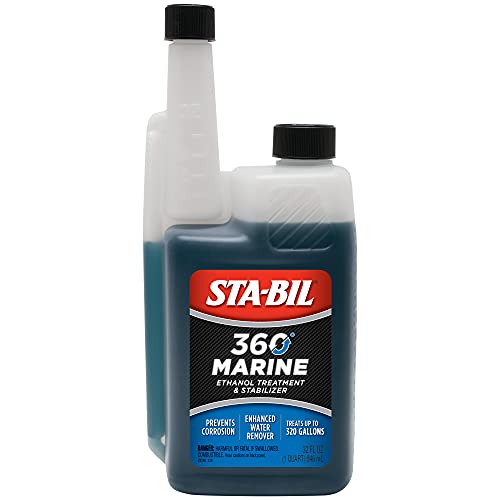
Best for: Larger boats or heavier use where a bigger bottle is preferred to treat hundreds of gallons. This formula focuses on fuel-system cleaning, corrosion defense, and ethanol damage prevention for long-term reliability.
- Targets the entire fuel system with cleaning action to maintain performance.
- Offers corrosion protection and ethanol-related damage prevention.
- Designed for in-season cleaning to keep systems running smoothly.
Best for: Avoid this if you only need short-term treatment or have a very small fuel capacity; otherwise, it provides strong value for frequent use.
Star Tron Enzyme Fuel Treatment – Concentrated Formula (32 Fl. Oz.)

Best for: Boat owners seeking enzyme-based stabilization that helps engines start reliably after inactivity and reduces ethanol-related issues. This product uses enzyme technology to keep the fuel system clean and efficient.
- Enzyme technology helps engines start more reliably and run cleaner after inactivity.
- Addresses ethanol-related problems, including poor performance and rough idling.
- Maximizes fuel economy by preventing gum, varnish, and carbon deposits.
Best for: Choose this if you want a non-chemical approach to fuel stability with emphasis on long-term cleanliness and ethanol mitigation.
Yamaha Yamalube Fuel Stabilizer & Conditioner

Best for: Yamaha-powered boats or engines where OEM compatibility and straightforward stabilization are priorities. This product combines stabilizing action with fuel conditioning for smoother operation.
- 32-ounce bottle designed for Yamaha systems.
- Stabilizes fuel and conditions to maintain engine performance.
- Simple option for Yamaha-based setups; ensure compatibility with your model.
Best for: Avoid this if you operate engines outside Yamaha’s ecosystem or require a multi-brand stabilizer with broader compatibility.
STA-BIL 360 Marine Fuel System Treatment, 10 oz

Best for: Boats and engines that need a compact option to defend against ethanol damage and moisture in tanks. This smaller bottle is convenient for smaller boats or travel packs.
- America’s #1 Ethanol Treatment formulation for fuel protection.
- Removes moisture and protects fuel systems in water environments.
- Advanced formula suitable for engines used around water.
Best for: Choose this if you prefer a lighter, portable option or have minimal storage space for fuel stabilizers.
Quicksilver Quickstor Fuel Treatment And Stabilizer

Best for: Long-term storage of boats, generators, and other powersports equipment where fuel stability is a priority. Helps prevent oxidation and keeps fuel usable for extended periods.
- Stabilizes fuel for long-term storage—up to two years.
- Prevents regular and ethanol-blended gas from breaking down.
- Treats 5 gallons per ounce, making it economical for small to mid-size tanks.
Best for: Avoid this if you need frequent dosing during active season; it’s optimized for storage rather than continuous use.
Buying Guide: Key Purchase Considerations
What should you look for when choosing a marine fuel stabilizer?
- Fuel system cleaning vs. storage stabilization: If you need to clean injectors and prevent varnish, select a cleaner with PEA additives or enzyme technology. For storage, focus on long-term stability and moisture reduction.
- Ethanol protection: Ethanol damage varies by product. Enzyme-based formulas are good for ethanol-related issues, while corrosion protection helps during season use.
- Fuel capacity compatibility: Ensure the bottle size matches your boat’s fuel volume and your maintenance schedule. Large boats may benefit from bigger containers; smaller boats from compact bottles.
- Engine compatibility and OEM guidance: OEM-recommended stabilizers may offer smoother operation for specific brands. Yamaha engines may benefit from branded stabilizers designed for those systems.
- Use case and storage duration: If you store your boat for months, choose a stabilizer with strong storage protection; if you boat year-round, prioritize fuel-system cleaning and corrosion resistance.
FAQs
- What is the purpose of a fuel stabilizer for boats? A fuel stabilizer prevents ethanol-related damage, reduces moisture, keeps fuel fresh, and protects the fuel system from corrosion and gum buildup.
- Can I use any stabilizer in a Yamaha engine? It’s best to follow the OEM recommendation; some Yamaha-branded stabilizers are designed specifically for Yamaha systems.
- Do enzyme-based treatments really work for boats? Enzyme-based formulations help prevent gum and varnish buildup and can address ethanol-related issues, supporting smoother operation.
- How often should I treat fuel for storage? For long storage, use a stabilizer designed for storage duration and follow the product’s dosing guidelines to maximize effectiveness.
- Is it better to clean the fuel system or just stabilize the fuel? If you notice deposits or rough operation, a cleaner that targets the fuel system is beneficial; for storage, stabilization may be sufficient.
- Are all bottles suitable for every boat size? Not exactly—check your fuel capacity and dosing directions to choose a bottle size that fits your needs.