Answering the buyer’s intent: these fuel tanks are designed to safely store and transport marine fuel for outboard motors, with options suited for different vessel sizes and usage patterns. Best for compact boats or as spare tanks are the smaller 3-gallon options; better for longer trips are larger cans with built-in gauges. This guide highlights five reliable choices, noting who each is best for and why.
| Product | Capacity | Best for | Key feature |
|---|---|---|---|
| AloneGoer 3 Gallon Portable Boat Fuel Tank | 3 Gal / 12 L | Yamaha outboard users needing a direct connector | HDPE-EVOH-HDPE barrier; low evaporation |
| VEVOR Boat Fuel Tank, 3.17-Gallon | 3.17 Gal / 12 L | Compact, portable use on smaller boats | 9.8 ft hose; salt spray resistant |
| Scepter 12 Gallon Portable Marine Gas Can | 12 Gal / 45 L | Extended runs for larger boats | Built-in gauge; 2-way vented cap |
| LIZHOUMIL Portable Boat Fuel Tank | 3 Gal / 12 L | Durable, mid-size tank with gauge | Clear gauge; built-in filter |
| VEVOR Marine Tank, 6.34-Gallon | 6.34 Gal / 24 L | Mid-size to larger boats needing more capacity | Gauge and long hose; durable material |
Note: This article selects five options that cover a range of capacities, hose lengths, and features. All data is based on listed specifications and typical marine-use considerations. Always verify compatibility with your specific outboard model and fuel type before purchasing.
AloneGoer 3 Gallon Portable Boat Fuel Tank
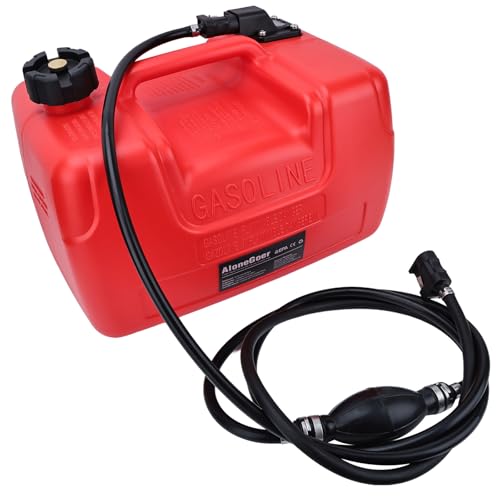
The AloneGoer tank has a 12L (3 gallon) capacity and uses a multi-layer barrier technology (HDPE-EVOH-HDPE) to reduce fuel molecule permeation and evaporation. It commonly replaces Yamaha 6YL-24201-24-00 tanks and includes a marine fuel line connector hose. Best for boaters who need a compact, corrosion-resistant spare or primary fuel tank for Yamaha outboards. Caution: UV stabilization helps longevity, but prolonged sun exposure should still be minimized to avoid material degradation.
VEVOR Boat Fuel Tank, 3.17-Gallon

This tank offers a 3.17 gal/12 L capacity with a 9.8 ft (3 m) hose and is designed for Yamaha connectors. It’s built from high-density polyethylene, resisting aging, impact, and corrosion. It’s best for anglers or boaters who need a portable, easy-to-handle tank that fits under seats. Better for short trips; avoid prolonged direct sunlight to prevent aging and expansion risk.
Scepter 12 Gallon Portable Marine Gas Can

With a 12-gallon capacity, this can targets longer boating sessions. It includes a built-in fuel gauge and pick-up, plus a 2-way vented cap to manage vapor and pressure during refueling. Compatible with diesel and ethanol-blended fuels. Best for boats needing extended range and quick fuel checks; choose this if you want a large-capacity tank with standard fittings. Limitation: some users report that gauge accuracy can vary with fill level.
Portable Boat Fuel Gas Tank, 3 Gallon
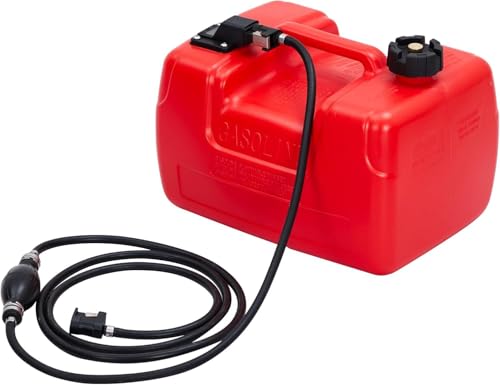
From LIZHOUMIL, this 3-gallon tank emphasizes durability with high-grade materials and an ergonomic I-shaped handle. It features a clear fuel gauge and built-in filter to help monitor fuel and maintain fuel cleanliness for smoother engine performance. Best for boaters who value visibility and ease of transport; note that data suggests good general durability but verify hose compatibility with your outboard’s lines.
VEVOR Marine Tank, 6.34-Gallon

This larger VEVOR tank offers 6.34 gal/24 L capacity with a gauge and a long 9.8 ft hose. It uses high-density polyethylene for durability and includes separate inlet and outlet ports to reduce spills. Best for boats needing more fuel on longer days or trips; avoid overfilling beyond 80% to minimize evaporation and safety risks.
Buying Guide
What capacity do I need?
For short day trips or small inflatables, 3 gallon/12 L tanks are typically sufficient. For longer days or mid-size boats, 6–12 gallons provide more run time, reducing refueling stops. Consider your typical voyage length, engine size, and fuel consumption when selecting capacity.
Should I choose a gauge and venting?
Gauges help you monitor fuel levels at a glance, while vented caps reduce vapor buildup during refueling. If you frequently refuel in open water or have limited storage space, these features improve safety and convenience.
What about compatibility and hoses?
Ensure the tank hose length (often 9.8 ft) and inner diameter match your boat’s fuel fittings. Some tanks are designed to fit Yamaha connectors; confirm connector type before purchasing.
Durability and environment considerations
HDPE-based tanks with UV stabilization resist aging, salt spray, and impact. If you boat in sunny or coastal environments, choose corrosion-resistant and UV-stabilized options. Storage under seats or in tight compartments benefits from slim profiles.
Under-seat storage vs. on-deck use
Slim designs and built-in handles favor under-seat storage. Larger tanks with gauges are better for open deck storage or platforms where quick fuel checks are possible.
FAQ
- What is the best tank for a Yamaha outboard? Tanks marketed as compatible with Yamaha connectors or that replace Yamaha parts are typically best for Yamaha outboards, such as the AloneGoer option listed here.
- Is a built-in gauge important? A built-in gauge helps monitor fuel without removing the tank. It can be valuable for planning longer trips and avoiding mid-journey refueling.
- Can these tanks be used with diesel? Some models claim compatibility with diesel and ethanol-blended fuels; verify fuel compatibility with your engine and local regulations before use.
- How should I store a portable fuel tank? Store away from direct sunlight and extreme heat, and keep vents closed when not in use to prevent evaporation and pressure buildup.
- Do tanks come with hoses? Many include hoses up to 9.8 ft; some require separate purchase of the fuel line compatible with your fitting.
- What maintenance is needed? Regularly inspect seals, hoses, and caps for cracks or leaks. Clean the exterior to prevent corrosion in saltwater environments.