Finding the right headliner material for boats means balancing water resistance, weight, appearance, and ease of installation. This guide highlights five headliner fabrics that are well-suited for marine interiors, focusing on durability, sound insulation, and DIY installability. Each product below is chosen for boat-friendly applications and practical installation benefits, with clear notes on who benefits most and any reasonable caveats.
| Product | Material Type | Backing | Best For |
|---|---|---|---|
| Pangda Suede Headliner Fabric | Synthetic suede | Foam backing | Boat ceilings needing plush, quiet interior |
| Hiksuky Suede Auto Headliner Fabric | Synthetic suede | Foam backing | Premium feel with easy flattening packaging |
| Rainmae Grey Suede Headliner | Grey suede | Foam backing | Large DIY boats or RVs with flexible shape |
| Kefly 54″ Suede Headliner (Black Mesh option) | Mesh or suede options | Foam backing | Budget-friendly, versatile for boats and cars |
| TuhooMall Suede Headliner | Suede | Foam backing | Durable, versatile use for marine interiors |
Note: Each product includes a DIY-friendly setup with backing foam for wrinkle resistance, and many come with basic installation tools. When choosing for a boat, consider marine humidity, UV exposure, and the need for sound insulation to reduce cabin noise. The products below are listed in no particular order and are selected for their balance of material quality, availability, and compatibility with boat ceilings and cabin walls.
Pangda Suede Headliner Fabric For Boats

Pangda’s suede headliner is designed with a 1/9″ foam backing and a plush synthetic suede surface. The included toolkit—rubber seam roller, utility knife, and 10 replacement blades—facilitates a DIY installation suitable for boat interiors. The fabric resists sagging and fading, maintaining a sleek black appearance over years of marine use. Best for boat cabins that require a soft, premium feel and a straightforward install. Limitation: the fabric typically needs ironing to restore its shape on arrival, which adds a preparatory step before installation.
Hiksuky Suede Auto Headliner For Boats

Hiksuky offers a premium suede headliner with a 1/9″ foam backing and tube packaging to keep the material flat for marine installations. The packaging approach helps minimize warping and makes cutting to fit curved boat ceilings easier. Best for boat projects that demand a luxurious look with comfortable acoustics and a stable finish. Caution: ensure precise measurements as tube packaging preserves flatness but requires accurate trimming for irregular cabin shapes.
Suede Headliner Fabric With Foam Backing By TuhooMall

TuhooMall’s suede headliner is backed by foam for added comfort and noise reduction, with a versatile size of 96″×60″. The fabric is soft, durable, and suitable for car, home, and marine interior repairs. Best for boat cabins needing a balance of luxury feel and practical installation work. Caution: ensure the foam backing is evenly applied to prevent sagging in high-humidity areas aboard boats.
Rainmae 98″ x 59″ Grey Suede Headliner Kit

Rainmae provides a large 98″×59″ grey suede headliner with foam backing plus essential trimming support. The fabric combines soft texture with sound insulation, making it a solid choice for boat interiors that require an even, quiet cabin atmosphere. Best for larger boat cabins where material usage favors oversized sheets for fewer seams. Limitation: installation may require careful planning due to the wide sheet size and potential seam visibility.
Kefly Gray Suede Headliner For Boats
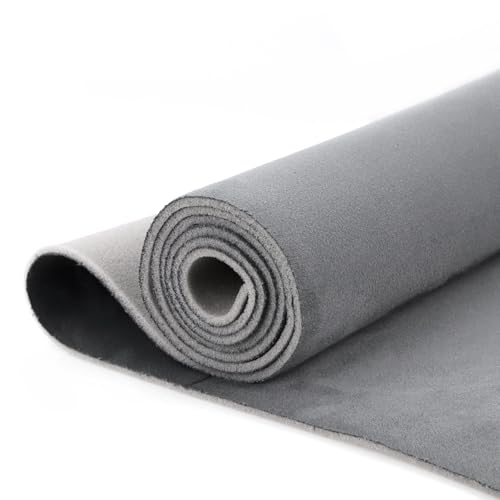
Kefly’s gray suede headliner offers a 54″×60″ size with 1/9″ foam backing, designed to be cut or spliced for various boat cabin shapes. The product is available in suede and mesh variants, delivering both sound insulation and flame-retardant properties. Best for boat interiors where a flexible, mid-price option is preferred and where cutting to fit reduces waste. Caution: check your boat’s specific curvature and seam lines to minimize visible joints after installation.
Buying Guide: Practical Considerations For Marine Headliners
- Material choice: Suede surfaces provide a premium look and sound insulation, while mesh options can offer lighter weight and potential air flow advantages in tighter cabins.
- Backing and sag resistance: Foam backing helps prevent sagging on curved ceilings; ensure foam thickness matches your boat’s humidity and temperature exposure.
- Installation approach: DIY kits with seam rollers and knives simplify installation, but precise measurements and cutting are crucial for marine applications where movement and flex occur.
- Moisture and maintenance: Marine environments demand moisture-resistant materials and easy cleaning; consider fabrics with fade resistance and water-repellent finishes where possible.
- Seam visibility: Larger fabric sheets reduce seams but may increase cutting complexity around irregular cabin shapes; plan layouts to minimize conspicuous joins.
- Fire safety: For boats, verify that the chosen material meets applicable safety standards for interior upholstery in marine settings.
FAQ: Quick Answers For Boat Headliner Purchases
- Q: Is suede headliner suitable for boats? A: Yes, suede headliners provide a plush look and good sound insulation, but ensure adequate moisture resistance and proper seam sealing for marine use.
- Q: Do these fabrics require professional installation? A: Not necessarily; many are designed for DIY installation with included tools, but precise measurement and fitting are essential on boats.
- Q: Which backing is best for boat ceilings? A: Foam backing helps prevent sagging and adds comfort, especially on curved ceilings common in boats.
- Q: Can I use the same material for seats and headliners? A: Some fabrics are marketed for both headliners and seats, but check compatibility with seat padding, UV exposure, and cleaning requirements.
- Q: What should I consider for a boat’s humidity? A: Choose fabrics with stable dimensions under humidity, and install properly sealed seams to prevent moisture ingress.
- Q: Are there limits to fabric sizes for marine roofs? A: Larger sheets reduce seams but may be harder to fit; plan layouts around cabin contours and access points.