If you’re shopping for an in-dash depth finder that uses a thru-hull transducer, you want devices designed for reliable hull integration, clear depth readings, and straightforward installation. This guide highlights five solid options, explains who they’re best for, and compares their key strengths and limits. Ideal buyers include sport boaters needing fast, reliable depth and temp data, weekend sailors seeking straightforward install, and anglers who want real-time depth feedback during transit and fishing.
| Product | Best For | Key Benefit |
|---|---|---|
| HawkEye DT2BX-TH In-Dash Depth Sounder | Compact boats that need temperature sensing | Includes air and water temperature readings with thru-hull installation |
| DepthTrax 2B Boat Mount In Dash Digital Depth Finder | Big-display, high visibility in fast-moving boats | Large display, advanced alarm system |
| Garmin GST 43 Thru-Hull Speed/Temperature Transducer | All-in-one speed and temp sensing | Thru-hull option with temperature data |
| Lowrance 9-Pin Shoot-Thru Hull M/H Chirp Transducer | Chirp depth without through-hull drilling | Shoot-thru-hull option with CHIRP support |
| Garmin Airmar B150M Thru-Hull Transducer | Premium thru-hull depth and speed integration | Tilted thru-hull transducer for better signal |
Note: Each product below includes a link to the Amazon listing, an image, and a concise breakdown of features, best-use scenarios, and potential limitations. Use these details to compare installation needs, display size, and data availability for your boat type.
HawkEye DT2BX-TH In-Dash Depth Sounder

The HawkEye DT2BX-TH combines an in-dash depth sounder with a thru-hull transducer and temperature sensing capabilities. It provides instant depth updates and both air and water temperature readings, making it suitable for anglers who want quick terrain awareness and temperature context. The transducer requires a 2″ hull hole, so plan for a precise cut during installation. Best for small to mid-size boats that need integrated depth and temperature data without adding complexity to the dash.
Who it’s best for: boaters who value real-time depth alongside ambient air and water temperatures in a single unit, with a relatively compact installation footprint. Why selected: the combination of instant depth updates and dual-temperature sensing is beneficial for fishing and navigation alike. Caution: drilling a 2″ hole is a permanent modification; ensure correct placement and watertight sealing.
DepthTrax 2B Boat Mount In Dash Digital Depth Finder

The DepthTrax 2B is designed for large, high-visibility displays and fast boats up to 60 mph. It delivers uninterrupted depth readings from shallow to deep ranges, with a 200 kHz transducer and options to mount through transom or glue-in into solid fiberglass hulls (up to 1/8″ aluminum). An advanced three-stage warning system combines an audible alarm, a bright LED indicator, and LCD indicators to alert you to depth or alarm conditions. Best for: boats that need a large, readable display and strong alarm functionality in challenging waters. Limitation: installation flexibility depends on hull material and mounting choice.
LUCKY Sonar Portable Fish Finder Transducer Wired
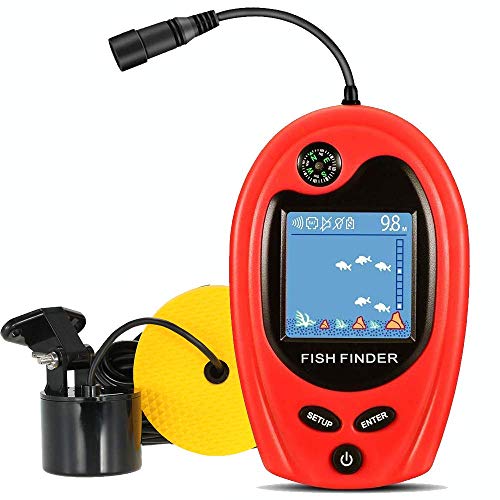
While not a traditional fixed-instrument depth finder, this wired handheld transducer kit from LUCKY provides real-time water depth readings and fish location data on a portable platform. It suits kayaks, small boats, or as a backup tool for anglers who want depth data on the go. Best for: anglers who need portable, budget-friendly depth information and fish detection on the move. Limitation: portability means it isn’t a permanent dashboard display or integrated vessel system.
Lowrance 9-Pin Shoot-Thru Hull M/H Chirp Transducer

The Lowrance transducer uses a CHIRP signal and features a shoot-through-hull design, which can provide solid depth data for vessels that require a frictionless installation without drilling through the hull. It is noted for CHIRP capability, enabling better target separation and depth accuracy. Best for: boats where a non-through-hull drilling option is preferred, provided the hull is compatible. Limitation: no built-in temperature sensing, and performance depends on hull type and mounting quality.
Garmin Airmar B150M Thru-Hull Transducer

The Garmin Airmar B150M is a premium thru-hull transducer designed for comprehensive depth and speed integration, with a tilt feature to optimize signal reception. It is well-suited for larger boats or those seeking high-fidelity data. Best for: serious sailors and anglers who require precise depth and speed data from a robust thru-hull sensor. Limitation: installation involves hull penetration and alignment considerations; ensure compatibility with your Garmin system and mounting space.
Buying Guide
What should you consider when choosing an in-dash depth finder with a thru-hull transducer?
- Installation type: Do you want a combined unit with a thru-hull transducer, or a transducer you mount separately? Thru-hull setups offer clean aesthetics but require precise drilling and sealing.
- Display size and readability: Larger displays improve legibility at speed. Consider daytime brightness and interface simplicity for fast decision-making on the water.
- Data offered: Depth, speed, and temperature are common. If you rely on temperature data for baiting or weather awareness, choose models with air and water temperature readings.
- Hull material compatibility: Some transducers work better with fiberglass or metal hulls. Check if the unit is designed to shoot-through or require a thru-hull installation.
- Alarm and safety features: A depth alarm can prevent grounding. Look for audible alerts and bright indicator LEDs for quick recognition.
- Power and wiring: Verify power requirements and whether existing boat wiring is compatible with your chosen device to avoid rewiring.
- Maintenance and sealing: Thru-hull installations demand watertight sealing. Plan for access to service or replace transducers as needed.
Frequently Asked Questions
- What is a thru-hull transducer? A thru-hull transducer passes through the hull of the boat to measure depth, often providing stable readings at higher speeds but requires hull drilling and proper sealing.
- Can I install a depth finder with a thru-hull transducer myself? Installation complexity varies. Some models require professional help to ensure watertight seals and proper alignment.
- Do all depth finders include temperature sensing? No. Some models include water and air temperature readings, while others focus on depth and speed only.
- Is shoot-through-hull different from thru-hull? Yes. Shoot-through-hull transducers mount inside the hull and rely on the hull’s material to transmit signals, avoiding hull penetration.
- Which features matter most for fishing? Depth accuracy, target separation with CHIRP, and reliable depth alarms can significantly aid fishing decisions.
- Do these devices require maintenance? Regular checks for seals, mounting integrity, and transducer cleanliness help maintain accurate readings and long-term reliability.