Find the right jet motor for your boat with clear, objective comparisons. This guide highlights five compact, gas-powered and electric jet drives suited for inflatable, wooden, rubber, and small fishing boats. Each option is described for common buyer needs—easy handling, fuel efficiency, and reliable maneuverability. Use the table below to compare key traits at a glance.
| Product | Power | Fuel Type | Best For |
|---|---|---|---|
| JDCEREN 4HP 4 Stroke Outboard | 4 HP | Gasoline | Rubber Boats, Small Wooden Boats |
| MOCHAG 4-Stroke 4HP Jet Pump | 4 HP | Gasoline | Fishing Boats, Small Yachts |
| Pxolerig 4 Stroke 4HP Jet Motor | 4 HP | Gasoline | Rubber Boats, Kayaks |
| JDCEREN 1000W Electric Jet Pump | 1000W (4 HP equiv) | Electric | Inflatable Boats, Light-Duty Use |
| LTIGOAW 4-Stroke 4HP Jet Pump | 4 HP | Gasoline | Inflatable Boats, Small Fishing Boats |
JDCEREN 4HP 4 Stroke Outboard Motor
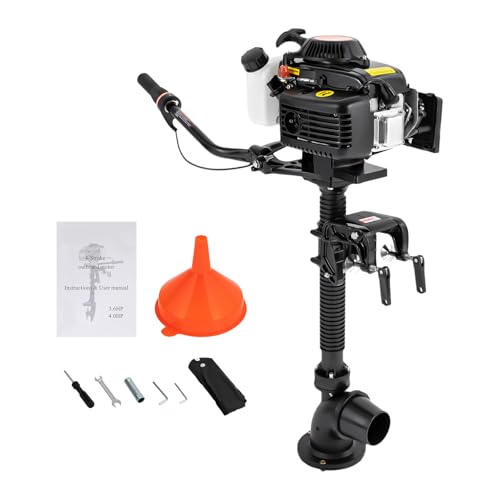
The 4.0hp, 55cc four-stroke engine delivers 2900W with a 4500-5500rpm range. This model is designed for rubber and wooden boats, offering smooth operation and fuel efficiency compared with two-stroke engines. Its tilt function and 360-degree rotation enable straightforward steering, while the CDI ignition supports quick starts. Best for small inflatable craft or light boating where reliable, simple power is needed. Caution: engine torque and balance may require careful mounting on lightweight hulls.
MOCHAG 4-Stroke 4HP Jet Pump Motor

This 4.0hp, 55cc four-stroke outboard provides 2900W and a steady 4500-5500rpm, with a step-less speed control for precise adjustments. High-quality plastics and aluminum alloy deliver durable construction, while the 360-degree rotation, tilt, and CDI ignition simplify direction changes. Best for anglers and hobbyists who value fuel economy and smooth, predictable control. Limitation: similar models emphasize fuel economy, but long-running use may require maintenance of the carburetor for optimal burn.
Pxolerig 4 Stroke Jet Motor
Pxolerig’s 4-stroke unit delivers similar power with a note on environmental efficiency: the four-stroke engine burns fuel more completely than two-stroke counterparts. Its 180-degree reverse gear lets you rotate the head to navigate, while tilt and 360-degree rotation offer flexible maneuvering. Best for small boats where simple throttle control and forward/reverse capability matter. Caution: identical 4HP specs across models mean performance can depend on hull design and load.
JDCEREN Outboard 1000W Electric Jet Pump

This electric jet pump offers a different power profile: 1000W with a 4HP equivalence, built for inflatable, iron, and plastic boats. Features include a rotatable stand and an omnidirectional joystick for flexible operation. High-efficiency brushless design reduces maintenance needs compared with traditional brushed motors. Best for light-duty use and quiet operation. Caution: electric models generally have lower peak thrust than gas-powered units; plan for smaller loads.
LTIGOAW 4-Stroke 4HP Jet Motor

LTIGOAW’s 4-stroke, 55cc jet motor delivers 2.9kW with a top RPM of 4500-5500. Its wind cooling, manual start, and CDI ignition provide reliable performance for inflatable boats and small fishing craft. Durable construction uses aluminum alloy and nylon components for rust resistance. Best for buyers seeking robust build and strong thrust in calmer waters. Caution: heavier design may be less suited for ultra-light hulls or very small craft.
Buying Guide: Key Considerations
What power do you need? For small boats, a 4HP (55cc) engine is common and sufficient for calm conditions. Consider whether you want gas-powered or electric—gas engines typically deliver higher thrust, while electric units offer quiet operation and low maintenance.
Where will you boat? For saltwater use, look for corrosion-resistant materials (aluminum alloys, coated components) and check the motor’s ability to withstand marine environments.
Mounting and shaft length matter. Short shafts fit smaller boats; long shafts suit deeper transoms. Ensure tilt and 360-degree rotation features match your steering needs.
Fuel efficiency and emissions: four-stroke engines typically burn cleaner and use less fuel than two-stroke designs. If you prioritize eco-friendliness, prefer four-stroke units and carburetor efficiency improvements.
Control features: CDI ignition improves starting reliability. Step-less throttle control helps fine-tune speed. A reverse mechanism is helpful in tight spaces.
Maintenance: Most products rely on carburetor care and fuel system upkeep. Electric models require battery management and motor controller upkeep. Factor availability of service and spare parts in your region.
FAQ
- Which jet motor is best for a small inflatable boat? A 4HP (55cc) four-stroke jet motor is a common, balanced choice for inflatables, offering adequate thrust with better fuel efficiency than two-stroke options.
- Are electric jet pumps powerful enough for larger small boats? Electric models can be sufficient for lightweight, calm-water use, but gas-powered units typically deliver higher thrust for heavier loads and rougher conditions.
- What maintenance should I plan for a four-stroke jet motor? Regular carburetor care, fuel system checks, and periodic lubrication are typical. Use clean fuel and store according to manufacturer guidelines.
- Is 360-degree rotation important? Yes, it improves maneuverability in tight spaces and during docking, especially on small craft with limited space.
- What should I consider when choosing a shaft length? Match the shaft to your transom height; incorrect length can reduce performance and cause vapor or cavitation.
- Do these motors require special fuel? Most gas engines use standard unleaded gasoline; some models specify an octane or fuel-tank requirement in their manuals.