The top picks below are ideal for kayak anglers, weekend paddlers, and small-boat explorers who want more range, quieter operation, and easier propulsion. This guide highlights 5 dependable options, explains who each is best for, and points out practical limitations to consider before buying.
Buyer’s quick-reference table
| Product | Best For | Key Benefit | Notes |
|---|---|---|---|
| Newport NK300 Electric Kayak Motor | Dedicated kayak anglers | High power with long range | Lightweight 25.5 lbs; 66-mile range |
| Newport NT300 Electric Outboard Motor | Saltwater and freshwater trips | Digital throttle with LCD | 9.8″ prop, 66-mile range, quiet |
| Newport Kayak Series 55lb Thrust Transom | Larger, saltwater setup | High thrust without excess weight | LED battery indicator, 30″ shaft |
| Newport NV-Series 46lb/55lb | Versatile small-boat trolling | Balanced power and efficiency | LED indicator, 30″ shaft |
| BODIOO 68lb Thrust Trolling Motor | Shallow waters with debris | Higher thrust, adjustable depth | LED display, 6″ handle |
Newport NK300 Electric Kayak Motor — 3HP Equivalent

Best for: Dedicated kayak anglers who need strong propulsion from a compact unit. The NK300 delivers 1300W (3HP equivalent) with speeds up to 6.5 MPH. Its lightweight design (25.5 lbs) helps keep the kayak balanced and maneuverable during extended trips. The 66-mile range and up to 30 hours of run time support longer outings without frequent recharges.
Why this selection: High peak power paired with efficient use of battery capacity makes it a strong choice for anglers who motor out to distant hotspots, then quietly fish before returning. The direct-drive brushless motor reduces maintenance needs and improves reliability on saltwater or freshwater trips.
Limitations: While powerful, the NK300’s performance depends on boat weight, battery, and conditions. Users should verify mounting compatibility with their kayak model and carry a spare battery if planning long adventures.
Newport NT300 Electric Outboard Motor

Best for: Anglers and paddlers who want digital throttle, a compact footprint, and long-range capability. The NT300 features 110 lb thrust and 66 miles of range with a 30-hour runtime, delivering quiet, reliable propulsion for both saltwater and freshwater uses.
Why this selection: The digital throttle and LCD display give clear feedback during trips, while the 24.6″ shaft and 9.8″ 2-blade prop provide predictable handling in varied conditions. Field-oriented control improves responsiveness across water states.
Limitations: The motor’s performance is influenced by boat weight, mounting height, and wind; ensure compatible mounting on your kayak and verify battery capacity for planned trips.
Newport Kayak Series 55lb Thrust Transom
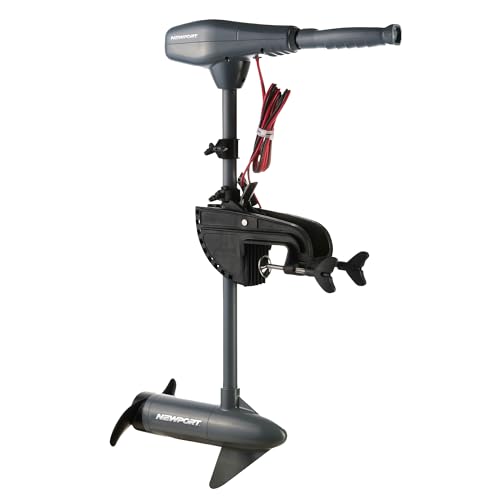
Best for: Kayaks or small boats needing more thrust without excessive weight. This series uses a saltwater-rated all-aluminum motor head with corrosion-resistant hardware, delivering strong drive while remaining suitable for both saltwater and freshwater use.
Why this selection: The 24″ shaft length and LED battery indicator support easy, on-the-water monitoring. Eight-speed options (five forward, three reverse) provide versatile control in tight harbors or windy conditions.
Limitations: Top speed varies with boat configuration and environmental factors. Heavier vessels or heavy wind may reduce effective speed and range compared with lighter setups.
Newport NV-Series 36lb Thrust Trolling Motor

Best for: Smaller craft needing dependable propulsion with low power. The 12V motor is compact and quiet, with a 30″ shaft and an LED battery indicator for easy monitoring during short trips or light-use days.
Why this selection: Lightweight power makes it ideal for kayaks, canoes, and inflatables where battery life matters most. The unit’s design emphasizes reliability and simple operation in calm to moderate water conditions.
Limitations: Lower thrust means it may struggle in strong currents or with heavier loads. Consider higher-thrust options if your kayak carries more gear or frequently encounters wind and chop.
Newport NV-Series 55lb Thrust Saltwater Transom Motor
Best for: Boaters needing robust power in saltwater environments without excessive motor size. This 55-lb thrust model provides a balance of torque and efficiency with a 30″ shaft and LED indicator.
Why this selection: The 8-speed range (5 forward, 3 reverse) supports deliberate trolling and maneuverability. The 12V system keeps wiring straightforward for common marine battery setups.
Limitations: Performance depends on mounting height and boat weight. Users should verify motor compatibility with their kayak or small boat hull and ensure proper corrosion protection in harsher marine settings.
BODIOO 68lb Thrust Trolling Motor

Best for: Kayaks or small boats that require higher thrust in shallow water with debris-rich environments. The copper-core design supports robust performance and the 6″ adjustable handle helps offset currents.
Why this selection: The 68 lb thrust offers stronger push while maintaining manageable noise levels around 50dB. The 90° rotatable bracket and debris-resistant 3-blade propeller help in shallow, weedy, or rocky conditions.
Limitations: Higher thrust consumes more battery. Check battery capacity and charging options to sustain longer trips, especially in windy or deep-water conditions.
Buying Guide: What To Consider When Choosing a Kayak Electric Outboard Motor
How Much Thrust Do You Need?
Thrust ranges from about 36 lb to 68 lb. Choose higher thrust if you carry more gear, fish in windy conditions, or have a heavier kayak. For calm lakes, lighter motors may suffice and conserve battery life.
Voltage, Battery Life, And Range
Most kayak motors run on 12V or 24/36V systems. Consider how far you typically travel and how many hours you’ll be on the water. Longer run times and higher efficiency reduce charging frequency.
Propeller Design And Noise
Two- or three-blade props affect thrust, efficiency, and debris handling. Debris-resistant designs help in shallow or weed-choked waters. Look for motors described as ultra-quiet for better wildlife and fishing experiences.
Mounting Compatibility And Shaft Length
Shaf t lengths around 24–30 inches fit most kayaks, but verify your hull depth and mounting location. Saltwater-rated hardware improves durability if you paddle in brackish or ocean conditions.
Digital Throttle, Display, And User Interface
Digital throttles and LCDs simplify monitoring speed, run time, and battery status. This can help you plan trips and avoid unexpected battery depletion on remote waters.
Weight And Portability
Lightweight units reduce the load on the kayak and improve handling. Balance the motor weight with your kayak’s weight limit and your carry options.
Maintenance And Durability
Brushless direct-drive designs offer long life and lower maintenance. Corrosion-resistant components are essential for saltwater use, while freshwater setups may tolerate lighter components.
Frequently Asked Questions
- What is the typical range of a kayak electric outboard? Most models offer 30–66 miles per charge, depending on battery capacity, speed, and water conditions.
- Can I mount any outboard motor on a kayak? Mounting depends on hull compatibility, shaft length, and mounting hardware. Always verify fit with your kayak model.
- Is a higher thrust motor better for kayaking? Higher thrust provides stronger push, useful in wind, current, or when carrying gear, but it consumes more battery and adds weight.
- Are electric kayak motors noisy? Many are designed to be ultra-quiet, but actual noise varies with mounting, prop design, and water conditions.
- What maintenance is required? Regular checks of the propeller, seals, and battery connections help ensure reliable operation in saltwater or freshwater environments.
- How do I choose between 12V and 36V systems? 12V is common for lighter setups and shorter trips; 36V systems deliver more thrust and efficiency for longer or heavier loads.