Answering the need for reliable boat power, this guide highlights top leisure batteries that balance deep-cycle capacity with starting power. Ideal buyers include anglers, weekend boaters, and RV-boat combos that require dependable trolling motor and accessories power. The table below compares five strong options across AGM and LiFePO4 technologies to fit different budgets and space constraints.
| Product | |||
|---|---|---|---|
| Interstate Batteries Marine/RV 12V 100Ah | AGM Dual-Purpose | 100 Ah | High dual-use power for starting and trolling |
| Interstate Batteries Marine/RV 12V 70Ah | AGM Dual-Purpose | 70 Ah | Compact, space-saving starter and deep cycle |
| UPLUS 12V 92Ah Dual Purpose AGM | AGM Dual-Purpose | 92 Ah | Space-saving, starts engines up to 350 HP |
| LVGINE 12V 100Ah LiFePO4 | LiFePO4 | 100 Ah | Lightweight, long cycle life, high safety |
| LiTime 12V 165Ah LiFePO4 | LiFePO4 | 165 Ah | High capacity, strong deep-cycle performance |
Interstate Batteries 100Ah AGM Dual-Purpose

Best for: boaters needing robust starting power and trolling capability in one unit. This dual-purpose AGM battery combines high crank power with deep-cycle endurance, designed to withstand rugged marine conditions. It’s intended to extend the time between recharges and maintain reliability during extended trips. Consider this when you want fewer battery boxes and more onboard efficiency.
Why selected: The 100Ah rating supports strong engine starts and prolonged operation of onboard electronics. Its thick-plate construction emphasizes durability and repeated discharge/recharge cycles, making it well-suited for anglers and weekend sailors.
Caution: As with most AGM deep-cycle options, ensure proper ventilation and secure mounting to avoid any movement in rough seas.
Interstate Batteries 70Ah AGM Dual-Purpose

Best for: smaller boats or spaces with limited battery bays, needing reliable starting power plus trolling capability. This compact option is easier to fit where space is at a premium while still delivering dual functionality.
Why selected: Its dual-purpose design provides starting and deep-cycle support with a lighter footprint, making it a practical choice for shallow cabins or compact power setups.
Caution: Lower Ah compared to larger models means more frequent recharges if you run extensive accessories or electronics.
UPLUS 92Ah Dual Purpose AGM
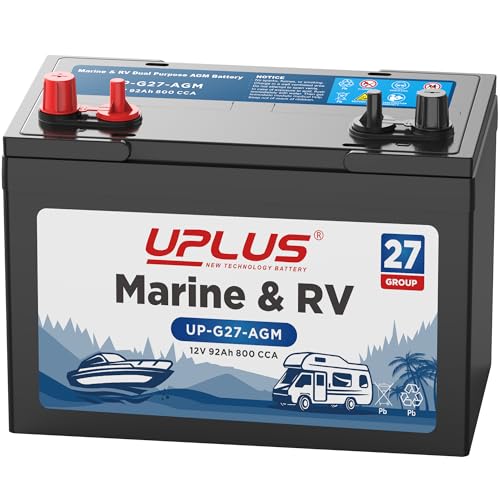
Best for: boaters seeking a compact 92Ah unit with strong starting power and the convenience of a single battery for a combined system. Suitable for mid-sized boats with moderate electronics loads.
Why selected: It delivers 800CCA, supporting reliable engine starts, while the dual-purpose design reduces system complexity and space needs on board.
Caution: Verify fit within the boat’s battery compartment, as dimensions influence mounting and cabling layout.
LVGINE 100Ah LiFePO4 Marine Battery

Best for: boaters prioritizing weight savings and long-term cycle life, especially for boats with limited mounting space or those pursuing high-efficiency power systems.
Why selected: LiFePO4 chemistry provides a light, compact, and durable option with high safety margins and deep discharge tolerance, ideal for long trips and solar-integrated systems.
Caution: LiFePO4 batteries require appropriate BMS integration and installation practices to ensure safe charging and discharging in marine environments.
LiTime 165Ah LiFePO4 Marine Battery

Best for: larger boats or extended trips where a high-capacity, lightweight lithium system is most beneficial for both starting power and deep-cycle needs.
Why selected: The 165Ah capacity with 1200CCA starting power provides robust performance for demanding electronics, trolling motors, and engine starts on longer voyages.
Caution: Lithium systems require careful installation planning, BMS considerations, and adherence to manufacturer guidelines to maximize safety and longevity.
Buying Guide: Key Considerations For Leisure Batteries On Boats
- Battery chemistry: AGM offers ruggedness and maintenance-free operation; LiFePO4 provides lighter weight and longer cycle life but requires careful integration and proper BMS setup.
- Capacity and power needs: assess both starting (CCA/MCAs) and deep-cycle requirements (Ah). Choose a dual-purpose battery when space and weight are limited.
- Space and fit: measure battery compartment dimensions and ensure mounting clearance, ventilation, and terminal accessibility.
- Weight considerations: lithium options save weight, improve efficiency, and may enable reseating weight distribution in smaller boats.
- Charging and alternator compatibility: verify charging profiles and whether a dedicated charger or battery management system is needed for lithium packs.
- Maintenance and durability: look for maintenance-free designs, rugged casings, and corrosion resistance for marine environments.
- Lifecycle and warranty: consider expected cycle life and warranty coverage, especially for high-use boaters and RV-boat combinations.
Frequently Asked Questions
- What is the difference between AGM and LiFePO4 for boat use?
AGM is robust and maintenance-free with solid overall performance; LiFePO4 is lighter with longer cycle life but must be installed with proper BMS and charging compatibility.
- What should I consider when choosing a dual-purpose battery?
Assess both starting power (CCA) and deep-cycle capacity (Ah). Ensure the size fits your boat’s battery compartment and that charging supports both modes.
- Do lithium batteries work well with standard boat alternators?
Yes, but you may need a compatible charger and BMS setup to manage charging safely and optimize cycle life.
- Is a larger Ah rating always better for boats?
More Ah supports longer electronics use between charges, but it also adds weight. Balance capacity with space and weight constraints.
- Can I mix different battery chemistries on the same boat?
Mixing chemistries is generally not recommended due to charging and balancing issues. Use a consistent system or professionally plan a dedicated setup for each function.
- How should I store a lithium battery when not in use for extended periods?
Keep it within recommended state-of-charge levels (often around 50-70%), in a dry environment, and monitor the BMS for stability.