Looking for a lightweight outboard motor that delivers reliable power without weighing you down? This guide highlights select, compact options ideal for inflatables, kayaks, small sailboats, and dinghies. Each pick is chosen for portability, easy starting, and fuel efficiency, making them suitable for casual anglers, weekend explorers, and beginners learning boat handling. Below, compare top choices, who they’re best for, and practical buying tips to help you pick with confidence.
| Product | Best For | Key Benefit |
|---|---|---|
| YaggeBike 4-Stroke 4HP Outboard | Inflatables, small boats | Lightweight, smooth CDI start |
| COFECO Hangkai 18HP Outboard | Rugged small craft, longer trips | Water cooling, fuel efficiency |
| KTYHNPM 4 Stroke 7.5HP | Medium-size boats | Strong power with air cooling |
| HinLIaDa 2-Stroke 2.3HP | Very light inflatables | Simple, high-revving performance |
| YIYIBYUS 2.3HP 52cc | Budget dinghies | Efficient 2-stroke design |
YaggeBike: 4-Stroke 4HP Outboard Motor

This compact 4-stroke outboard delivers reliable thrust for small boats, inflatable crafts, and light sailboats. The design emphasizes fuel efficiency and low noise, making it suitable for calm lake days or river cruising. Best for casual anglers and novice boaters who want straightforward operation without heavy gear.
- Best for: inflatable boats and small sailing craft.
- Why selected: lightweight, easy CDI ignition, smooth throttle response.
Limitations: While adequate for gentle to moderate currents, it may feel underpowered on faster or heavier setups. The cooling system supports longer runs but consider boat weight when planning trips.
COFECO Hangkai 18HP Outboard Motor

This model offers a robust 18 HP two-stroke engine with water cooling and CDI ignition. With an 8-inch propeller and a fuel-conscious carburetor, it’s geared for longer runs on small to mid-sized craft. Best for boaters who need more pulling power without stepping up to a larger, heavier motor.
- Best for: longer trips and boats needing extra punch.
- Why selected: strong performance, effective cooling, and fuel efficiency for its class.
Limitation: Being a two-stroke, it requires proper fuel mixing and maintenance to sustain performance over time.
KTYHNPM 4 Stroke 7.5HP Outboard
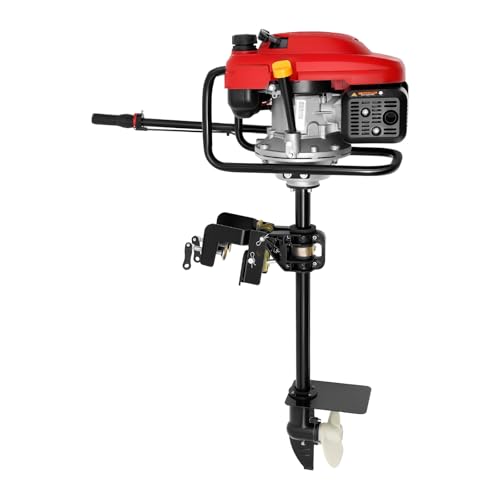
A 7.5 HP four-stroke engine with air cooling and a single-cylinder layout, this motor delivers solid mid-range power for boats around 13 to 20 feet. The CVT-like transmission setup aims for smooth gear transitions and consistent performance on modest seas. Best for small families with modest cruising needs.
- Best for: mid-sized dinghies and small sailboats.
- Why selected: strong, reliable power with good heat management for regular use.
Caution: The motor’s weight and mounting footprint may require compatible transom fittings on some boats.
HinLIaDa 2-Stroke 2.3HP Outboard
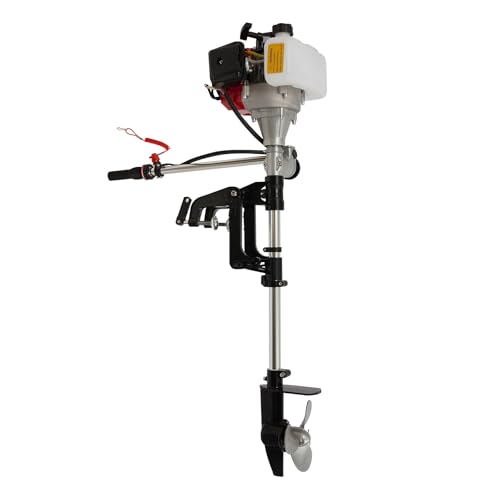
This 2.3 HP two-stroke option emphasizes lightweight design and simple starting for small inflatables and dinghies. It’s ideal when minimal weight is the priority and modest speed suffices. Best for tiny boats used in calm conditions or as an auxiliary motor.
- Best for: very light inflatables and dinghies.
- Why selected: easy handling, compact size, quick starts.
Limitation: Lower power output means slower planing and reduced performance in wind or current.
YIYIBYUS 2.3HP 52cc Outboard

This 52cc two-stroke engine offers a compact, efficient option with non-contact electronic ignition. It’s well-suited for budget-conscious buyers needing reliable propulsion for small boats and inflatables. Best for occasional use and learning to operate a small motor.
- Best for: budget-conscious buyers with small craft needs.
- Why selected: efficient power delivery in a compact package.
Note: As a two-stroke, it may require careful fuel mixing and maintenance planning to sustain performance.
Minn Kota Endura C2 Transom Motor
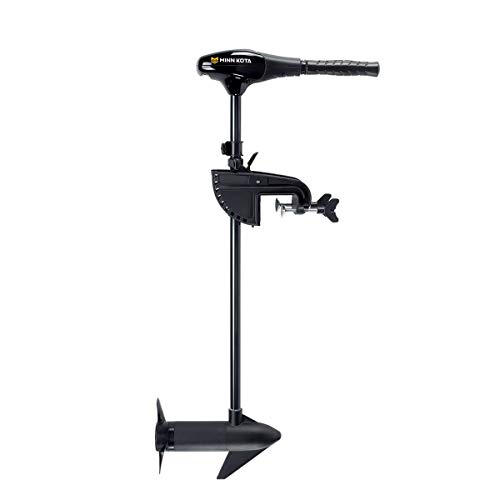
This electric trolling motor offers electric propulsion with a 30 Lb thrust and a 30-inch shaft. It uses a telescoping tiller for easy control and includes a power meter for battery awareness. Best for anglers who want precise, quiet trolling in lakes and reservoirs.
- Best for: quiet trolling and freshwater fishing.
- Why selected: solid control, durable build, and practical features for long days on the water.
Limitation: It requires a compatible battery system and may not be suitable for high-speed travel or rough seas.
BJTDLLX 12HP Short Shaft Outboard

This 12 HP two-stroke engine delivers stronger thrust for small fishing boats and inflatable crafts. It features water cooling with CDI ignition and a vent design to extend service life. Best for boaters needing extra performance without moving to a larger engine.
- Best for: heavier small boats needing more power.
- Why selected: good balance of power and durability in a compact form.
Limitation: Higher horsepower can mean greater fuel consumption and weight.
Ireliajob 4 Stroke 4HP Outboard
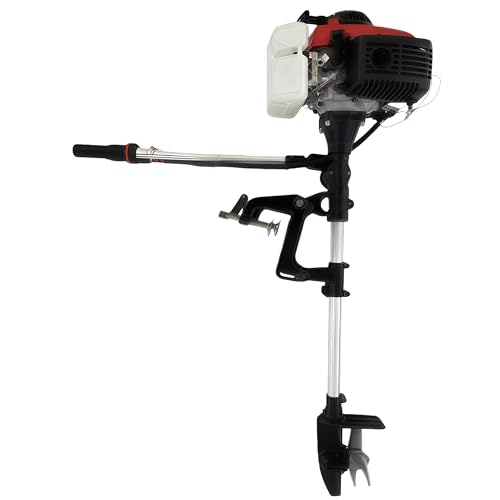
This 4 HP four-stroke motor emphasizes a balance of efficiency and power with built-in water cooling. CDI ignition and a smooth throttle provide reliable starts and easy speed control. Best for entry-level boaters and small sailboats where simple operation matters.
- Best for: entry-level users and small sailboats.
- Why selected: reliable start, consistent cooling, and straightforward throttle control.
Limitation: Lower horsepower compared to mid-range options may limit performance in heavier loads or fast currents.
Buying Guide: How To Choose The Right Lightweight Outboard
- Boat type and weight: Choose a motor with horsepower and weight suited to your boat’s size and how many passengers you typically carry.
- Fuel vs electric: Gas-powered models offer higher thrust and longer range; electric trolling motors excel in quiet operation and precision control.
- Cooling system: Water cooling generally improves engine longevity; air cooling keeps weight down but may heat faster in hot conditions.
- Starting method: CDI ignition provides quick starts; pull-start models can be simpler but may require more effort.
- Mounting and shaft length: Short shafts fit smaller transoms; ensure shaft length matches your boat’s transom height to avoid cavitation and prop strike.
- Maintenance needs: Two-stroke engines tend to require fuel mixing and more frequent oil management; four-stroke engines often run cleaner and require less mixing.
- Fuel capacity and efficiency: consider fuel tank compatibility and the expected consumption rate for planned trips.
- Noise and emissions: If you boat in quiet lakes or near residences, consider quieter models and those with EPA-friendly designs.
FAQ
- What is the lightest practical outboard motor for a small inflatable? Most options around 2-4 HP are among the lightest and easiest to handle for inflatables.
- Do I need a water-cooled engine for my inflatable boat? Water cooling helps prevent overheating on longer runs but adds complexity and weight. For very light use, air cooling may suffice.
- Is a 2-stroke or 4-stroke better for beginners? A 4-stroke offers smoother operation and lower emissions, while a 2-stroke provides higher power-to-weight and simpler maintenance in some cases.
- How important is shaft length? Shaft length affects propeller immersion and efficiency; choose a length that matches your transom height to avoid cavitation.
- Can I use a trolling motor as my primary propulsion? Trolling motors are excellent for maneuvering and quiet fishing but typically lack the speed and range of gas or larger electric motors for propulsion across open water.
- What maintenance should I perform after buying a lightweight outboard? Regular checks on the fuel system, cooling passages, spark/ignition, and mounting hardware help ensure reliable performance.