When choosing a lithium battery for a boat, look for reliability, cycle life, temperature protection, and a solid BMS. This guide highlights five highly compatible options for marine use, trolling motors, and auxiliary house power. Each selection suits different boating needs—from compact trolling setups to larger systems requiring substantial storage. The buyer types best served by these picks range from weekend boaters needing dependable auxiliary power to full-time mariners seeking long-lasting energy storage with smart monitoring.
Product Comparison at a Glance
| Product | Key Strengths | Best For |
|---|---|---|
| SUPER EMPOWER 12V 100Ah LiFePO4 (BCI Group 24) | Drop-in replacement, long cycle life, robust BMS | RV, small to mid-size boats needing easy swap |
| LiTime 12V 165Ah Dual Purpose Marine Battery | 2-in-1 starting and storage, high starting power | Boats needing both cranking and house power |
| LiTime 12V 100Ah Trolling Motors (Group 31) | Bluetooth monitoring, low-temp protection | GPS trolling setups and mid-sized boats |
| SUPER EMPOWER 12V 100Ah LiFePO4 (BCI Group 31) | High cycle life, 1:1 lead-adapt fit | Dockside power and supplemental house power |
| BUKNUWO 12.8V 100Ah LiFePO4 | Expandable, high cycle life, 100A BMS | Expandable marine/storage systems, multiple packs |
SUPER EMPOWER 12V 100Ah LiFePO4 Battery (BCI Group 24)

The 12V 100Ah LiFePO4 battery from SUPER EMPOWER is designed for deep cycle energy storage in RVs, boats, and off-grid setups. It includes a built-in BMS that guards against overcharge, over-discharge, overcurrent, short circuits, and temperature extremes. This model is intended for auxiliary and house power rather than engine starting. It fits standard Group 24 boxes and uses M8 terminals, offering a true drop-in replacement for traditional lead-acid systems. Best for boaters needing a reliable, long-lasting power source without engine-start capabilities, ensuring stable daily operation.
Best for: boat owners seeking a straightforward, long-lasting house power upgrade or replacement that is simple to install in existing Group 24 boxes. Limitations: not suitable for cranking or starting as a primary engine battery.
LiTime 12V 165Ah Dual Purpose Battery (Marine)

LiTime’s 12V 165Ah dual-purpose lithium battery combines cranking power with deep cycle storage in one unit. It supports 1200 CCA starting power at cold temperatures and provides ample capacity for house devices, electronics, and trolling gear. The unit is ABYC-compatible for cross-brand installations and is designed to fit alongside common marine electronics without adding extra batteries. It’s a strong choice for boaters who want a compact, two-in-one solution to reduce weight and space used by separate starting and house batteries.
Best for: boats needing both reliable engine starting power and robust house power in a single compact package. Consideration: ensure cross-brand compatibility and proper charging strategy for lithium systems.
LiTime 12V 100Ah Trolling Motors Battery (Group 31)

This LiTime 100Ah LiFePO4 battery is tailored for trolling motors and marine devices, featuring a Bluetooth monitor that lets you check status and perform system checks from your phone. It includes low-temperature protection to prevent charging below 32°F and discharging below -4°F, helping maintain performance in challenging coastal and northern sailing seasons. With more than 20 safety protections and IP65 dust/water resistance, it’s built to withstand harsh marine environments. Best for: boats with trolling motors that want easy field monitoring and strong cold-weather performance. Limitation: ensure compatible charging profiles with your marine electronics.
SUPER EMPOWER 12V 100Ah LiFePO4 Battery (BCI Group 31)
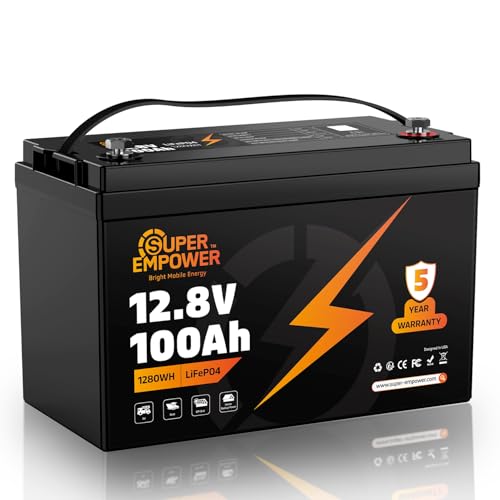
This unit mirrors the deep cycle philosophy of the Group 24 version but fits Group 31 configurations, broadening compatibility with larger marine battery boxes and existing systems. With Grade A+ LiFePO4 cells and a built-in BMS, it supports thousands of cycles with consistent performance. It is ideal for dockside power banks or auxiliary house power on boats that rely on standard Group 31 compartments. Best for: boats with Group 31 battery boxes needing long life and straightforward upgrade. Caution: verify box dimensions to ensure a snug 31-size fit.
BUKNUWO 12.8V 100Ah LiFePO4 Battery

BUKNUWO offers a 12.8V 100Ah LiFePO4 battery with an expansive BMS featuring automatic high/low temperature cut-offs and protection against overcharging and overdischarging. It supports up to 4000 cycles at 100% DOD and up to 15000 cycles at 60% DOD, making it a strong option for expandable, multi-pack systems on boats. It also supports series and parallel expansion (up to 4S4P), enabling larger home-energy style configurations for marine use. Best for: power systems that may grow into larger arrays or require multiple packs. Limitation: 12.8V nominal, so ensure compatibility with equipment expecting 12V modules.
Buying Guide: Practical Considerations For Marine Lithium Batteries
What capacity do you actually need?
Evaluate your daily energy use and planned duration away from shore power. A higher Ah rating increases total available energy, but weight and space matter on a boat. For modest systems, 100–165Ah typically covers essential electronics, lighting, and fans. For longer trips, consider multiple cells or a dual-purpose unit that minimizes the number of batteries while still delivering enough power.
How important is a smart BMS?
A robust BMS protects against overcharge, deep discharge, short circuits, and temperature extremes. Look for features like low-temperature cut-off, auto-recovery, and cell balancing to prolong life and reduce maintenance. A Bluetooth or app-based monitor helps track health and state of charge while on the water.
Is weight a concern?
Yes. LiFePO4 batteries are lighter than lead-acid equivalents, but weight still adds up with larger capacities. Compare battery weight per delivered usable capacity to optimize weight distribution on board and in compartments.
What about charging compatibility?
Use lithium-specific chargers or lithium mode on charge controllers. Many marine systems use solar or shore power; ensure the charger’s voltage and CC/CV profile align with the battery’s requirements (typically around 14.4–14.6V for LiFePO4 charging). Consider how the BMS handles charging from different sources and temperatures.
Do you need a two-in-one solution?
For some boats, a dual-purpose battery that handles both starting and storage reduces space and weight. If your engine requires substantial cranking power but you also want house power, a high-CCA LiFePO4 option can simplify the setup without sacrificing performance.
What about expansion and future-proofing?
Expandable systems let you add more packs as power needs grow. Check if the battery supports series/parallel connections and whether the BMS and wiring allow safe expansion while maintaining performance and safety.
Frequently Asked Questions
- Can I replace a lead-acid battery with LiFePO4 on my boat? Yes, many LiFePO4 packs are designed as drop-in replacements for standard sizes like Group 24 or Group 31, but verify dimensions and terminal layout before upgrading.
- Do these batteries work in cold weather? Most models have low-temperature protections to prevent charging below freezing. Some offer pre-warm protections or require chargers designed for cold environments.
- What is “cycles” and why does it matter? A cycle is one full discharge and recharge. More cycles mean longer life. LiFePO4 cells typically last thousands of cycles, far surpassing lead-acid equivalents when used within recommended DOD ranges.
- Is Bluetooth monitoring necessary? It’s optional but helpful. It provides real-time status, remaining capacity, and alerts, which is valuable for remote boats or boats with complex electrical setups.
- How should I charge lithium on a boat? Use a lithium-approved charger or a controller configured for lithium, and avoid conventional lead-acid charging profiles that can harm LiFePO4 cells.