The top choice for trolling motor power is a 12V LiFePO4 battery with a built‑in BMS, high cycle life, and reliable cold‑weather protection. This guide highlights five options that balance safety, longevity, and ease of use for boaters, RVs, and solar setups. Best for: casual anglers needing dependable day trips, devoted cruisers seeking long-term endurance, and anyone upgrading from lead‑acid systems. The table below compares core specs to help you pick quickly.
- Product: 12V 100Ah LiFePO4 Battery (Group 24) — Durable, drop-in replacement
- Product: DC HOUSE 12V 100Ah LiFePO4 — Bluetooth monitoring, low-temp cut-off
- Product: Litime 12V 100Ah (Group 31) — Bluetooth, strong cold‑weather protection
- Product: Eiiev 12V 100Ah LiFePO4 — Long life, high efficiency
- Product: KGIOO 12V 100Ah LiFePO4 (Group 31) — Flexible series/parallel setup
| Product | Group Size | Cycle Life (DOD) | Threats Covered | Best For |
|---|---|---|---|---|
| SUPER EMPOWER 12V 100Ah (Group 24) | BCI Group 24 | 5000–15000 | Overcharge, over-discharge, short circuit | Compact boats, auxiliary power |
| DC HOUSE 12V 100Ah | Group 24 | Up to 15000 | Low temp, discharging | Bluetooth monitoring fans |
| Litime 12V 100Ah (Group 31) | Group 31 | Up to 15000 | Low temp, protection against extremes | Rugged marine and RV use |
| Eiiev 12V 100Ah | Group 31 | 4000–15000 | High efficiency, long life | Outdoor camping and power storage |
| KGIOO 12V 100Ah (Group 31) | Group 31 | Up to 15000 | Overcharge, discharging, shorts | Series/parallel builds for larger systems |
SUPER EMPOWER 12V 100Ah Group 24 Battery

Best for: boaters needing a direct drop-in replacement for lead-acid in Group 24 boxes. This battery uses Grade A+ LiFePO4 cells and integrates a BMS to guard against overcharge, over-discharge, overcurrent, and temperature extremes. It is designed for energy storage and should not be used for engine starting. It interfaces smoothly with standard battery boxes, simplifying installation on small boats or RVs.
Why chosen: It offers a long cycle life (up to 15,000 cycles at 60% DOD) and a practical weight, along with a true drop-in option for existing 12V systems. The integrated BMS provides daily reliability for trolling motors and auxiliary power.
Caution: Not suitable for engine starting or high‑crank demands; use with compatible charging sources and avoid high current starts.
DC HOUSE 12V 100Ah LiFePO4 With Bluetooth

Best for: boaters who want real-time battery data from a smartphone app. The built-in Bluetooth closely monitors state of charge, voltage, and current. Low-temperature cut-off protects the battery when ambient temperatures drop, which is beneficial in colder climates or early-season outings.
Why chosen: It supports up to 15,000 cycles and a stated 10-year life, making it a solid long-term choice for trolling motors and off-grid marine setups combined with solar charging.
Caution: Bluetooth range is limited; keep your device within the stated range for accurate data.
Litime 12V 100Ah Group 31 With Bluetooth

Best for: users who value integrated Bluetooth monitoring and strong cold-weather protection. The battery auto‑connects to a mobile app to check status and perform checks, which helps keep trolling motor power predictable during trips.
Why chosen: Beyond the Bluetooth feature, it provides a robust low-temperature protection scheme, stopping charging below 32°F and discharging below -4°F to mitigate cold-season damage. It’s designed to handle harsh marine environments with IP65 dust and water resistance.
Caution: Ensure the app is up to date to access fault displays and troubleshooting guidance.
Eiiev 12V 100Ah LiFePO4 Battery

Best for: campers and outdoor power users who need long cycle life and high efficiency. The flat discharge curve maintains voltage for a large portion of its capacity, extending runtime for trolling motors and other marine electronics.
Why chosen: It claims up to 15,000 cycles at 60% DOD with a 10-year lifetime, which translates to substantial long-term cost savings and reliability in marine or RV energy storage projects.
Caution: Data emphasizes energy storage performance; confirm compatibility with your charger and solar setup for best results.
SUPER EMPOWER 12V 100Ah Group 31 (Two Pack)
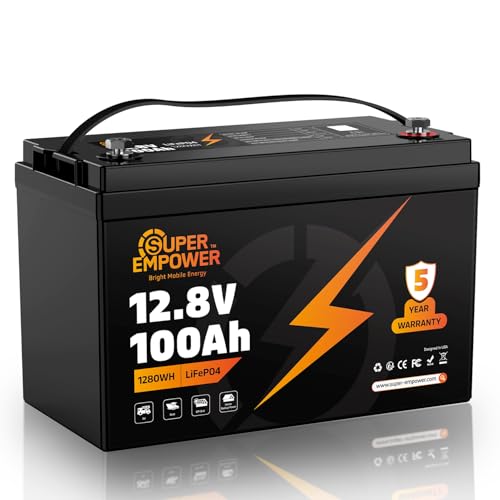
Best for: users needing a scalable power solution for larger trolling motor setups or solar storage. The two-pack option allows stacking in series or parallel to build higher voltage or capacity systems.
Why chosen: It mirrors the single‑pack model’s long cycle life and robust BMS, extended to a two-pack configuration for greater flexibility in marine and RV installations.
Caution: Ensure your charging system and BMS settings are configured to handle multi‑battery configurations safely; follow recommended wiring practices for series/parallel builds.
Buying Guide: Key Considerations For The Right Battery
What size group do I need for my trolling motor? Group size matters for fit in standard battery boxes. Group 24 or Group 31 are common, with 31 offering more capacity in the same footprint. If your boat has a compact battery compartment, a Group 24 option may be ideal.
How important is cycle life? For frequent use or multi-season boating, look for 5000+ cycles at 100% DOD or better. Higher cycle life reduces replacement costs over time.
Should I choose Bluetooth monitoring? Bluetooth-enabled models give easy real-time status checks via an app, helping you manage SOC and prevent unexpected outages on the water.
What about cold-weather protection? Low-temperature cut-off prevents charging at dangerously low temperatures, while accurate BMS protections guard against over-discharge in cold conditions. This is critical for early-season trolling.
Is expansion possible? If you plan to scale up, consider batteries that support 4S4P or similar configurations. This enables higher voltages and larger storage arrays for extended trips or solar-dominant setups.
What charging should I use? Use a charger designed for LiFePO4, with a proper CC/CV profile (commonly 14.4–14.6V). Solar controllers should be configured for lithium mode to maximize efficiency and battery health.
FAQ
- Q: Can these batteries start my boat’s engine? A: No, these LiFePO4 batteries are designed for energy storage and trolling motor use, not for engine starting.
- Q: How long does a 12V 100Ah LiFePO4 battery typically last? A: With proper use, many of these models claim up to 10 years and thousands of cycles, depending on DOD and charging practices.
- Q: Do I need a special charger for LiFePO4 batteries? A: Yes, use a LiFePO4-rated charger with appropriate voltage and CC/CV charging profiles.
- Q: Are these batteries safe for marine use? A: Yes, all listed models include BMS protections for overcharge, over-discharge, and short circuits, plus temperature safeguards.
- Q: Can I connect multiple batteries in series or parallel? A: Some models support series/parallel configurations (check the product’s stated compatibility and wiring guidelines).
- Q: Do these batteries weigh a lot to install? A: LiFePO4 batteries are typically lighter than lead-acid equivalents, often around 20–25 lbs for a 100Ah unit, depending on the model.