Finding the right marine battery for a trolling motor means balancing weight, longevity, and reliable power in demanding water conditions. This article highlights five top options suited for anglers, boaters, and RVers who depend on steady energy on the water. Each pick is evaluated for who it’s best for, why it stands out, and a clear limitation to consider before choosing.
Buyer snapshot: the top five selections below are grouped by typical use cases—lightweight backup power, high-cycle LiFePO4 systems, smart monitoring with Bluetooth, and dual-purpose AGM options. If you need straightforward, long-cycle power for trolling motors and onboard electronics, one of these may fit your vessel and operating environment best.
| Product | Best For | Key Benefit |
|---|---|---|
| Newport 12V50Ah AGM | Lightweight boats, easy installation | Sealed, leak-proof design with trolling motor compatibility |
| 12V 100Ah LiFePO4 (SUPER EMPOWER) | Long life, high cycle count | Drop-in lead-acid replacement with high cycles |
| Litime 12V 100Ah LiFePO4 | App-enabled monitoring on the go | Bluetooth status updates and robust protections |
| DC HOUSE 12V 100Ah LiFePO4 | Bluetooth monitoring with low-temp protection | High cycle life and cold-weather safety |
| GOKWH 12V 100Ah LiFePO4 | Expandable power for longer trips | Bluetooth monitoring and expandable configurations |
Newport 12V50Ah Deep Cycle AGM Battery

The Newport 12V50Ah AGM is a lightweight, sealed deep-cycle option designed for trolling motors. It weighs about 32 pounds, easing transport and installation on smaller boats. The sealed lead-acid construction minimizes leaks and maintenance while delivering steady trolling motor power. Best for: boaters who need a lightweight, reliable power source for on-the-water trolling and electronics without heavy equipment.
Limitations: AGM batteries are typically heavier per amp-hour than lithium options and may require longer charging times. This model is optimized for trolling motor compatibility but does not offer lithium’s high cycle life.
12V 100Ah LiFePO4 (SUPER EMPOWER)

This 12V 100Ah LiFePO4 battery is a high-cycle, deep-cycle energy storage solution with a built-in BMS. It suits RVs, boats, trolling motors, and solar setups as a drop-in replacement for lead-acid systems. Best for: users seeking a long-lived lithium option with substantial cycle life and a straightforward switch from AGM or SLA batteries. It’s not designed for engine starting.
Limitations: Not suitable for starting engines or cranking, which means you may still need a separate cranking battery for starting purposes on some vessels.
Litime 12V 100Ah LiFePO4 (Group 31)

Litime’s 12V 100Ah LiFePO4 battery offers Bluetooth monitoring and a robust 100A BMS with low-temperature protection. It includes safety features like IP65 waterproofing and dust resistance. Best for: boaters who value on-the-water connectivity and proactive protection, particularly in variable climates.
Limitations: Bluetooth monitoring relies on proximity to a connected device, and installation quality affects long-term performance in wet environments.
DC HOUSE 12V 100Ah LiFePO4

DC HOUSE provides a 12V 100Ah LiFePO4 battery with advanced low-temp cut-off and Bluetooth app monitoring. It’s designed for trolling motors, marine use, and solar applications, with a long cycle life and a 10-year expectancy. Best for: users who operate in cooler conditions or want direct app-based load management while on the water.
Limitations: Requires compatible Bluetooth app and configuration; some setups may need precise wiring to maximize BMS protections.
Newport Trolling Motor Smart Battery Box
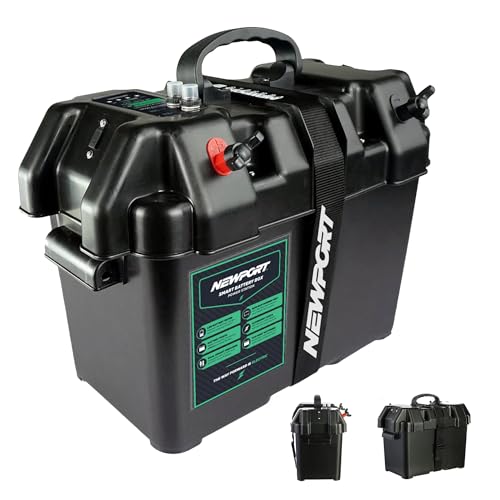
The Newport Smart Battery Box is a compact all-in-one power hub designed to simplify power management. It provides USB and 12V DC ports, with external terminals for easy connections to trolling motors and marine electronics. Best for: boaters seeking a clean, organized power setup with quick external access and minimal wiring complexity.
Limitations: It’s a power hub rather than a standalone battery, so you’ll still need a compatible battery and proper mounting in your vessel.
GOKWH 12V 100Ah LiFePO4 With Bluetooth

The GOKWH 12V 100Ah LiFePO4 battery emphasizes smart Bluetooth monitoring and expansion capability for larger, longer trips. It delivers high energy density in a lighter package, and supports 4P4S expansion for greater voltage or capacity. Best for: power users who anticipate extended days on the water and want scalable lithium power with real-time telemetry. Limitations: Expansion requires compatible hardware and careful electrical planning to maintain BMS protection at higher configurations.
Buying Guide: What to Consider When Choosing Marine Batteries For Trolling Motors
- Battery chemistry: Compare lead-acid AGM versus LiFePO4. LiFePO4 offers longer life, lighter weight for the same capacity, and better deep-cycle performance, but at a higher upfront cost.
- Capacity and weight: Align amp-hour rating with trolling motor draw and expected runtime. Lighter options ease installation on smaller craft, while higher capacity extends time between charges on larger vessels.
- Weight impact on vessel balance: Heavier batteries can affect trim and handling; weigh options against boat size and storage space.
- Durability and water exposure: Look for IP ratings (water and dust resistance) and sealed designs for wet environments.
- Battery management system (BMS): A robust BMS protects against overcharge, deep discharge, short circuits, and temperature extremes, extending life and safety.
- Temperature tolerance: Low-temp protection helps preserve charge in cold conditions, a common concern for early-season or high-latitude boating.
- Monitoring capabilities: Bluetooth or app-based monitoring provides real-time status, making it easier to plan runs and overnight trips.
- Expansion possibilities: If planning a larger system, consider batteries that support expansion (e.g., 4P4S configurations) or modular battery boxes.
FAQ
- What is the main difference between AGM and LiFePO4 for trolling motors?
LiFePO4 batteries are lighter and offer more cycles, while AGM batteries are typically less expensive upfront and easier to source. - Can I use a LiFePO4 battery to start my boat engine?
Most LiFePO4 trolling-motor batteries are designed for deep-cycle use and are not intended for engine cranking; a separate start battery is often recommended. - Do I need a special charger for LiFePO4 batteries?
Yes, use a charger compatible with LiFePO4 chemistry to ensure proper charging and BMS protection. - How long will a 100Ah LiFePO4 battery last on a trolling motor?
Lifetime depends on usage, but LiFePO4 batteries can provide thousands of cycles with proper care; consult the BMS and manufacturer guidance. - Is Bluetooth monitoring essential for marine batteries?
It’s helpful for real-time status, but not strictly essential; wired monitoring and manual checks remain viable. - Can these batteries be used for other marine electronics?
Yes, most LiFePO4 options support trolling motors, fish finders, and other low-power marine devices, though starting engines may require a separate supply.