The best marine battery solar charger picks optimize charging efficiency, protect battery life, and stand up to harsh marine conditions. This guide highlights top 5 models ideal for boats, RVs, and other outdoor applications. Best for compact setups, best for rugged use, best for high daily recharge, best for all-weather durability, and best overall value. Each option includes MPPT control, three-stage charging, and maintenance features to minimize battery care while maximizing charge readiness.
Buyer snapshot: The following table summarizes the five recommended products, their key capabilities, and the ideal scenario for use.
| Product | Wattage / Model | MPPT / Controller | Best For | Notes |
|---|---|---|---|---|
| SUNER POWER Waterproof 12W | 12W | Ultra-Smart MPPT | Compact boats and small battery banks | Three-stage charging, maintenance-friendly |
| SOLPERK 20W Solar Battery Charger Kit | 20W | Smart MPPT Controller | Everyday marine and trailer setups | Suitable for multiple 12V chemistries |
| Voltset 20W Solar Battery Charger | 20W | Smart MPPT | Cars, RVs, boats with steady sun | Universal compatibility, protection features |
| POWOXI 7.5W-Solar-Battery-Trickle-Charger | 7.5W | Smart Internal Protection | Very small 12V systems, backup power | Low profile, weather resistant |
| SUNER POWER Waterproof 50W | 50W | Ultra-Smart MPPT | Medium to large battery banks on boats | High efficiency, robust for marine use |
SUNER POWER Waterproof 12W 12V Solar Charger
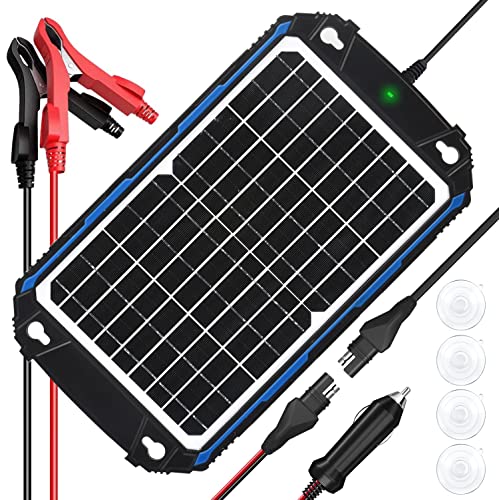
Best for compact 12V battery setups on small boats, cars, or portable marine applications. It uses Ultra-Smart MPPT to maximize energy capture under limited panel space. The 3-stage charging approach (Bulk, Absorption, Float) helps maintain battery health and efficiency. It stops charging when full and resumes on discharge, offering maintenance-free operation for limited sun.
Who it’s best for: buyers with small battery banks, limited mounting space, and a need for a simple, reliable trickle charger that minimizes maintenance. Caution: performance may be limited in very low-light conditions due to lower wattage.
SUNER POWER 20W 12V Solar Battery Charger

This option delivers higher output while maintaining the same smart charging principles. Best for mid-sized marine setups where sun exposure is moderate and battery maintenance is a daily concern. The MPPT controller improves efficiency, while the maintenance-free operation reduces ongoing care. Suitable for boats with larger battery banks or longer sunny intervals.
Who it’s best for: boaters needing more charging capacity without stepping up to heavier equipment. Caution: ensure mounting and wiring meet marine electrical standards to avoid long cable runs increasing losses.
Voltset 12V Solar Battery Charger 20W

Best for universal 12V battery compatibility, including LiFePO4 and AGM chemistries. The MPPT controller delivers 20–30% faster charging, and built-in multi-layer protection guards against overcharge, over-discharge, and short circuits. It’s a versatile choice for mixed-use marine rigs with different battery types.
Who it’s best for: owners who want compatibility across several battery chemistries and a robust protection system. Caution: performance depends on consistent sun; occasional cloudy days may reduce charging speed.
POWOXI Upgraded 7.5W Solar Battery Trickle Charger
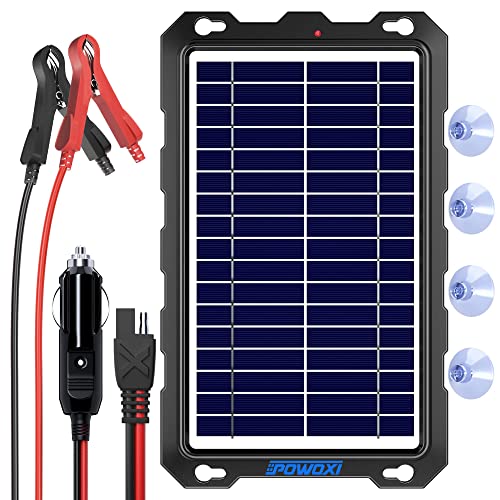
Best for ultra-compact systems or as a supplementary charger in marine setups demanding minimal footprint. It features an internal protection system that safeguards against overvoltage and short circuits. Its low wattage makes it ideal for maintaining smaller batteries during long periods of storage or light-use conditions.
Who it’s best for: sailors or campers with very small 12V batteries or those who want a discreet, maintenance-light charger. Caution: limited charging speed means it won’t meet the daily replenishment needs of high-draw systems.
SUNER POWER 50W Waterproof Solar Battery Charger

Best for larger marine battery banks and higher daily recharge demands. The Ultra-Smart MPPT technology provides high tracking efficiency and peak conversion, potentially delivering 20–30% more energy capture than non-MPPT counterparts. The three-stage charging optimizes performance and battery life, with automatic maintenance after full charge.
Who it’s best for: boats with bigger energy needs or those cruising in sunny regions and needing faster replenishment. Caution: heavier unit and wider footprint may require more mounting space and secure installation.
Buying Guide: Key Purchase Considerations
What size should I choose?
Match wattage to your battery bank and typical sun exposure. Smaller boats may do well with 12–20W; larger rigs benefit from 30–50W panels for faster replenishment.
Why MPPT matters?
MPPT controllers maximize power extraction from solar panels, improving charging efficiency, especially in variable light or cooler temperatures. This helps to shorten charge times and keep batteries healthier.
Which battery types are supported?
Look for compatibility with LiFePO4, AGM, Gel, Flooded, and other common 12V chemistries. Multichemistry support offers flexibility for mixed fleets or upgrades.
What maintenance features are important?
Automatic stop/ resume charging, overcharge protection, short-circuit safeguards, and weatherproof housing reduce ongoing care and protect equipment in marine environments.
How should I mount and wire the system?
Choose weatherproof, corrosion-resistant mounting and ensure proper cable sizing to minimize voltage drop. Consider brackets with adjustable angles for optimal sun exposure and secure fastenings to withstand movement at sea.
What about durability and weather resistance?
Low-iron tempered glass, marine-grade frame materials, and IP-rated housings improve resistance to salt spray, rain, and wind loads. Panels designed for 2400Pa wind and similar snow loads offer resilience in adverse conditions.
FAQ
- Will a higher wattage charger always mean faster charging? Not always. Real-world charging speed depends on sun exposure, battery state, and cable losses. A larger panel helps under bright sun but may not improve performance in shade.
- Can these chargers prevent battery damage? Yes. Most units employ three-stage charging and protection features to prevent overcharge, over-discharge, and short circuits, promoting longer battery life.
- Are these chargers suitable for LiFePO4 batteries? Many models claim compatibility with LiFePO4 and other chemistries. Verify the brand’s listed compatibility for your exact battery type before use.
- Do I need a separate solar charge controller? Some kits include an integrated MPPT controller. If not, you’ll need a compatible controller to regulate charging and protect the battery.
- Can these withstand marine environments? Look for weatherproof enclosures, corrosion-resistant frames, and proven IP ratings. Proper installation also mitigates exposure risks.
- How do I determine the right mounting position? Aim for a slope and angle that maximize sun capture during peak boating hours, while keeping the panel accessible for maintenance.