Finding the right Group 24 battery tray for marine, automotive, or RV use is about securing a battery in rough conditions and tight spaces. This guide presents five solid options and explains who each is best for, plus practical buying notes. Ideal buyers include boat owners facing rough water, RV travelers seeking secure mounts, and automotive setups that demand durable, flip-safe trays. Below is a quick comparison table to help you skim the essentials.
| Product | Best For | Key Advantage |
|---|---|---|
| Automotive, Marine, Boat, RV Battery Tray – Group 24 Series With Strap (24 Series) — A.A | Rough seas and rugged trips | Heavy-duty strap retention |
| Attwood 9096-5 USCG-Approved 24 Series Tray — Black | Coast Guard-compliant installations | Adjustable height crossbar |
| NSBGPSD Group 24 Battery Tray (2 Pack) — 24 Series | Two-tray needs, flexible mounting | Universal fit with quick-release buckle |
| T-H Marine Narrow Battery Tray Holder — 24 Series | Tight spaces on boats | Space-saving, recessed mounting wells |
| Attwood Adjustable Battery Tray — 24 & 24M Series — 9090-5 | Flexible battery compatibility | Height-adjustable crossbar |
Automotive, Marine, Boat, RV Battery Tray — Group 24 With Strap

The Group 24 Series Battery Tray with Strap is designed for heavy use in automotive, marine, and RV environments. It is constructed from high-impact polypropylene and includes a battery strap to limit movement. This tray keeps a Group 24 battery secure and reduces vibration during travel or on water. Best for buyers who prioritize a straightforward, strap-secured mounting in rugged conditions. A potential limitation is that installation may require compatible mounting hardware not included in all packages.
Attwood 9096-5 USCG-Approved 24 Series Heavy Duty Adjustable Hold-Down Tray

This tray meets ABYC standards and U.S. Coast Guard requirements, making it suitable for safety-conscious installations. It features an adjustable height crossbar and stainless steel retaining fasteners. Best for buyers who need Coast Guard compliance and a versatile fit for various heights. Note that installation may require additional fasteners (#10) not included in the package.
NSBGPSD Group 24 Battery Tray — 24 Series With Strap

This tray is designed for a universal fit across automotive, marine, boat, and RV sectors, with a strong quick-release buckle to keep the battery firmly in place. Made from high-strength plastic, it offers impact resistance and extended service life. Best for buyers who want a versatile, two-pack option for multiple batteries. A limitation is that some users may need to verify compatibility with their specific boat or vehicle model.
NSBGPSD Group 24 Battery Tray (2 Pack) With Strap

This 2-pack tray set mirrors the single-tray NSBGPSD design, offering secure strap retention and a universal fit for 24-series batteries. Best for buyers who need multiple trays for larger installations or spare capacity. Limitations include the need to confirm exact battery dimensions to prevent a tight fit in constrained spaces.
Group 24 Battery Tray with Strap — GAQUECY

This GAQUECY tray provides a snug, strap-secured fit for Group 24 batteries, with high-impact polypropylene construction that resists gas and moisture. It includes a safety strap and screws for tool-free installation in about five minutes. Best for buyers who want a quick, tool-free setup and durable material; avoid if you need a tray with built-in mounting hardware for a different battery size.
T-H Marine Narrow Battery Tray Holder — Group 24
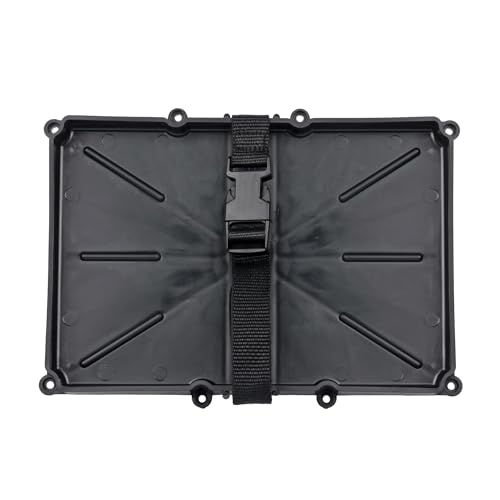
The T-H Marine tray is designed for tight spaces, featuring a space-saving footprint and recessed mounting wells to hide fasteners. It includes a secure poly strap retention to keep the battery in place in rough seas or during road trips. Best for buyers with compact bilge areas or small compartments. A limitation is that it may be narrower than standard trays, which could affect larger 24-series batteries.
Attwood Adjustable Tray for 24 & 24M Series — 9090-5

This tray offers compatibility with both 24 and 24M series batteries, featuring a height-adjustable crossbar to minimize battery movement. Best for buyers who anticipate different battery configurations or require adjustable fit. A minor caveat is that the crossbar adjustment may require precise alignment during installation.
Buying Guide: Key Considerations And Comparisons
- Space and layout: Measure your mounting area to choose a narrow or standard-width tray. Narrow trays excel in tight bilges or transoms, while standard trays accommodate larger battery footprints.
- Battery compatibility: Confirm Group 24 sizing, including length and height, to ensure a proper fit with or without a strap.
- Strap and retention: Straps prevent battery movement. Look for quick-release buckles for easy removal or integrated retention features for tough conditions.
- Material and durability: High-impact polypropylene resists gas, oil, acid, and moisture. This improves longevity in marine environments.
- Mounting hardware: Some trays include screws or fasteners; others may require separate hardware. Check if #10 fasteners or other mounting components are included or needed.
- Standards and safety: For marine setups, consider trays meeting ABYC or USCG guidelines when regulatory compliance matters for the installation.
Frequently Asked Questions
- What is Group 24?
Group 24 refers to a common battery size used in cars, boats, and RVs; trays labeled for Group 24 are designed to fit this dimension and weight range. - Do I need a strap with my battery tray?
Straps help lock the battery in place, reducing movement during movement or vibration. This is especially important in boats and RVs. - Are there Coast Guard-approved trays?
Yes, some trays, like the Attwood 9096-5, meet USCG and ABYC standards for safer marine installations. - Can I install a Group 24 tray without tools?
Several models offer tool-free installation with built-in straps and simple mounting design, but always verify included hardware and the mounting surface. - How do I choose between a single tray and a 2-pack?
A 2-pack is convenient for dual-battery systems or multiple vehicles/boats; a single tray is typically sufficient for a single-battery setup. - What should I check before buying?
Confirm battery dimensions, space constraints, mounting hardware inclusions, and whether the tray meets your vessel’s or vehicle’s regulatory requirements.