Answer: For boaters seeking clean fuel, reduced deposits, and smoother operation, these marine diesel fuel treatments are among the top options. The best picks target soot reduction, corrosion protection, lubricity, and fuel stabilization. This guide helps you choose based on your vessel type, climate, and maintenance goals. The top products are suitable for commercial craft, recreational boats, and workboats operating in variable conditions.
Summary table of selected products:
| Product | Best For | Key Benefit | Notes |
|---|---|---|---|
| BIOBOR MD Diesel Fuel Additive | Boats and trucks in varied climates | Reduces soot, raises cetane, improves lubricity | Anti-gel properties; corrosion prevention |
| BIOBOR JF Diesel Fuel Additive | Fleet vehicles and marine uses | Biocide protection, dual-phase chemistry | Extends fuel filter life |
| STA-BIL Diesel Fuel Stabilizer | Diesel engines prone to sludge | Sludge prevention, system cleaning | Corrosion protection included |
| Star Tron Enzyme Diesel Treatment | Diesel engines needing moisture control | Moisture dispersion, cleaner combustion | Widely trusted; supports engine performance |
| Archoil AR6500 Diesel Treatment | Regular diesel users with wear concerns | Lubricity boost, injector cleaning | Treats up to 400 gallons |
BIOBOR MD Diesel Fuel Additive for Marine & Road

What it does: Reduces soot by up to 94%, raises cetane by up to six numbers, and enhances lubricity by about 12.5%. Anti-gel agents support fuel flow in cold conditions. Best for boaters who want cleaner combustion, fewer deposits, and improved cold-weather performance.
Who it’s best for: Small to mid-size boats and fleet operators seeking an all-around additive to curb soot, improve ignition, and protect fuel system parts. Choose this if you want a broader performance boost beyond basic stabilization.
Caution: Performance claims rely on typical operating conditions; extreme contamination or improper dosing can limit results.
BIOBOR JF Diesel Fuel Additive

What it does: Acts as a powerful biocide to kill and prevent microbial growth, lubricates injectors and fuel pumps, and uses dual-phase chemistry to protect both water and fuel phases. Extends fuel filter life by reducing biomass in tanks.
Who it’s best for: Marine fleets and vessels operating in humid storage or climates where microbial growth and water contamination are concerns. Choose this if tank cleanliness and corrosion prevention are priorities.
Caution: For robust antimicrobial protection, ensure proper dosing guidelines are followed to avoid overuse in sensitive systems.
STA-BIL Diesel Fuel Stabilizer
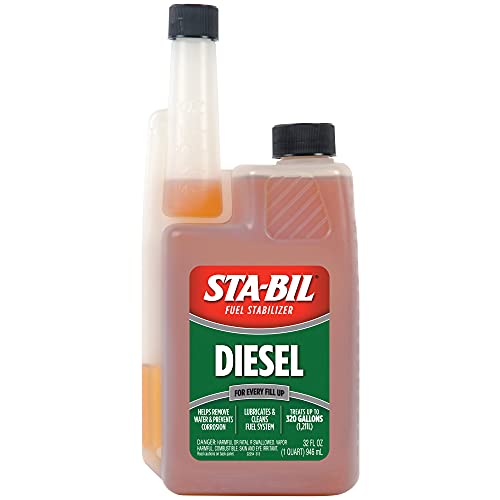
What it does: Prevents sludge and sediment buildup, cleans and lubricates the entire fuel system from injectors to tanks, and includes corrosion protection. It helps maintain fuel efficiency and engine longevity, especially for boats that sit idle for periods.
Who it’s best for: Boats with long storage periods or engines that oscillate between heavy use and inactivity. Choose this if you need a reliable system-wide cleaner and protective formulation.
Caution: Regular usage according to dosing directions is essential to prevent potential over-application issues.
Star Tron Enzyme Fuel Treatment – Diesel Formula

What it does: An enzyme-based additive designed to stabilize diesel, disperse moisture, and promote cleaner, more uniform combustion. It is trusted for reducing moisture-related emissions and helping maintain engine performance in diesel systems.
Who it’s best for: Operators seeking enzyme-based stabilization and moisture control for diesel fuel, especially in fleets or vessels with variable fuel quality. Choose this if you want a moisture-dispersing option with proven compatibility in diesel engines.
Caution: Enzyme formulations require proper storage; avoid extreme heat to preserve effectiveness.
Archoil AR6500 Diesel Treatment

What it does: A 40 oz bottle treats up to 400 gallons, focusing on lubricity improvement and injector cleaning. It supports DPF and turbo deposit control and provides cetane boosting benefits. It’s positioned as a broad lubricity enhancer for diesel engines.
Who it’s best for: Boats and equipment with high-mileage engines or systems requiring added lubricity to protect sensitive components like CP4 pumps. Choose this if you want a well-rounded fuel treatment that emphasizes wear protection.
Caution: For modern, highly tuned HPCR engines, verify compatibility with your specific model and follow dosing instructions to avoid over-treatment.
Buying Guide
What should you consider before buying a marine diesel fuel treatment?
- Engine type and use case: Choose a product aligned with your vessel size, engine type, and typical operating conditions (in harbor vs. offshore, cold weather vs. heat).
- Key objectives: If you need soot reduction, cetane enhancement, or moisture control, prioritize products marketed for those benefits.
- Fuel stability vs. additives: Some formulas stabilize fuel for storage, while others target ongoing performance; determine whether you store fuel for long periods or use it continually.
- Water and microbial protection: In humid climates or storage tanks, consider biocides or dual-phase chemistries to prevent corrosion and biomass growth.
- Lubricity and deposit control: For older engines or high-mileage fleets, lubricity improvements and injector clean-up can extend service life and reduce maintenance.
- Storage and handling: Proper storage conditions preserve effectiveness; avoid heat and direct sunlight for enzyme- or biocide-based formulas.
- Compatibility and dosing: Always follow manufacturer dosing instructions and consult your engine manufacturer guidelines for chemical compatibility.
FAQ
- What is the main purpose of marine diesel fuel treatments?
They clean the fuel system, reduce deposits, protect against corrosion, stabilize fuel, and improve lubricity for better engine performance. - Do diesel fuel additives prevent water issues?
Some formulations disperse or remove water, while others focus on microbial protection; select based on whether water contamination is a concern in your operation. - Is it better to use a single multi-function additive or separate products?
Multi-function additives simplify maintenance, but targeted products can provide stronger performance in specific areas like soot reduction or biocidal protection. - How often should I treat my fuel?
Follow the product’s dosing schedule and engine usage; frequent use may be beneficial for fleets with varied operation, while boats used seasonally may require different intervals. - Can these additives damage engines?
When used as directed, reputable marine diesel fuel treatments are designed to be safe for diesel systems; improper dosing can cause issues, so adhere to guidelines. - Do these products work with all diesel engines?
Most are compatible with a broad range of diesel engines, including modern high-pressure common rail (HPCR) systems; confirm with the specific product guidelines for your engine.