Answering the search needs of boat owners, this guide highlights five reliable marine check valves that prevent backflow in exhaust or fuel lines. Each choice targets common boat setups, from bilge pump hoses to inline fuel lines. Use these sections to compare sizing, materials, and performance so you can select the best valve for your vessel.
Buying at a glance: the table below summarizes key details for quick comparison.
| Product | Brand | Size | Best For |
|---|---|---|---|
| 3/4 Inch Check Valve, Marine Boat Bilge Pump Hose Inline | Aincix | 3/4 inch | Bilge pump line, small sail or powerboats |
| 1 1/8 Inch Check Valve, Boat Bilge Pump Hose Inline | Aincix | 1-1/8 inch | Medium bilge applications, versatile hose sizes |
| EVIL ENERGY 3/8″ Fuel Check Valve | EVIL ENERGY | 3/8 inch | Fuel line systems, small engines |
| 1 1/8 Inch Check Valve, Marine Boat Bilge Pump Hose Inline | Aincix | 1-1/8 inch | Bilge lines with standard 1-1/8″ fittings |
| T. H. Marine Double Barb Inline Scupper Check Valve | T-H Marine | 1-1/2 inch (fits 1-1/2″ hose) | Scupper and drain lines on small boats |
3/4 Inch Check Valve, Marine Boat Bilge Pump Hose Inline

Brand: Aincix. Size: 3/4 inch. Features: 3/4 inch Non Return Valve, 3/4 inch Check Valve for Boat Bilge, 2 stainless steel hose clamps. This valve is best for small bilge lines and compact pump configurations where space is a factor. The stainless clamps help secure fitment. A limitation is that flow performance is optimized for standard bilge pump pressures; extremely high-pressure exhaust lines may require a larger valve.
1 1/8 Inch Check Valve, Boat Bilge Pump Hose Inline

Brand: Aincix. Size: 1-1/8 inch. Features: 1-1/8 inch Non Return Valve, 1-1/8 inch Check Valve for Boat Bilge, 2 pcs of check valves. Best for mid-sized bilge lines and systems with multiple valve points. Choose this if your hose fittings are 1-1/8 inch. A potential limitation is that these valves are sold in pairs; plan for replacement if you only need one.
EVIL ENERGY 3/8″ Fuel Check Valve
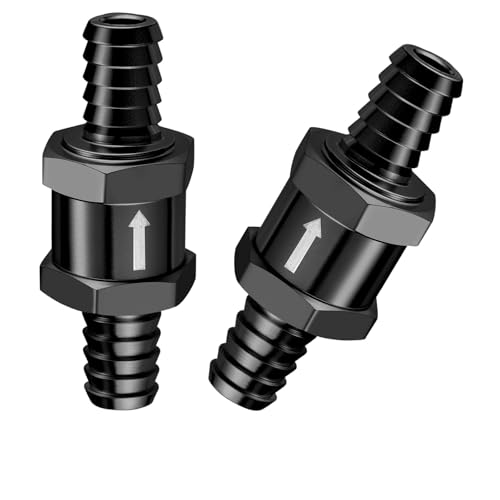
Brand: EVIL ENERGY. Size: 3/8 inch OD. Features: 3/8 inch (10 mm) OD, stainless steel spring, operates from 0.2 to 6 bar, -22°F to 266°F. Material: 6061-T6 aluminum alloy, black anodized for corrosion resistance. Best for fuel lines in compact engine bays where backflow prevention is essential. This valve is suited for automotive-grade fuels and may be overkill for simple vent lines. Caution: ensure compatible fittings and seals for marine fuel systems.
1 1/8 Inch Check Valve, Marine Boat Bilge Pump Inline

Brand: Aincix. Size: 1-1/8 inch. Features: 1-1/8 inch Non Return Valve, 1-1/8 inch Check Valve for Boat Bilge, 2 stainless steel hose clamps. Best for flexible bilge configurations with standard 1-1/8″ hose. Choose this when you need a paired valve setup and corrosion resistance from stainless clamps. Limitation: check valve direction must be confirmed to avoid interfering with other inline components.
T. H. Marine Double Barb Inline Scupper Check Valve

Brand: T-H Marine. Size: Fits 1-1/2″ hose. Features: Double barb inline scupper check valve, designed for scupper and drain lines on boats. Best for preventing backflow from deck scuppers and bilge drainage paths. Caution: check compatibility with your hose ID and ensure the valve length does not restrict flow in tight installations.
3/4 Inch Check Valve, Boat Marine Bilge Pump Inline

Brand: Aincix. Size: 3/4 inch. Features: 3/4 inch Non Return Valve, 3/4 inch Check Valve for Marine Bilge, 2 pcs of check valves. Best for compact bilge networks with multiple 3/4 inch hoses. Choose this when you need redundancy in a small space. Limitation: may require additional clamps or adapters if your hose ends are nonstandard.
Buying Guide: Key Considerations for Marine Check Valves
What size should I choose? Start with your hose ID. Select a valve that matches the hose size or provides a secure, leak-proof connection with adapters if needed.
What material matters? Aluminum alloys offer corrosion resistance and light weight for engine bays and hulls, while stainless clamps improve durability at high vibration points. For fuel lines, ensure materials are compatible with the specific fuel and temperature ranges.
How many vents or inline points will I have? If your system uses multiple inline valves, consider buying in pairs or sets to simplify installation and future maintenance.
What are common limitations? Some compact valves have lower flow for higher-demand bilge pumps. Others may not seal perfectly with certain hose types without proper clamps or securing hardware. Always verify compatibility with your boat’s hose diameter and operating pressures.
How should I install them safely? Position valves so gravity and flow direction are clear, with arrow indicators pointing toward discharge. Use stainless clamps, apply appropriate sealants per hose type, and avoid overtightening to prevent hose damage.
FAQ
- What is a marine check valve used for?
- Can I use a fuel line check valve in an exhaust system?
- What size hoses do these valves fit?
- Do these valves come with clamps?
- Are metal valves more durable than plastic?
- How many valves should I install in a bilge system?
It prevents backflow in bilge, fuel, and exhaust-related lines, protecting the engine and other systems from reverse flow.
Only if the valve specifications match the exhaust system’s pressures and temperatures. Many fuel valves are designed for fuel lines and may not be ideal for hot exhaust gases.
Sizes shown include 3/4 inch and 1-1/8 inch, with some 1-1/2 inch scupper valves. Always measure your hose ID before buying.
Some listings include stainless steel hose clamps; others are sold separately. Verify included components in the product description.
Metal valves (aluminum or stainless) typically resist corrosion and wear better in harsh marine environments, but may be heavier and costlier.
Install at least one valve inline with the pump output and consider additional valves in long or multi-branch lines for redundancy and control.