Answer: Choose corrosion-resistant, properly sized vents designed for 5/8″ hoses and mounting options that suit your boat’s hull or deck layout. This guide highlights five top options that balance durability, airflow, and ease of installation for different boat types—from small sailboats to larger yachts. Best for anglers and coastal cruisers who want reliable venting without frequent maintenance. The products below cover through-hull and deck-mounted styles, with clear indications of suitability and limitations. A quick buyer’s table follows to help you compare at a glance.
| Product | Mount Type | Best For | Key Benefit |
|---|---|---|---|
| Universal 90° Fuel Vent (keehui) | Deck Mounted | Solid deck installations | 316 stainless steel, strong with 5/8″ hose fit |
| Seachoice Fuel Tank Vent Chrome (5/8 in.) | Deck Mounted | General marine fuel venting | Chrome-plated zinc, flame arresting screen |
| Seachoice Thru Hull Fuel Tank Vent (Chrome-Brass) | Thru-Hull | Hull-through venting needs | Corrosion-resistant brass, two vent holes |
| Universal 90° Flush Mount Fuel Vent (keehui) | Flush Mount | Low-profile installations | 316 stainless steel, compact precision |
| 316 Stainless Steel Marine Fuel Tank Vent (EEYAD) | Deck/Inline | Durable, versatile hose connection | 316 stainless, corrosion resistance |
Universal 90° Fuel Vent 316 Stainless Steel

Material: 316 stainless steel; solid metal slab for durability. Requires an approx. 1 3/8-inch hole and connects to a 5/8-inch interior diameter hose. Best for vessels needing strong, corrosion-resistant deck vents. Suitable for cruisers and fishing boats that face salt exposure.
Best for: Boats that prioritize long-term corrosion resistance and a robust deck-installed vent. The 316 stainless steel construction helps withstand marine environments.
Caution: Ensure correct hole size and hose fit for a secure seal; mis-sizing can lead to leaks or venting inefficiencies.
Seachoice Fuel Tank Vent Chrome 5/8 in.

Features chrome-plated zinc for corrosion resistance and a stainless-steel flame arresting screen to block contaminants. Designed to maintain proper fuel flow during fueling.
Best for: Boats needing a proven, corrosion-resistant vent with an added flame arrestor for safety in fueling operations.
Caution: Chrome-plated components can wear over time in fully exposed, rough-water conditions; inspect seals and screen periodically.
Seachoice Thru Hull Fuel Tank Vent

Chrome-plated brass construction for corrosion resistance; designed for thru-hull venting via a hose (not included). It features two vent holes, aiding airflow while keeping water intrusion at bay.
Best for: Boats needing a hull-through vent option with a compact footprint and strong brass construction.
Caution: Requires proper hull penetration and sealing; must be installed by someone familiar with through-hull fittings to prevent leaks.
Universal 90° Flush Mount Fuel Vent 316 Stainless Steel

Material: 316 stainless steel; solid metal slab with high durability. Requires an approx. 1 3/8-inch hole and connects to a 5/8-inch interior diameter hose. Flush-mount design offers a low-profile appearance for sleek deck layouts.
Best for: Vessels with low deck clearance or where a discreet vent is preferred without compromising airflow.
Caution: Flush mounts may be harder to access for inspection; ensure correct installation depth to avoid water intrusion.
316 Stainless Steel Marine Tank Vent (EEYAD)
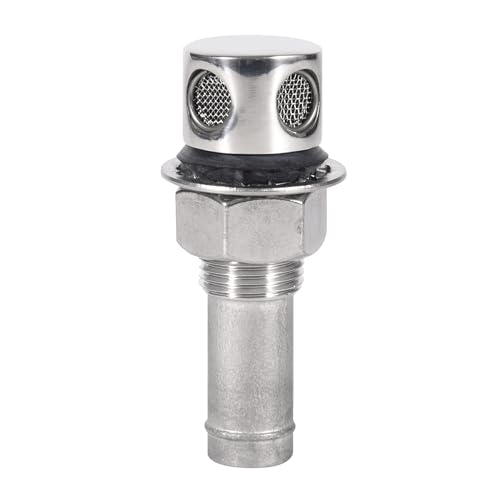
Made of corrosion-resistant 316 stainless steel; requires about a 1 3/8-inch hole and fits 5/8-inch interior diameter hose. Adopts fine grinding mirror polishing for a precise, bright finish with good flatness.
Best for: Those seeking a premium stainless vent with a clean, polished look for exposed deck areas on larger boats.
Caution: Polished surfaces require regular cleaning to maintain the mirror finish and prevent residue buildup in salt air.
Buying Guide: Key Purchase Considerations
What mounting style fits my boat? Deck-mounted vents are easy to install but protrude, while flush-mount vents offer a low profile. Thru-hull vents suit hull penetration needs but require careful installation and sealing.
Is 5/8″ hose compatibility important? All listed options use standard 5/8″ hose sizes, which is common for marine fuel venting. Verify your hose ID and hose clamps for a secure fit.
What material matters? Stainless steel (especially 316) resists corrosion in saltwater. Brass and chrome-plated components add corrosion resistance but may require more maintenance in harsh environments.
Do I need a flame arresting feature? Some vents include flame arresting screens to reduce ignition risk during fueling. Consider adding this if your fueling area lacks containment measures or if you frequently fuel in open-water conditions.
What about safety and compliance? ABYC standards influence vent design and installation. If unsure, consult a professional to ensure proper vent placement, ventilation rate, and sealing to prevent fuel vapor buildup or water intrusion.
FAQ
- What diameter hole do these vents require? Most listed vents require about a 1 3/8-inch hole for proper mounting.
- Will these vents fit standard 5/8″ hoses? Yes, all selected vents are designed for 5/8″ interior-diameter hoses.
- Is a thru-hull vent better than a deck vent? Thru-hull vents are suitable for hull-level venting but require careful sealing; deck vents are easier to install and inspect.
- Do vents have flame arrestors? Some models include flame arresting screens; check product features to confirm.
- Which material lasts longest in saltwater? 316 stainless steel offers superior corrosion resistance in marine environments.
- Can I install these myself? Basic deck or flush-mounted vents can be DIY with proper tools; thru-hull installations should be performed by a professional to prevent leaks.