The best marine paint for boats combines durability, ease of application, and protection above or below the waterline. This guide highlights five trusted options for topside and bottom jobs, helping you choose the right coating for fiberglass, wood, aluminum, or steel hulls. Ideal buyers include DIY boaters repainting a topside, campers and RV enthusiasts seeking exterior hull finishes, and sailors needing long-lasting antifouling protection. Below is a quick product overview to start your comparison.
| Product | Brand | Use |
|---|---|---|
| Rust-Oleum Marine Coatings Topside Paint | Rust-Oleum | Above the waterline, fiberglass/wood/metal |
| TotalBoat Wet Edge Topside Paint | TotalBoat | Above the waterline, multi-surface |
| Rust-Oleum Marine Coatings Topside Paint (Semi-Gloss) | Rust-Oleum | Above the waterline, fiberglass/wood/metal |
| TotalBoat Aluminum Boat Paint | TotalBoat | Aluminum and galvanized metal |
| TotalBoat Underdog Marine Antifouling Bottom Paint | TotalBoat | Bottom of hulls (below waterline) in saltwater |
Rust-Oleum Marine Topside Paint — White, Quart

Product overview: An oil-based topside coating that is flexible and easy to level. Suitable for fiberglass, wood, or metal surfaces above the waterline. Dries to the touch in 1–2 hours and covers up to 100 sq ft. Best for homeowners painting a boat’s exterior deck or superstructure where flexibility and leveling matter. Caution: oil-based paints require proper ventilation and cleanup with mineral spirits.
TotalBoat Wet Edge Topside Paint — White, Gallon

Product overview: A durable, high-gloss marine-grade polyurethane coating designed for topside use. Provides scratch and chemical resistance with excellent color and gloss retention. One-part formula supports easy application via brush, roller, or spray. Best for above-waterline surfaces on powerboats, sailboats, RVs, and trim where long-lasting shine is valued. Limitation: intended for above-waterline use only and requires proper curing conditions.
Rust-Oleum Marine Topside Paint — White, Quart (Semi-Gloss)

Product overview: A versatile topside coating for fiberglass, wood, or metal above the waterline. Oil-based formula offers flexibility and ease of leveling with quick-touch drying. Coverage up to 100 sq ft. Best for small to mid-sized boats needing a reliable, traditional finish. Limitation: contains oil-based solvents requiring ventilation and proper cleanup.
TotalBoat Aluminum Boat Paint — Light Gray, Quart
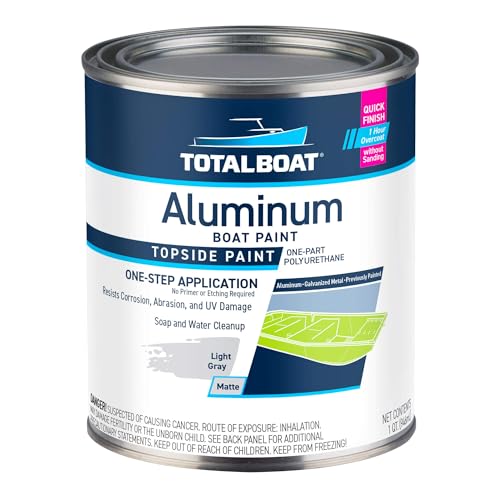
Product overview: A one-part polyurethane designed for aluminum and galvanized metal. No priming necessary; applies via brush, roller, or spray with 2–3 coats. Dries to recoat within about 1 hour at 72 F. Best for aluminum canoes, jon boats, pontoons, and trailers needing a durable, low-sheen finish. Limitation: formulated for aluminum and may require surface etching for best adhesion on bare metal.
TotalBoat Aluminum Boat Paint — Olive Drab, Quart

Product overview: Similar to the light gray aluminum formulation, this olive drab version delivers good adhesion on aluminum or galvanized surfaces with a low-sheen finish. No priming necessary and fast overcoat times. Best for camo-ready equipment like hunting boats or trailers where a matte, low-profile look is desired. Limitation: color may vary slightly between batches; plan color consistency across multiple cans.
TotalBoat Wet Edge Topside Paint — Classic Whaler Blue

Product overview: A high-gloss, marine-grade topside paint that resists fading and cracking. The one-part formula supports straightforward brushing or rolling and also accepts spraying. Best for power boats and sailboats seeking long-term color retention above water. Limitation: designed for above-waterline use only; ensure proper surface preparation for best results.
TotalBoat Underdog Antifouling Bottom Paint — Black, Gallon
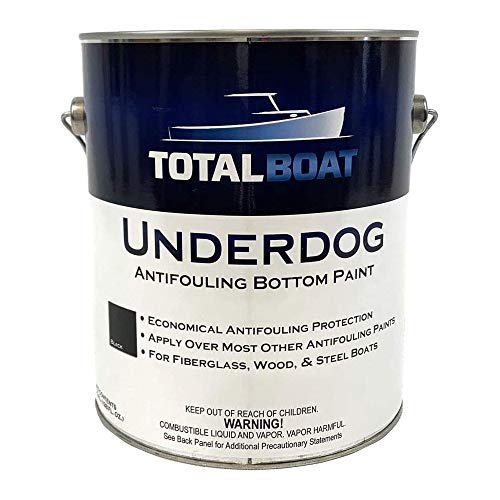
Product overview: An economical antifouling bottom paint using copper biocide to prevent barnacles and mussels from clinging to hulls. Suitable for properly prepped fiberglass, wood, steel, or iron boat bottoms. Best for boats used frequently in saltwater conditions to minimize barnacle build-up. Caution: annual reapplication may be needed to maintain protection, and proper surface preparation is essential for adhesion.
Buying Guide: How To Choose The Right Marine Paint
- Topside vs. Bottom: Decide if you need a topside paint above the waterline or an antifouling bottom paint for submerged areas. Topsides focus on gloss, color retention, and UV resistance; bottom paints emphasize fouling release and durability under water exposure.
- Substrate Compatibility: Confirm the coating works on your hull material (fiberglass, wood, aluminum, or steel). Some products are optimized for aluminum or galvanized surfaces, while others are multi-surface.
- Finish and Sheen: Glossy finishes offer sharp color and easier cleaning; low-sheen or matte finishes reduce glare and are often chosen for camo patterns or stealth appearances.
- Application Method: Consider whether you prefer brushing, rolling, or spraying. One-part formulas simplify mixing and cleanup, but spray compatibility and ventilation requirements vary by product.
- Drying And Recoat Windows: Check touch-dry times and how soon you can apply a second coat. Faster-drying finishes speed up projects but may require precise temperature control.
- Maintenance And Longevity: Antifouling coatings require periodic reapplication; topsides coatings aim for long color life and resistance to abrasion and chemical exposure.
- Safety And Cleanup: Oil-based paints require solvents and ventilation; water-based options reduce odors and cleanup effort but may have different durability profiles.
- Surface Prep: Proper sanding, cleaning, and etching (where applicable) improve adhesion and finish. Some products require no priming on specific metals or plastics.
Frequently Asked Questions
- What’s the difference between topside paint and antifouling bottom paint? Topside paints protect and beautify above the waterline, while antifouling paints prevent organisms from attaching to the hull below the waterline.
- Can I mix paints from different brands? It’s generally not recommended due to potential chemical incompatibilities and coating failure. Follow manufacturer guidelines for best results.
- How long does it take for topside paint to dry before getting wet? Dry times vary; most products become touch-dry within hours, but full cure can take days. Always follow product-specific instructions.
- Is aluminum boat paint different from regular topside paint? Yes, aluminum-specific paints are formulated for better adhesion to aluminum and galvanized surfaces and may require surface etching or special primers for optimal results.
- Do I need to sand between coats? Some products are one-part and require no sanding between coats, while others may benefit from light sanding to improve adhesion and sheen. Check product directions.
- How should I store leftover paint? Keep containers sealed tightly, store in a cool, dry place, and follow local disposal guidelines for hazardous materials.