Staying organized and safe with a 12V marine power system is essential for reliable boating, RV, or off-grid setups. This guide highlights five top marine power distribution blocks that balance robust construction, clear labeling, and easy installation. Whether you’re wiring a boat, cabin cruiser, or solar-powered trailer, these options help you manage batteries, fuses, and ground connections with confidence. This article is designed for boaters, RV owners, and marine technicians seeking durable 12V distribution blocks that resist corrosion and deliver solid current handling.
| Product | Type | Max Amps | Voltage Range | Best For |
|---|---|---|---|---|
| RVBOATPAT Power Distribution Block | 12V Bus Bar | 150 A | Up to 48 V DC | Small to mid-size marine and automotive wiring with easy 1/4″ studs |
| Blue Sea Systems ST Blade Fuse Block 12 Circuits | Fuse Block with Ground | 100 A | 12–24 V DC | Complex boat electrical panels needing individual fused circuits |
| RVMARINEPAT 12V Bus Bar 250A | Power Distribution Block | 250 A | Up to 48 V DC | High-current marine or solar wiring with multiple 5/16″ posts |
| Joinfworld Bus Bar 250A | Power Distribution Block | 250 A | Up to 48 V DC | Vehicle, boat, and solar wiring needing multiple 3/8″ studs |
| Avelis Bus Bar 150A | Power Distribution Block | 150 A | Up to 48 V DC | Marine, solar, and automotive wiring with 1/4″ studs |
RVBOATPAT Power Distribution Block 12V

The RVBOATPAT block is a 12V distribution center designed for marine and automotive use, capable of 150A continuous operation and compatible with up to 48V DC. It includes both positive and ground bus bars, plus multiple terminals and copper lugs for straightforward wiring. Best for boaters needing a compact, rugged block with a simple stud-based terminal arrangement. Consider this when you want quick, clean routing of 12V circuits in a small- to mid-sized marine setup. A potential limitation is the fixed layout of terminals, which may constrain larger wire bundles in tight installations.
Blue Sea Systems ST Blade Fuse Block 12 Circuit

This fuse block offers twelve circuits with a ground bus and a clear insulating cover. It’s ideal for more complex DC systems on boats requiring individual fusing per circuit, with a total capacity up to 100 amps. The integrated spare fuse storage and recessed label areas aid maintenance and circuit identification. Good for larger boats or RV installations where organized circuit-by-circuit protection matters. A limitation is the 100-amp total capacity, which may require multiple blocks for very high-current systems.
RVMARINEPAT 12V Bus Bar 250A

The RVMARINEPAT block delivers high current handling with 6 x 5/16″ (M8) terminal studs and a robust round-corner base design for stability and aesthetics. It’s suitable for demanding marine or solar installations up to 48V DC and 250A. The open-area cover design supports flexible wire lug arrangements, which helps when routing multiple cables. Best for high-current demands, such as battery-to-inverter connections. Avoid this if your setup requires a small, low-profile block with fewer terminals.
Joinfworld Bus Bar 250A

The Joinfworld block features a thick copper bus plate with four 3/8″ studs and three additional screw terminals, enabling large connectors and higher-current wiring. The kit includes both positive and negative bars and a secure nylon bottom mounted with M10 support. It is well-suited for marine, automotive, or solar systems requiring robust, multi-wire connections. A potential limitation is its size, which may demand more mounting space and cable routing clearance.
Avelis Bus Bar 150A
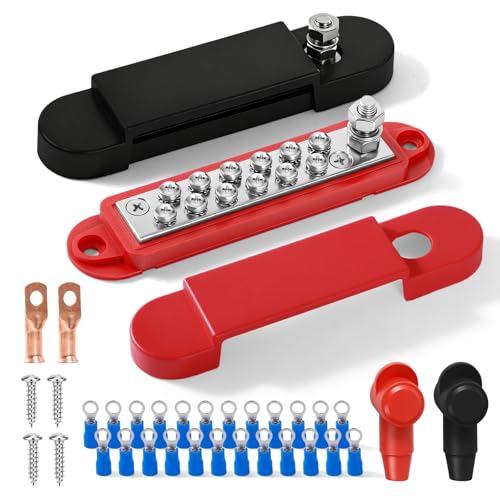
The Avelis block provides a solid 150A rating with 1/4″ studs and a compact 5.4″ length footprint. Its Snap-lock covers protect connections from vibration and shorting while permitting easy service access. It suits marine and automotive users who want a reliable, corrosion-resistant block in a tight space. A caution: confirm mounting clearance and cable routing before purchase due to its specific base dimensions.
Buying Guide: Key Purchase Considerations
What amperage and voltage do you need? Match the block’s max current and operating voltage to your system’s needs. For boats with inverters or high-current accessories, consider blocks rated 150–250A and up to 48V DC. Do you need a dedicated ground or negative bus? Some models include a negative/ground bus; others rely on a separate grounding arrangement. How will you route wires? Look for open-area or flexible lug designs, screw terminal options, and mounting feet that fit your space. Is labeling important? Clear labels, spare fuse storage, and protective covers simplify maintenance and reduce mistakes. What about installation environment? Marine-grade blocks should resist salt spray and corrosion and maintain secure connections under vibration. Consider size, mounting footprint, and compatibility with your existing cables and lugs.
Practical Tips for Installation and Use
- Plan wire routes before mounting; avoid crossing hot and ground paths to minimize interference.
- Use ring or lug connections rated for the wire gauge you’re using; ensure tight, clean torque on all studs.
- Keep spare fuses and labeled circuits to facilitate quick troubleshooting on the water.
- Protect exposed terminals with covers or enclosures to reduce accidental shorts during service.
FAQ
- What is a marine power distribution block? A device that consolidates multiple power and ground connections from a 12V or 24V battery system, often including fuses and a negative bus for organized wiring on boats and RVs.
- Do I need a fuse block with a ground bus for my boat? A ground/negative bus helps keep return paths organized and simplifies fault diagnosis, especially in larger electrical systems.
- Can I use a 250A block in a small boat? Yes, if the wiring and battery setup support higher current; ensure cable gauge and mounting space are appropriate for your application.
- What should I check before buying a bus bar? Verify terminal size (stud diameter), wire gauge compatibility, voltage rating, mounting footprint, and whether a cover or labeling is included for maintenance.
- Is corrosion resistance important for marine blocks? Absolutely; look for nickel-plated copper or stainless components and protective covers to withstand saltwater environments.
- How do I choose between a fuse block and a pure bus bar? If you need circuit protection, choose a fuse block; if you primarily need clean distribution with few integrated protections, a bus bar may suffice, and you can add fuses separately.