Answering the needs of boaters and RV travelers, a marine solar charging system provides reliable, maintenance-free power in remote locations. The top picks below are best for different buyers: compact, portable setups for small boats; robust, expandable kits for larger vessels; and versatile PWM/MPPT controllers for mixed battery types. This guide highlights five strong options and explains who each is best for, with practical comparisons to help you choose.
| Product | Best For | Key Benefit |
|---|---|---|
| Small boats, RVs, trailers | Ultra-Smart MPPT for high efficiency | |
| Mid-size boats and RVs | Solid kit with 1000Wh/day estimate | |
| Expandable systems | Complete kit with easy expansion | |
| All-around 12V vehicles | High-efficiency MPPT and waterproof | |
| Budget-conscious buyers | Smart protections and real-time status |
SUNER POWER Waterproof 12W 12V Solar Charger & Maintainer Pro
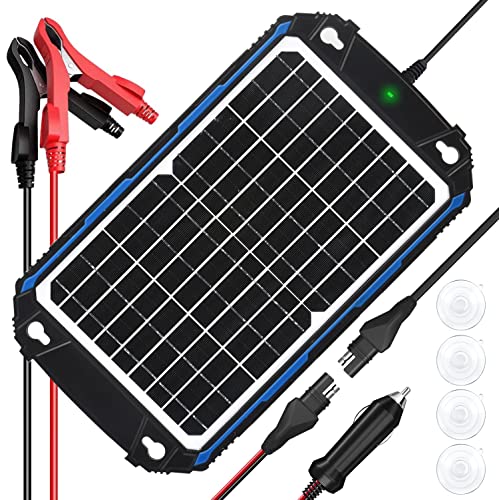
The SUNER POWER kit uses Ultra-Smart MPPT technology to maximize energy harvesting. It delivers up to 99% tracking efficiency and up to 98% peak conversion efficiency, aiming for 20-30% better utilization than many competitors. It processes a three-step charging cycle (Bulk, Absorption, Float) to safely recharge 12V batteries and extend life. Suitable for small boats, cars, and marine trailers that require a maintenance charger with minimal hands-on work. Best for compact systems where space and simplicity matter.
Who it’s best for: boaters with limited space who want a smart, low-maintenance charger for keeping batteries topped up during layups or weekend trips. It’s also a good fit for RVers needing a reliable trickle charger that won’t overcharge. Limitation: the 12W capacity may be too small for high-energy needs or long periods of full sun in harsh conditions.
Renogy 200 Watt 12 Volt Monocrystalline Starter Kit

This starter kit bundles two 100W panels with a 30A PWM charge controller. It’s designed for off-grid use on RVs, boats, campers, and marine setups. The kit’s 22% cell efficiency and bypass diodes help maintain output in low-light conditions, while the back sheet dissipates heat for steady performance. It supports expanding up to 400W when additional panels are added. Best for: mid-size systems where reliability and easy expansion are priorities. Caution: PWM controllers require compatible battery configurations and may be less efficient than MPPT in full sun for some setups.
Renogy 200 Watt Solar Panel Kit New Upgrades

This upgraded Renogy kit emphasizes complete package quality, including pre-drilled mounting points for quick setup. It’s built around two 100W panels with a 30A PWM controller and is designed to scale by adding more panels to reach higher outputs. With 25% cell efficiency and low-light resilience, it balances performance with ease of installation. Best for: owners who want a robust, expandable kit that can grow with energy needs over time. Caution: PWM controllers are simpler and slower to respond than MPPT under varying light.
SOLPERK 100W Solar Battery Charger Kit

The SOLPERK 100W kit features a high-efficiency MPPT controller with IP68 waterproof protection. It promises about 30% more power than standard controllers and includes a 360-degree adjustable bracket for optimal sun exposure. Its 30% efficient monocrystalline cells deliver up to 400 watt-hours per day under good sun, suitable for RVs, boats, and motorhomes. Best for: users needing strong performance in challenging sunlight angles or on irregular mounting surfaces. Limitation: 100W may be insufficient for larger battery banks without expansion.
Voltset Solar Panel Charger Kit 100W

The Voltset kit pairs a 100W monocrystalline panel with a 20A charge controller designed for fast charging and safe operation. It includes an LCD display for real-time charging status and memory functions to retain settings. Safety features include overcharge, overvoltage, overcurrent, over-temperature, short circuit, and reverse polarity protections. Best for: buyers who want transparent charging data and hands-off protection. Caution: Pay attention to mounting and shade issues, as performance hinges on sun exposure and panel orientation.
Buying Guide: Key Considerations For Marine Solar Systems
What grid-tie versus off-grid needs apply? For boats and remote camps, off-grid capacity and weather resilience matter most. MPPT controllers generally extract more energy in variable light, but PWM controllers can be simpler and cheaper for small setups.
How much energy do you actually need? Calculate daily watt-hours based on battery bank size and your intended loads. A larger system is more forgiving of shading and weather but requires more space and heavier equipment.
Expandability and mounting: If you anticipate growing your system, choose kits that allow adding panels without reworking the controller. Consider corrosion-resistant mounting options for marine environments.
Battery compatibility: Ensure the controller supports your battery chemistry (sealed, gel, flooded, lithium). Some kits include universal controllers, while others are chemistry-specific.
Protection and durability: Waterproofing, IP ratings, and robust enclosures reduce maintenance. Look for overcharge and short-circuit protections to safeguard both the installer and the battery.
Comparison Snapshot
- Best for compact spaces: SUNER POWER 12W with Ultra-Smart MPPT, minimal footprint, easy setup.
- Best beginner expansion path: Renogy 200W Starter Kit, two 100W panels, straightforward expansion to 400W.
- Best complete upgrade option: Renogy 200W N-Type Starter Kit, ready for future panel additions and upgrades.
- Best balanced performance: SOLPERK 100W with high-efficiency MPPT and waterproof design.
- Best value with safety features: Voltset 100W Kit with LCD status and comprehensive protections.
FAQ
- What size solar kit do I need for a marine battery bank?
Estimate daily energy usage and multiply by hours of sun exposure. Choose a kit that can replenish your battery bank within your typical daylight window, with a bit of reserve for cloudy days.
- Is MPPT worth it for marine setups?
Generally yes, MPPT controllers extract more energy in varying light and temperature, improving efficiency on boats where angles and shade are common.
- Can I mix panel types in one system?
It’s best to match panels for even voltage and current. Mixing can complicate charging and reduce efficiency unless managed carefully by a compatible controller.
- What maintenance is required for marine solar kits?
Regularly inspect mounts, wiring, and connectors for corrosion. Clean panels to avoid dirt buildup that blocks light. Automated chargers require minimal attention beyond periodic checks.
- How do I choose between PWM and MPPT for marine use?
MPPT is superior for variable sun and larger systems; PWM is simpler and enough for small, steady loads. Budget and expansion plans influence the choice.