Find the right marine water intake hose to keep your engine cooling and exhaust systems running smoothly. This guide targets boaters and recreational vehicle users who need durable, corrosion‑resistant hoses for raw water, cooling lines, and wet exhaust connections. The top five products below are chosen for readability, compatibility with common boat and RV systems, and clear specification details. A quick comparison table follows the intro to help you decide at a glance.
| Product | Diameter | Length | Best For |
|---|---|---|---|
| Midnight Marine 250 Series Hardwall Hose | 1″ per ft | Per foot cuts | Engine raw water pumps, through hulls, wet exhaust |
| Midnight Marine 250 Series (3/4″ I.D.) | 3/4″ I.D. | 2.5 ft | Thermostat housing, heat exchangers |
| Midnight Marine 250 Series 1-1/4″ per ft | 1-1/4″ per ft | Per foot cuts | High‑volume wet exhaust and pump lines |
| Pangda 1-1/4″ x 4′ Water/Fuel Fill Hose | 1-1/4″ I.D. | 4 ft | Marine hose with wire reinforcement for high pressure |
| Midnight Marine 100 Series Automotive Hose | 1-1/4″ per ft | Per foot cuts | Engine cooling and exhaust connections |
Midnight Marine 250 Series Hardwall Hose – 1″ Per Foot

Best for general raw water intake and wet exhaust connections on boats with standard cooling loops. The 250 Series uses a shielded, hardwall design that can resist engine heat and exposure to saltwater. This option fits flexible per-foot purchases for customized hose runs. Ideal for owners who want readily available sizes and straightforward installation.
Who it’s best for: Boat owners needing a versatile, per-foot hose to match specific intake paths or through-hull connections. Why selected: It covers common raw water and exhaust connections with durable construction.
Caution: Verify both length and diameter before ordering; there are no returns on per-foot cuts, which requires precise measurements.
Midnight Marine 250 Series 3/4″ I.D. x 2.5′ Hose
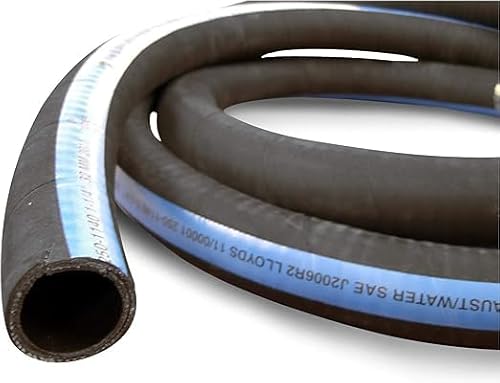
Better for compact engine compartments where space limits hose diameter. This length is suited for thermostat housing or short through-hull runs. The product resists exposure to engine exhaust and saltwater, offering reliable performance in tight installations.
Who it’s best for: Small to mid‑sized boats needing a compact, heat‑resistant hose. Why selected: It balances resistance to exhaust with a smaller internal diameter for tight spaces.
Caution: Confirm both length and diameter before purchasing; this is sold per piece and has a defined minimal cut length.
Midnight Marine 250 Series 1-1/4″ Per Foot
Best for higher‑flow wet exhaust lines and pump intakes where larger hose capacity reduces back pressure. Its heavy‑duty construction handles saltwater and engine heat while maintaining flexibility for routing around engine blocks and hoses.
Who it’s best for: Enthusiasts upgrading to a higher‑volume cooling and exhaust setup. Why selected: The 1-1/4″ size is a common upgrade for improved flow in marine systems.
Caution: Ensure the hose length is measured accurately because per‑foot sales limit returns.
Pangda 1-1/4″ x 4′ Hardwall Hose With Wire

Designed for higher‑pressure applications such as through hull and heat exchanger lines. The wire reinforcement provides a stronger wall to resist collapse when exposed to engine vibrations and high fluid pressure. Useful when routing a longer hose path on a boat or RV.
Who it’s best for: Users needing a reinforced, rigid line for through‑transom or heat exchanger connections. Why selected: It combines precise dimensions with spiral steel reinforcement for durable performance.
Caution: Review chemical resistance and exposure; verify compatibility with antifreeze and saltwater environments before deployment.
Midnight Marine 100 Series Automotive Hose (1-1/4″ per Foot)

Best for heavier engine cooling and exhaust connections where higher durability matters. It offers straightforward per‑foot sizing for custom routing and replacement along the engine bay. The rugged construction helps resist chemical exposure from antifreeze and saltwater.
Who it’s best for: Boaters looking for a robust, longer‑lasting automotive‑grade hose for critical connections. Why selected: The 100 Series line emphasizes durability and reliable performance in marine environments.
Caution: Per‑foot pricing requires careful measurement to avoid waste or shortfalls; confirm diameter before ordering.
Midnight Marine 250 Series 2″ Per Foot
Best for high‑volume applications such as larger water intake lines and combined cooling paths. The 2″ per‑foot option provides a larger internal diameter to minimize flow resistance in demanding marine setups. Suitable for performance boats with sizable raw water needs.
Who it’s best for: Skippers who require larger hoses for high water throughput. Why selected: It pairs compatibility with standard marine fittings while delivering robust wall thickness.
Caution: Larger hoses need careful measurement to ensure routing clearances around deck hardware and engine blocks.
Buying Guide: Key Purchase Considerations
- Size and fit: Determine the hose inner diameter (I.D.) and outer diameter (O.D.) needed for your through hole, pump inlet, and thermostat housing. Mismatch can cause leaks or restricted flow.
- Environment and exposure: Choose hose materials with resistance to engine heat, saltwater, antifreeze, and mild chemicals. Reinforced hardwall options help prevent wall collapse under pressure.
- Length strategy: Per-foot hose pricing requires precise measurements. Plan runs with extra length to accommodate routing but avoid excessive slack that can trap heat or debris.
- Reinforcement: Wire or spiral reinforcement reduces wall collapse during high‑pressure applications such as cooling lines and exhaust connections.
- Installation considerations: Verify clearance around engine blocks, clamps, and fittings. Flexible routing may reduce stress on connections and extend hose life.
- Compatibility: Check that the hose material is compatible with the fluids it will contact (water, antifreeze, fuel blends, saltwater) and not susceptible to additive degradation.
FAQ
- What is the difference between I.D. and O.D. when choosing a marine hose?
The I.D. is the inner diameter that determines the hose’s flow capacity, while the O.D. is the outer diameter that affects fit inside clamps and along routing paths. Both should be matched to the existing fittings.
- Why choose a reinforced hardwall hose for marine use?
Reinforced hoses resist wall collapse under pressure, especially in high‑flow or high‑temperature sections like through hulls and heat exchangers.
- How do I measure for a replacement hose?
Measure the existing hose length, I.D., and the distance between connection points with the system drained. Include some extra length for routing but avoid excessive slack in engine compartments.
- Can these hoses handle engine antifreeze?
Several listed hoses are designed to resist mild chemicals and antifreeze exposure; verify the exact material properties for your specific antifreeze mix before installation.
- Are per-foot hoses returnable?
Many per-foot sales state that there are no returns on per-foot cuts, so precise measurement is essential before purchase.
- Is it okay to mix hoses from different brands?
Choosing hoses with compatible materials and fittings is important. Mixing brands is acceptable if the diameters and chemical resistances meet your system’s requirements.