Find the right modular floating dock system for your waterfront, whether you’re planning a simple entry platform or a full multi-section docking solution. This guide compares five top options, highlighting who each product is best for, plus practical considerations like stability, decking, and ease of installation. Ideal buyers include homeowners seeking easy access to the water, lakeside property owners needing scalable layouts, and hobbyists who value quick assembly.
| Product | Type | Best For |
|---|---|---|
| Patriot Docks D-22013 Low-Profile Floating Dock Section | Low-profile deck | Access to water without high deck clearance; easy entry |
| Patriot Docks D-32013 Premium Floating Dock Section | Premium deck with side floats | Stability for larger loads and watercraft |
| Patriot Docks D-32014 Gray Premium Floating Dock | Premium deck with side floats | Balanced platform for multiple activities |
| Patriot Docks D-22012 Tan Poly Decking | Tan poly deck | Budget-friendly, easy access |
| Connect-A-Dock 20-Foot Kit | 20 ft straight kit | Complete kit for longer, straight layouts |
Patriot Docks Low-Profile Floating Dock Section with Brown Aluminum Decking (D-22013)

Includes: one 4×8 low-profile frame, two 48x24x12 floats, two float mounting bracket sets, two 4×4 deck panels. The low-profile design sits closer to the water for easy access and features high-density polyethylene floats for buoyancy. Best for buyers who want a compact, stable platform near the waterline and straightforward setup.
Who it’s best for: homeowners who prefer easier water access, small waterfront entries, or dock installations where height is a concern. Why selected: it emphasizes a low-profile footprint while delivering reliable buoyancy and simple mounting hardware. Caution: fewer side floats may limit edge stability under heavier loads or uneven water conditions.
Patriot Docks Low-Profile Premium Floating Dock Section with Brown Aluminum Decking (D-32013)
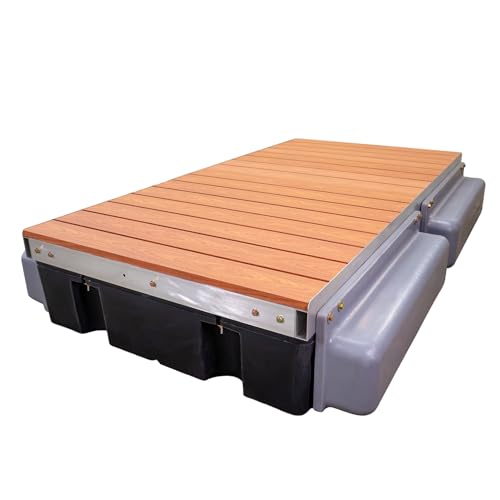
Includes: 1 × 4×8 low-profile frame, 2 × 48x24x12 floats, 2 × 4×4 deck panels, 4 × 43″x13″x7″ side stability floats, and mounting hardware. Premium design adds integrated side floats for enhanced balance and weight distribution, improving stability for watercraft access and lounging. Best for: users needing a more stable platform with extra edge stability for activities like kayaking or paddleboarding. Caution: side floats increase deck footprint; ensure adequate space in your layout.
Patriot Docks Low-Profile Premium Floating Dock Section with Gray Aluminum Decking (D-32014)

Includes: same as D-32013 with gray decking and side floats for stability. Best for: buyers seeking a neutral-toned deck solution that blends with water environments while maintaining robust stability. Why selected: gray decking offers a versatile appearance and strong side float support for even weight distribution. Caution: aluminum decking may require care to avoid scuffing or scratches in rocky entry zones.
Patriot Docks Low-Profile Floating Dock Section with Tan Poly Decking (D-22012)
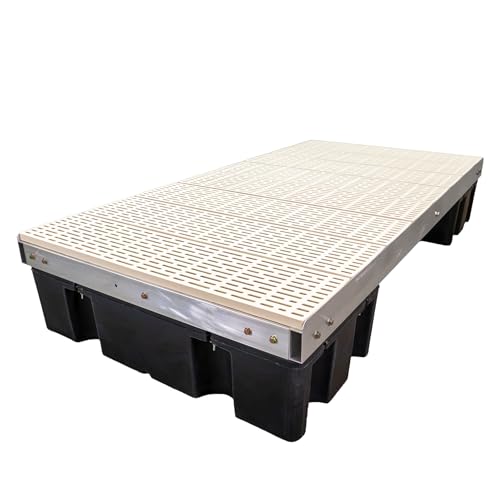
Includes: 1 × 4×8 low-profile frame, 2 × 48x24x12 floats, 2 × 4×4 deck panels. Features tan poly decking for a warm, natural look and straightforward maintenance. Best for: budget-conscious buyers who want a durable, water-ready dock with easy access. Constraint: poly decking may offer fewer texture options than aluminum or wood in high-traffic areas; verify grip if slipping concerns arise.
Connect-A-Dock 20-Foot Floating Dock Kit

Includes: four 3.75′ × 5′ float sections, nine float connectors, four pole anchoring connectors, four 8″ cleats, one gangway hinge, plus all float connection hardware. Schedule 40 pipe for piling anchoring not included. Best for: buyers planning longer, straight dock runs or modular expansions. Why selected: the complete kit offers flexible layout options and strong connection hardware. Limitation: assembly can be more time-consuming; two or more people recommended for efficient setup.
Connect-A-Dock 15-Foot Floating Dock Kit
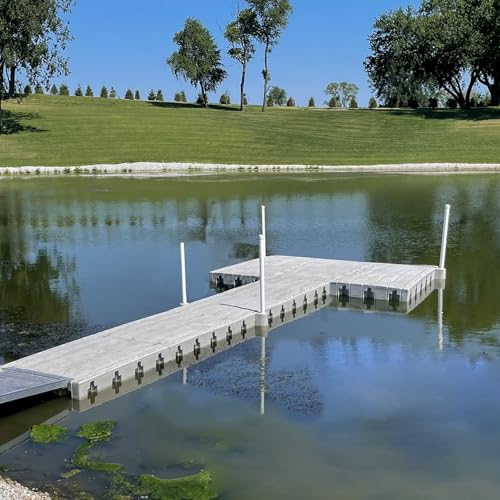
Includes: six 3.75′ × 5′ float sections, 17 float connectors, four pole anchoring connectors, four 8″ cleats, one gangway hinge, and necessary hardware. Schedule 40 pipe for piling anchoring not included. Best for: buyers seeking a mid-length modular dock with flexible expansion in mind. Why selected: strong modular compatibility with other Connect-A-Dock kits. Caution: alignment and leveling may require careful planning during installation.
Buying Guide: Key Considerations for Modular Floating Docks
- Goal and layout: Decide whether you need a straight run, corner configurations, or a multi-section platform. Modular systems excel when you plan future expansion.
- Decking material: Aluminum decking tends to be durable and low maintenance, while poly decking often offers a budget-friendly and slip-resistant option. Consider water exposure and foot traffic.
- Stability features: Side floats and additional buoyancy elements improve balance, especially for larger watercraft or active families.
- Ease of installation: Kits with pre-mated sections and clear hardware simplify setup. Some options are easier for one-person assembly, while others benefit from two or more people.
- Durability and maintenance: Look for UV-resistant shells, corrosion-resistant hardware, and floats designed to resist harsh water conditions.
- Compatibility: If you already own another system, check compatibility with existing connectors, floats, and deck panels to minimize gaps in your dock plan.
- Storage and expansion: Consider future needs such as additional sections, gangways, or planters to extend usability.
Frequently Asked Questions
- What is the advantage of a modular floating dock system?
Modular systems allow scalable layouts, easier repairs, and flexible configurations to adapt to changing waterfront needs.
- Which decking material is best for high-traffic areas?
Aluminum decking is typically durable and weather-resistant, while polymer decking can provide good slip resistance and lower maintenance.
- Are side floats necessary for stability?
Side floats can improve balance and weight distribution, especially when docking boats or hosting multiple users.
- Can these kits be installed by a single person?
Some kits are designed for solo installation, but many benefit from two or more people for alignment and securing sections.
- How do I choose between a straight kit and a corner configuration?
Consider the shape of your shoreline and access needs; straight kits work well for long piers, while corner configurations fit irregular shorelines.
- Is maintenance required for floating docks?
Yes, check bolts, seals, and floats periodically, and clean surfaces to prevent algae or buildup that could affect traction.