Whether you’re docking at a crowded marina or tying off on a buoy, the right mooring hooks and docking aids make the process safer and faster. This guide highlights five top options, explains who they’re best for, and points out practical limitations. Ideal buyers include novice boaters seeking simple operation, saltwater sailors needing corrosion resistance, and anglers or divers who want quick access to lines. A quick summary follows the product sections to compare core specs at a glance.
| Product | Best For | Reach / Extension | Material | |
|---|---|---|---|---|
| Attwood 11180-5 | Shallow mooring or buoy snagging | 3.5 ft to 8 ft | Aluminum with poly tip | Non-marring, lightweight |
| Klanata Dock Hook | Effortless docking from a distance | Telescopic pole (length varies) | Stainless steel with rope threader | Robust, corrosion resistant |
| Shonan Marine Hooks | Heavy-duty securing and quick connections | Various, includes carabiner style | 316 stainless steel | Durable, corrosion resistant |
Attwood Telescoping Boat Hook 3.5–8 Ft

Best for: boaters who want a simple, lightweight extendable hook for snagging lines or docks without heavy gear. The alloy construction offers durability with a non-marring poly tip to protect boat surfaces. Extension is adjustable from 3.5 to 8 feet, making it suitable for dock edges, buoys, and shallow moorings. The tool is easy to grip even when wet, which improves control during cramped docking scenarios.
Why chosen: This model combines a compact profile with reliable extension, ideal for everyday docking tasks. The aluminum build balances strength and lightness, while the tip design minimizes hull scratches. Best used when you need a straightforward reach without specialized fittings.
Limitations: Not designed for extreme heavy-duty line pulling. For frequent heavy handling, consider models with reinforced connections and higher load specs.
Klanata Dock Hook With Telescopic Rod

Best for: boaters who want a dock threader that helps secure lines from a distance and with minimal effort during docking. The integrated mooring rope threader simplifies tying off at the perfect height, reducing the need for extra hands during berthing at marinas or on shore moorings.
Why chosen: The design emphasizes effortless operation and versatility, allowing you to loop ropes around posts or mooring lines with one hand. It is particularly helpful for single-handed docking or when you’re securing a vessel in windy conditions.
Limitations: The product is best used with compatible rope and posts; if your docking environment has unusual pole spacings, you may need additional accessories to maximize efficiency.
SHONAN Marine Heavy-Duty Carabiner Hooks

Best for: boaters needing secure, quick connections for lines, docks, or gear. These 316 stainless steel hooks deliver strong holding power and corrosion resistance for saltwater environments, making them reliable year-round in marinas or on open water.
Why chosen: The stainless steel construction and user-friendly nonlocking mechanism provide dependable operation, with a smooth finish that minimizes scratches on lines or fittings. The range suits jet skis, kayaks, and larger boats alike.
Limitations: Heavier than some lighter hooks; plan for occasional handling in windier docking situations where lighter gear may not provide the same control.
CSUPPCREA 16-Inch Stainless Dock Poles (2 Pack)
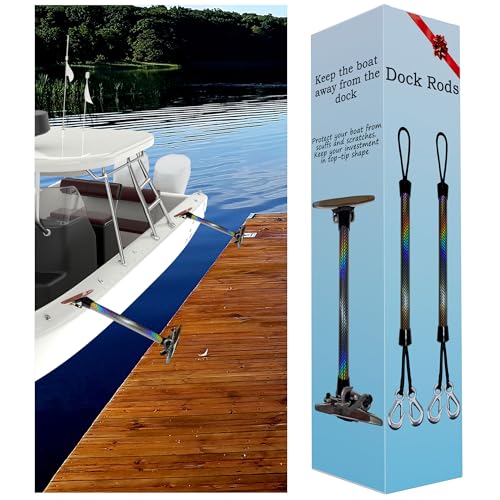
Best for: boat owners who want a quick and straightforward docking setup with durable stainless components. The 316 stainless steel clips and rugged construction support repeat use in challenging water conditions, including saltwater docks and mooring bollards.
Why chosen: The kit emphasizes rapid tie-ups and reliable disengagement, reducing docking time. It is well-suited for users who value durability and corrosion resistance when docking with heavier vessels or in busy marinas.
Limitations: The emphasis is on docking assistance rather than feature-rich hook mechanics; if you need a longer reach, pairing with a longer pole may be necessary.
EVERSPROUT Telescoping Boat Hook, 4.5–12 Ft

Best for: boaters who need a long reach for docking or retrieving lines, with buoyant versatility for lure retrieval and other tasks. The 4.5–12 ft range allows access to distant moorings and buoy lines.
Why chosen: The 3-stage anodized aluminum pole with an 8” boat hook offers strong push-pull power and a lightweight feel. It floats, which adds a safety margin if dropped during docking or retrieval.
Limitations: The extended length may be cumbersome in tight spaces; consider the 6–8 ft options if dock width is limited.
Rainier Supply Co Boat Hook With Telescoping Extension

Best for: boaters seeking a lightweight, easy-to-handle pole with a versatile nylon tip and threaded end for accessories. It’s suitable for docking, mooring, and light-line tasks in varied water conditions.
Why chosen: The quick quarter-turn locking mechanism provides a firm hold, and the universal ¾” Acme thread allows attachment of brushes or other tools, increasing multi-use potential on board or at home.
Limitations: While versatile, it may not offer the same maximum reach as some longer poles; pairing with shorter tasks ensures optimal use.
Buying Guide
What should I consider when choosing mooring hooks?
Reach matters: choose a length that fits your typical docking scenarios. Longer poles reduce distance to the cleat or mooring line but may be harder to maneuver in tight slips.
Material and corrosion resistance: stainless steel and marine-grade aluminum perform best in saltwater. Ensure tips are non-marring to protect hull finishes.
Weight and balance: lighter tools are easier to handle, especially for single-handed docking. Heavier hooks offer more heft for pulling and securing thicker lines.
Versatility: some poles support interchangeable tips or threading for attachments. This expands use beyond docking, such as lure retrieval or as a general outdoor pole.
Floatation: floating hooks reduce loss risk if dropped in water. This is especially useful in choppy conditions or when handling long reach lines.
What are practical docking tips?
- Position yourself at an appropriate angle to the bow line and prepare the mooring line before approaching the dock.
- Test the grip before applying pressure; ensure the line is clear of obstacles and other boats.
- Use a longer reach in windy conditions to keep your vessel’s stern away from pilings or other boats.
Quick FAQ
- Q: Which material lasts longest in saltwater? A: 316 stainless steel and marine-grade aluminum perform best against corrosion when properly maintained.
- Q: Do these hooks float? A: Some models are designed to float, helping prevent loss if dropped.
- Q: Is a longer pole always better? A: Not necessarily; longer poles offer reach but can be harder to manage in tight docks.
- Q: Can I use these for purposes other than docking? A: Several models support attachments like brushes or lures, increasing on-board utility.
- Q: Are there safety considerations for beginners? A: Practice in calm conditions and always secure lines before applying tension.
- Q: Do all models include a rope threader? A: Some do, while others rely on separate accessories for threading ropes.